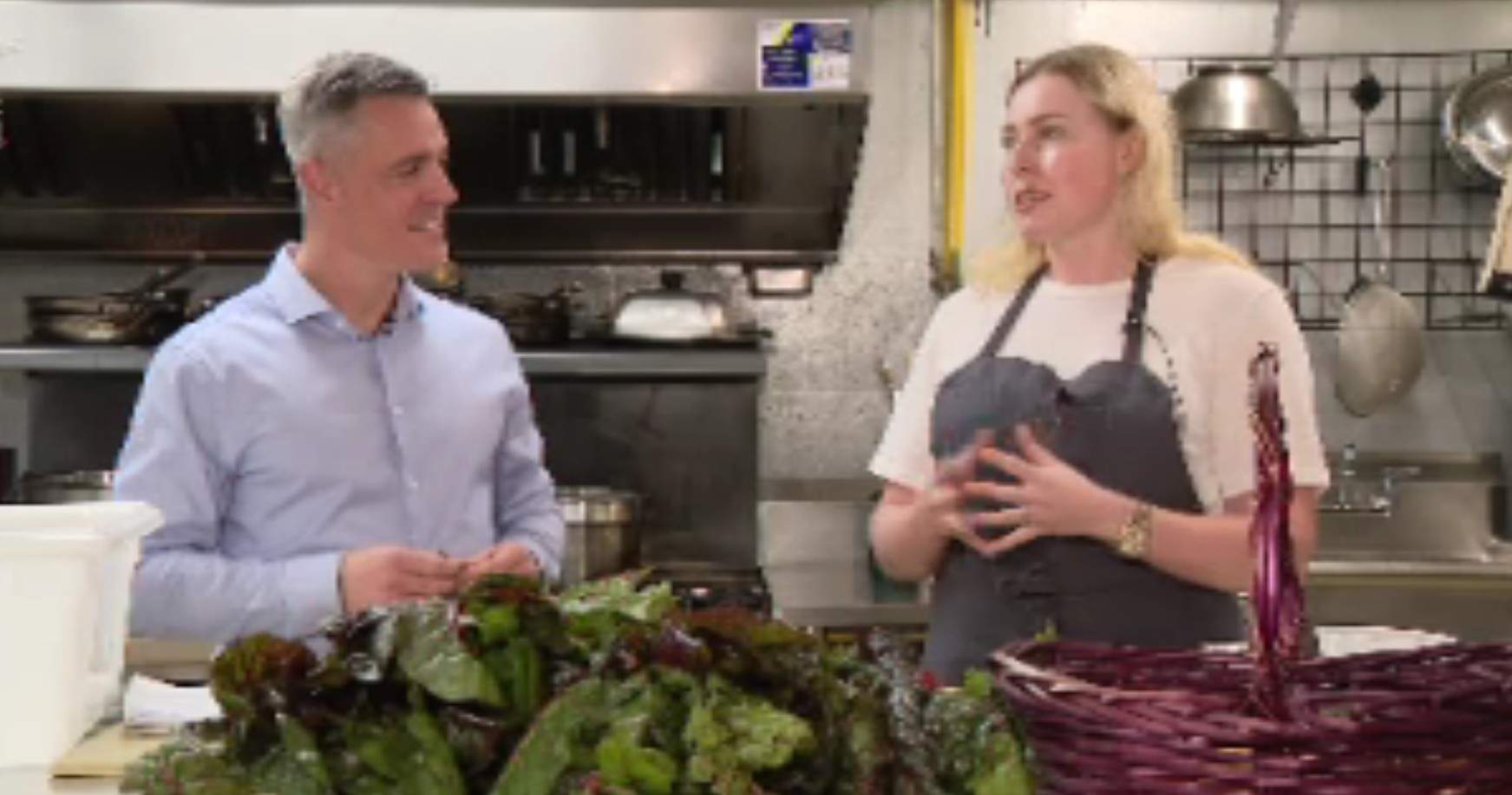
Watch a parent read a restaurant menu when their child has a severe food allergy.
Their eyes do not scan for flavor profiles, seasonal specials, or wine pairings. They scan for traps. They are looking for the invisible punctuation marks of culinary danger—a stray walnut oil in a vinaigrette, a shared fryer where breaded shrimp swam ten minutes ago, a trace of dairy hiding inside a supposedly simple sear. For millions of families, dining out is not an indulgence. It is a calculated gamble played at a wooden table under warm lighting, with an epinephrine auto-injector resting beside a linen napkin like a loaded flare gun.
Now, picture that same table in the heart of Kansas City, Missouri.
When news broke that Brittany and Patrick Mahomes secured initial city approval for a new, allergy-friendly restaurant concept in Kansas City, the headlines treated it like another celebrity real estate transaction. Another athlete investing in hospitality. Another line item on a municipal zoning agenda.
They missed the point entirely.
To understand why a zoning vote in a Midwestern city carries emotional weight far beyond football or local business, you have to understand what happens behind the swinging doors of a commercial kitchen—and what happens inside the chest of a parent when those doors open.
The Architecture of Invisible Risk
Imagine a hypothetical Friday night at a bustling, upscale bistro. Call our family the Millers. Sarah and David have spent three weeks planning an anniversary dinner, finally bringing along their seven-year-old son, Leo, who lives with anaphylactic allergies to peanuts, tree nuts, and dairy.
Before leaving the house, Sarah checked the online menu twice. She called the host stand at 4:15 PM, right between the lunch rush and dinner service, when managers actually have time to breathe. She was assured the kitchen "takes allergies very seriously."
Yet the moment they sit down, the low hum of anxiety begins. When the server arrives, Sarah has to perform a ritual familiar to every allergy parent: the interrogation. She asks about butter finishes on the steaks. She asks if the bread basket is baked in a facility that processes walnuts. She watches the server’s face for that subtle, terrifying flicker of uncertainty—the pause that means I think so, let me go check, followed by a hurried conversation near the pass where nobody actually pulls out an ingredient binder.
Even when a kitchen tries its best, standard commercial restaurants are built for speed, cross-utilization, and efficiency. A single cutting board sees dozens of ingredients during a four-hour rush. Steam rises from shared flat-tops, carrying microscopic proteins into the air. A chef wiping down a station with a damp towel can inadvertently transfer enough allergen residue onto a clean plate to trigger a systemic immune cascade.
This is not rare. According to Food Allergy Research and Education, roughly 33 million Americans live with food allergies, including nearly one in thirteen children. That translates to roughly two kids in every single elementary school classroom. And every year, hundreds of thousands of emergency room visits stem from accidental exposure—many of them occurring in restaurants where staff genuinely meant well, yet lacked the structural separation required to guarantee safety.
For Brittany and Patrick Mahomes, this reality is not a demographic statistic pulled from a public health brief. It is personal. Their daughter, Sterling, has dealt with severe food allergies—a reality Brittany has spoken candidly about over the years, recounting the sheer terror of watching a young child react to an unexpected trigger and the constant vigilance required just to navigate everyday meals.
When you have stood in a hospital room watching doctors stabilize your child because of something she ate, a restaurant menu never looks the same again. You stop asking how a kitchen can accommodate allergies. You start asking how a kitchen can be built from the concrete slab up so the danger never enters the building in the first place.
Why Initial Approval Matters More Than Brick and Mortar
Getting a restaurant off the ground in any major American city requires surviving a labyrinth of bureaucracy long before a single skillet hits a burner. When the Mahomes’ hospitality venture cleared its first municipal approval hurdle in Kansas City—moving through early planning and zoning review—the victory was procedural on paper, yet seismic in practice.
Why? Because building a genuinely allergy-conscious dining room is radically different from slapping a gluten-free symbol next to a salad on a laminated menu.
Think of a traditional restaurant kitchen like an open-concept loft. Everything shares air, tools, storage racks, and prep tables. Creating a true allergy-friendly environment requires turning that loft into an airlock. In culinary design, preventing cross-contact at scale demands dedicated prep zones, isolated ventilation hoods, color-coded utensil ecosystems, separate dishwashing lines, and rigorous supplier vetting that traces ingredients back to the processing plant.
These features are expensive. They eat into square footage. They complicate plumbing, electrical layouts, and city health code inspections. Most hospitality groups run the numbers, grimace at the capital expenditure, and decide it is cheaper to simply print a disclaimer at the bottom of the menu: Please inform your server of any allergies, though we cannot guarantee against cross-contamination.
That single sentence—printed in six-point italic font across millions of menus nationwide—is the polite corporate translation of You are on your own.
By pushing a dedicated, allergy-friendly concept through the initial approval stages in Kansas City, the Mahomes are betting serious capital and cultural clout on the exact opposite premise. They are proving that safety does not have to be an afterthought bolted onto an existing business model. It can be the foundation.
The Economics of Empathy
Critics and cynical industry observers often view celebrity-backed restaurants through a narrow lens: vanity projects fueled by surplus wealth and name recognition. Sometimes that critique is fair. Plenty of famous names have slapped their likenesses onto steakhouses or tequila bars that folded within twenty-four months because the underlying food lacked soul or operational discipline.
This venture operates on a completely different frequency.
Consider the market dynamics hiding in plain sight. Families managing food allergies represent one of the most fiercely loyal, chronically underserved consumer demographics in the entire hospitality sector. When a family finds a restaurant where their child can order off the menu without a twenty-minute cross-examination of the line cooks, they do not just visit once. They become evangelists. They drive forty-five minutes across metro lines on a Tuesday night. They book every birthday, graduation, and anniversary dinner there. They tip generously because the relief of eating in peace feels priceless.
Yet for decades, the culinary world largely treated allergy-friendly dining as a compromise—a clinical, joyless experience associated with cardboard-textured baked goods, bland steamed vegetables, and apologetic service.
The real breakthrough of a high-profile, thoughtfully designed restaurant in Kansas City lies in destroying that false choice. You should not have to trade culinary ambition for physical safety. A great meal should still carry the sizzle of caramelized edges, the brightness of fresh herbs, the warmth of a dining room buzzing with conversation and clinking glasses. The only difference is that the invisible threat has been engineered out of the room before the doors even unlock.
I remember the first time I watched a friend’s daughter—a nine-year-old who had spent her entire life bringing Tupperware containers of plain chicken and rice to birthday parties—sit down at a fully nut-free, dairy-safe bakery café. She stared at the glass display case for nearly three full minutes without speaking. Her mother kept waiting for her to ask the usual question: Can I have that one?
When her mother finally whispered, "Sweetheart, you can pick anything in the entire case," the girl didn't cheer. She burst into tears. Not out of sadness, but because for the first time in her memory, the world was not telling her no.
That is the emotional currency beneath a zoning permit.
What Comes After the First Stamp
Of course, clearing an initial city approval in Kansas City is only the opening chapter of a long, grueling buildout. Between early municipal sign-offs and opening night lies a gauntlet of architectural revisions, supply-chain audits, staff training protocols, and relentless health inspections.
A restaurant can have the cleanest blueprints in Missouri and still fail if the culture inside the kitchen treats allergen protocols as a chore rather than a craft. True safety requires training every dishwasher, prep cook, expediter, and server to understand that a single mistake is not a comped appetizer—it is an ambulance siren. It means building relationships with food distributors who verify every batch of spices, oils, and flours before a single crate crosses the loading dock.
And it raises practical questions that local diners and traveling fans alike are already asking. Will the menu eliminate top allergens entirely from the building, or rely on strictly segregated culinary stations? How will price points balance the higher cost of specialized sourcing with accessibility for everyday Kansas City families? When will the doors officially open to the public?
Those details will crystallize as construction progresses and the culinary leadership team steps forward. What is already unmistakable, however, is the ripple effect this single project sends through the wider hospitality industry.
When figures with the cultural gravity of Patrick and Brittany Mahomes put their names, resources, and personal story behind an allergy-friendly restaurant, other restaurateurs pay attention. Investors stop dismissing allergen safety as a niche liability and start recognizing it as a viable, scalable standard. Culinary schools take note. Suppliers adapt.
Slowly, the six-point italic disclaimer at the bottom of the menu begins to look less like standard practice and more like an excuse.
The Seat at the Table
Walk past any crowded neighborhood restaurant at seven o'clock on a Saturday evening and press your hand against the brick wall outside. You can feel the vibration of human connection humming right through the mortar—laughter spilling out when the front door swings open, the clatter of silverware, the warm glow of people sharing bread together without fear.
For most of us, that warmth is effortless. We take it for granted from the moment we pull into the parking lot.
Somewhere across town, a family is sitting in a parked sedan with the engine idling, double-checking an expiration date on an EpiPen before walking inside, rehearsing the questions they will have to ask a stranger just to keep their child breathing through dessert.
In Kansas City, a quiet blueprint just took its first official step toward turning that engine off, unlocking the door, and pulling out a chair where everyone at the table can finally exhale.