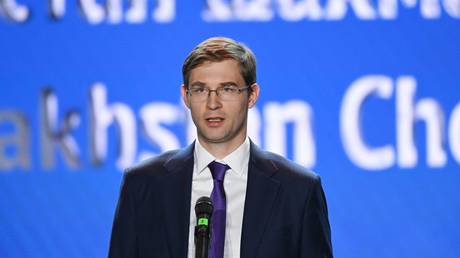
Silence hangs heavy over a tournament hall. The only sound is the dry click of a wooden piece meeting a polished board, followed immediately by the soft press of a mechanical clock lever. Time bleeds away in seconds and milliseconds. To the casual observer, chess is a museum piece of human intellect, a pristine sanctuary untouched by the messy chaos of geopolitics, corporate boardrooms, or national ambition.
They are wrong.
Beneath the veneer of quiet contemplation lies a high-stakes arena where global power struggles play out in miniature. For decades, the International Chess Federation, known universally as FIDE, operated less like a modern sporting body and more like a relic of an older, more opaque era. It was weighed down by controversy, financial instability, and the long, eccentric shadow of its previous leadership. The organization needed a complete overhaul. It needed someone who understood not just the knight's L-shaped leap, but the grinding gears of international bureaucracy and finance.
Enter Arkady Dvorkovich.
When the Russian-born economist, former government official, and businessman stepped into the presidency, the global chess community held its collective breath. This was not merely an administrative appointment. It was a seismic shift in how the ancient game would navigate the twenty-first century. But to understand the weight of that election, one must look past the crisp suits and press conferences. You have to look at the board itself.
Picture a dimly lit room in Batumi, Georgia, during the autumn of 2018. Delegates from nearly two hundred nations milled about, nursing cold coffee and whispering in fragmented coalitions. The atmosphere crackled with anxiety. The incumbent president had faced heavy international sanctions and relentless scrutiny, leaving the federation financially isolated and morally adrift. Sponsors were hesitant to write checks. National federations were starved of resources. Players, the lifeblood of the movement, frequently found themselves caught in political crossfire, wondering if their tournaments would be canceled or their prize money would materialize.
Dvorkovich arrived with a reputation as a technocrat. He was a man of spreadsheets, diplomatic handshakes, and quiet competence. Trained as an economist at Moscow State University and later at Duke, he understood capital flows as well as he understood the Sicilian Defense. His supporters painted him as the pragmatic savior who could balance the books, restore corporate trust, and modernize the digital infrastructure of a sport that was rapidly migrating online. Critics, however, pointed to his past government ties in Moscow, questioning whether an organization spanning every geopolitical divide could truly remain independent under his watch.
Elections in global sports rarely hinge on pure idealism. They are won in hotel lobbies at two in the morning, through whispered promises of development grants, coaching programs, and regional representation. Dvorkovich navigated this labyrinth with surgical precision. When the votes were tallied, the outcome was decisive. A new era had begun.
Yet winning the election was the easy part.
The real challenge began the moment he took the gavel. Running FIDE is akin to steering an ancient galleon through a hurricane while simultaneously trying to rebuild its hull. The federation’s coffers were virtually empty. The shadow of past scandals lingered over every potential sponsorship deal. Furthermore, the digital explosion of chess, supercharged by online streaming platforms and popular media, meant that millions of new fans were watching. They did not care about old political grudges. They wanted fast-paced broadcasts, interactive apps, and flawless production values.
Consider what happens when a traditional institution collides with modern digital culture. For centuries, chess was viewed as an elite pursuit, accessible only to those with access to expensive coaches, massive physical libraries, and exclusive clubs. Dvorkovich inherited a mandate to democratize that access. Under his administration, the focus shifted heavily toward grassroots development in regions that had long been ignored by the traditional European and North American power centers. Africa, Latin America, and parts of Asia saw a surge in instructional programs, certified arbiters, and regional tournaments.
Money followed competence. Slowly at first, then in a steady stream, major corporate partners returned. Tech companies, financial institutions, and global brands began to see value in associating their names with the ultimate battle of wits. The World Championship cycles secured better venues, larger prize pools, and broader television coverage.
Of course, leadership on this scale never exists in a vacuum. The test of any international sports executive arrives when the wider world intervenes. When geopolitical tensions escalated sharply in subsequent years, sports federations across the globe faced unprecedented dilemmas. Athletes from various nations found themselves banned, neutral, or caught in bureaucratic limbo. Dvorkovich walked a razor-thin diplomatic tightrope. He maintained channels of communication across fractured international lines, insisting that chess must remain a bridge between people rather than a wall that divides them.
Critics watched his every move with a magnifying glass. Every statement was parsed for bias; every administrative decision was weighed against the backdrop of international sanctions. Yet his survival and continued tenure pointed to a stark reality. In a fragmented world, the ability to keep disparate nations sitting across the same board, playing by the exact same rules, is an extraordinary achievement.
To watch a high-level chess game is to witness a conversation without words. Two minds lock into a silent duel of anticipation, calculation, and psychological endurance. Every pawn move carries a narrative of sacrifice and ambition. Every queen maneuver threatens a sudden, irreversible collapse.
When Dvorkovich won that initial election, he did not just inherit an administrative desk. He inherited a living ecosystem of millions of players ranging from children huddled over plastic boards in community centers to grandmasters battling for world supremacy under blinding studio lights. He became the custodian of a tradition that predates modern nations, digital networks, and global corporations.
The boardroom battles are quieter now, but the stakes remain just as high. The digital surge continues to accelerate, bringing new players, new controversies, and new opportunities. Artificial intelligence has long since surpassed human capability on the board, transforming chess from a test of raw calculation into a profound exploration of human creativity against silicon perfection.
The man who sits at the head of the table today is neither a romantic hero nor a distant villain. He is an administrator steering a ship through turbulent waters, balancing the rigid traditions of a royal game with the demands of a hyper-connected planet.
The clock ticks down. The pieces are reset. Another game begins.