Two hundred and forty dollars.
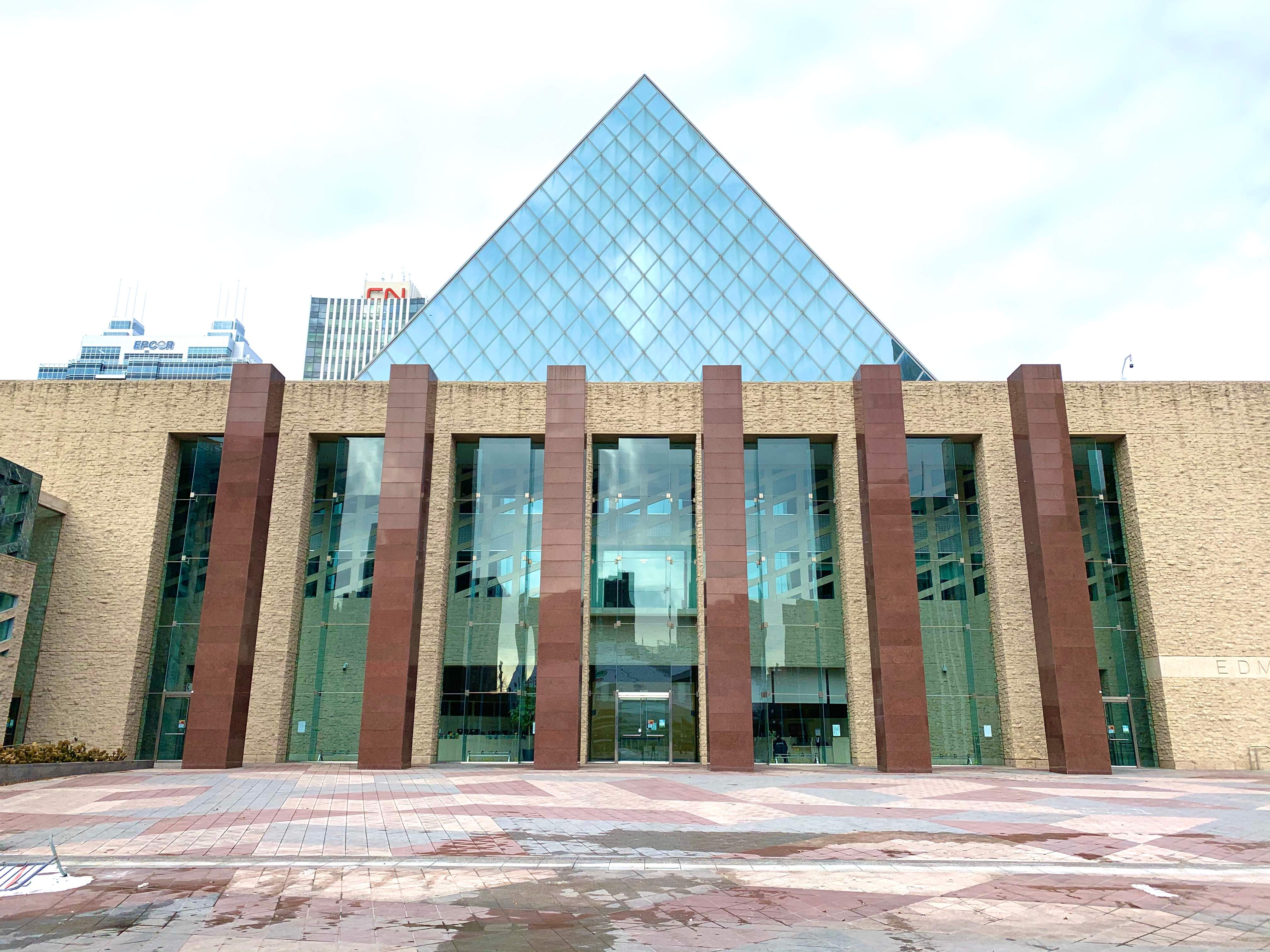
On paper, inside a three-ring binder thick enough to stop a draft under a basement door, it looks like a rounding error. It is a fraction of a percentage point, a decimal shifted across a municipal spreadsheet, an abstract figure debated under the fluorescent hum of Council Chambers at Sir Winston Churchill Square. To the accountants and policy analysts drafting the City of Edmonton’s proposed 2027–2030 budget, that number represents a carefully calibrated compromise between civic ambition and fiscal restraint.
To a household sitting at a kitchen table in Mill Woods at eleven o'clock on a Tuesday night, staring at a stack of envelopes beside a cold mug of tea, it is something else entirely. It is two weeks of winter groceries. It is a child’s hockey registration fee. It is the exact margin between breathing room and holding your breath until the next payday.
That disconnect—the chasm between the macro-math of a growing northern metropolis and the micro-reality of the people who shovel its sidewalks—is why the release of Edmonton’s four-year budget proposal has sparked neither celebration nor outright revolt, but a deep, fractured unease. The reaction across the river valley has been decidedly mixed. Everyone agrees the city is at a crossroads, yet nobody can agree on which road leads out of the woods, or who should pay for the paving.
The Architecture of a Four-Year Promise
Unlike many municipalities that live hand-to-mouth from one annual fiscal cycle to the next, Edmonton plans in four-year blocks. In theory, this multi-year budgeting model is an act of civic maturity. You cannot build an LRT extension, replace crumbling century-old water mains, or overhaul a transit network on a twelve-month leash. Infrastructure demands patience. It requires laying down concrete today for trains that won't carry a single commuter until the snow falls in 2030.
Yet locking in a financial blueprint from 2027 through 2030 feels a bit like packing a suitcase for a four-year expedition without knowing the weather forecast.
When city administration unveiled the proposed framework, they were attempting to square a brutal mathematical circle. Edmonton is booming. Over the past few years, tens of thousands of new residents have arrived from across Canada and around the world, drawn by relative housing affordability and the promise of opportunity on the prairies. More people mean more energy, more tax base, and more vibrancy.
More people also mean more potholes, longer ambulance response times, crowded rec centres, and buses running behind schedule in minus-thirty weather.
Consider a hypothetical family—let’s call them the Kowalskis—living in a 1970s bungalow in the north end. Marek works in logistics near the Anthony Henday; Priya is an educational assistant. Over the last four years, they have watched their property tax bill climb steadily, driven by inflation, rising borrowing costs, and the city’s push to fund major capital projects. When they hear that the 2027–2030 budget proposes another round of property tax increases—paired with higher utility rates and transit fares—their immediate reaction isn't ideological. It is visceral. They look at the cracked asphalt on their residential street, which hasn't seen a grader since last spring, and ask a simple, piercing question: What are we actually buying?
The Illusion of "Cutting the Fat"
Whenever municipal budgets surface, a familiar chorus rises from certain corners of the city. Business associations, taxpayer advocacy groups, and fiscal hawks point to the sheer size of the operating budget and demand a freeze. Cut the red tape, they argue. Trim the bureaucracy. Stop funding pet projects and stick to the basics: roads, police, snow removal, and garbage collection.
It is a seductive argument because it relies on a household metaphor. When a family runs short of cash, they cancel streaming subscriptions and stop eating out. Why can't City Hall do the same?
The flaw in that analogy is that a city is not a household. A city is an aging machine that never turns off, operating in a climate actively hostile to concrete and steel.
If you defer maintenance on a bridge over the North Saskatchewan River today to save half a percentage point on this year's tax levy, the concrete does not politely pause its decay until the economy improves. Moisture seeps into microscopic fissures, freezes, expands, and turns a manageable repair bill in 2027 into a catastrophic structural rebuild in 2032. Economists call this the infrastructure deficit; homeowners know it as the leaky roof you ignored until the drywall collapsed.
Business owners downtown and along corridors like Whyte Avenue and 118th Avenue are caught in the crossfire of this reality. Speak to an independent restaurateur trying to survive razor-thin margins, and you will hear a very different frustration with the 2027–2030 proposal. For commercial property owners, who already pay a higher tax rate than residential properties, every uptick in municipal levies acts like a silent rent hike. They aren't against a vibrant, safe city—in fact, their survival depends on it. What terrifies them is paying more while watching foot traffic stagnate due to visible social disorder, boarded-up storefronts, and endless construction barricades blocking their front doors.
The Invisible Ledger of Social Decay
Walk down Jasper Avenue on a crisp autumn morning, and you see the competing realities of Edmonton colliding on a single block.
On one side of the street stands a gleaming glass tower, a testament to a city reinventing itself as a hub for artificial intelligence, clean energy, and medical research. Twenty paces away, huddled near a warm exhaust vent, are neighbors with nowhere else to go, caught in the grip of an addiction and housing crisis that municipal property taxes were never designed to solve.
Here lies the quiet tragedy of Canadian civic finance. Under our constitutional architecture, cities are creatures of the province, restricted to collecting revenue primarily through property taxes and user fees—mechanisms invented in the nineteenth century to pay for boardwalks and fire brigades. Yet in the twenty-first century, municipalities have become the default frontline responders for mental health emergencies, homelessness, and climate adaptation.
When social advocates and community leagues examine the 2027–2030 budget, their criticism flips the fiscal hawks' argument upside down. To them, the proposed budget does not go nearly far enough. Holding the line on taxes by trimming social grants, delaying supportive housing initiatives, or slowing down transit frequency is not saving money—it is simply moving the expense from one column of the public ledger to another.
Every dollar saved by underfunding preventive community programs shows up six months later as a ten-dollar bill in emergency room visits, police dispatches, and shelter beds. It is the most expensive way possible to manage a crisis.
The Transit Gamble
Nowhere is this philosophical tug-of-war sharper than in how Edmonton moves its people.
For decades, Edmonton was built for the car. Wide arterials, sprawling suburbs, abundant parking. It worked when the population was half a million. At well over a million residents and climbing toward two, that model is hitting a physical wall. You cannot widen every road without bulldozing neighborhoods, and the cost of servicing low-density sprawl stretches municipal finances to the breaking point.
The 2027–2030 budget leans heavily into continuing the city’s massive bet on public transit and active transportation—expanding LRT lines, improving bus rapid transit, and knitting together bike lanes.
To urban planners and younger residents, this is common sense. It is how a real city grows up. If you want to attract talent and keep housing attainable, people need reliable ways to get to work and university without owning two vehicles.
To a tradesperson living in St. Albert or driving from Terwillegar to an industrial park in the east end at five in the morning, however, those investments can feel like a tax levied on their livelihood to fund a lifestyle they cannot use. When winter winds howl down the valley and a bus fails to show up, patience for twenty-year transit visions evaporates fast.
The Cost of Hesitation
I have sat in enough late-night budget hearings over the years to recognize the look on a city councillor's face around midnight. It is the look of someone trying to hold water in cupped hands. Every delegation that steps up to the microphone—the firefighter union president, the suburban parent, the disability advocate, the chamber of commerce representative—speaks a truth that is entirely valid on its own terms.
The firefighters are right: response times matter when your kitchen is on fire.
The seniors on fixed incomes are right: inflation has already eaten their savings, and another tax hike hurts.
The youth advocates are right: closing recreation centres and libraries hollows out the soul of a neighborhood.
The agonizing truth of the 2027–2030 budget is that there is no hidden vault of unclaimed gold beneath City Hall. Every dollar spent comes from a resident's pocket, a business's ledger, or an intergovernmental transfer that carries strings attached. And every dollar not spent carries a hidden price tag—paid in longer commutes, rougher roads, dimmer streetlights, or a neighbor left behind on a frozen sidewalk.
Public engagement sessions over the coming months will inevitably feature heated speeches and sharp headlines. Some will call the plan reckless; others will call it timid. Both camps will point to the exact same spreadsheets to prove their case.
What Remains When the Ink Dries
Strip away the accounting jargon, the multi-year capital profiles, and the political posturing, and a municipal budget is really just a moral document. It is a city’s way of answering one question: What do we owe each other?
Do we owe our future selves a transit system that works, even if we have to endure the dust and taxes of building it today? Do we owe our struggling small businesses a break so their lights stay on through another winter? Do we owe the most vulnerable among us a warm place to sleep, even when our own budgets feel stretched to the limit?
Think back to that hypothetical family in Mill Woods, staring at the bills on their kitchen table. Now imagine them stepping out their front door at seven the next morning.
The streetlamp flickering above their driveway works because an electrical crew maintained the grid overnight. The bus pulling up to the corner on time—heated, bright, carrying nurses and students and baristas toward the core—runs because someone voted to fund the route. The snowplow scraping the arterial road clear of black ice passes by because a budget line item survived a contentious debate in Council Chambers.
We rarely notice the city when it works. We only feel its weight when the bill arrives, or when the gears grind to a halt. Between now and the final gavel on the 2027–2030 budget, Edmontonians will argue fiercely over those numbers—and they should. Democracy is supposed to be loud when the stakes are personal.
Just after sunrise on a freezing November morning along the North Saskatchewan River, steam rises off the dark water in thick, ghostly ribbons, wrapping the High Level Bridge in white mist before vanishing into the cold blue air. Beneath that bridge, the river keeps moving—steady, indifferent to the arguments echoing from the concrete towers above, carrying the weight of the city forward whether we are ready for the current or not.


