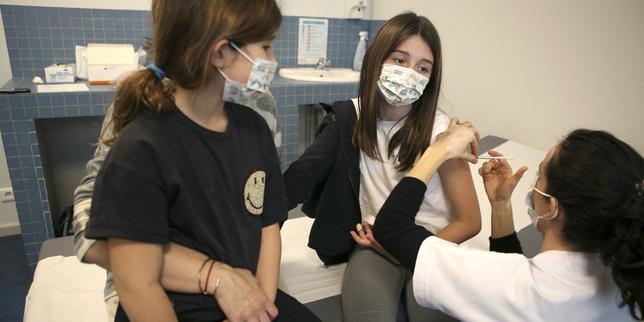
Fluorescent light hums inside a pediatric clinic somewhere between Lyon and Leuven. A mother sits on paper crinkle-sheet with a three-year-old whose sneakers barely reach the edge of the examination table. The toddler is swinging one leg, absorbed in the way a plastic spatula catches the ceiling glare, completely unaware that the ink on his yellow vaccination booklet has become a point of quiet negotiation.
Across several European countries, childhood vaccination rates have begun to slip. Recent multi-country studies tracking pediatric immunization coverage paint a sobering picture: schedules that once looked nearly automatic—measles, mumps, rubella, diphtheria, tetanus, pertussis, polio—are showing soft spots. Not a sudden collapse overnight, and not identical everywhere. More like hairline fractures spreading across a pane of glass that Europe spent decades polishing.
Numbers on a chart look tidy. Ninety-four percent here, eighty-nine percent there, a two-point dip in second-dose measles coverage in one country, a widening gap between urban centers and rural districts in another. Tidy numbers hide messy mornings. They hide the parent lying awake at two in the morning scrolling through contradictory threads, the family doctor trying to answer ten years of accumulated anxiety in a twelve-minute appointment, and the public health nurse watching appointment slots go unfilled.
To understand why childhood immunization is receding in parts of Europe, you have to look past the lab bench and into the kitchen table.
When Safety Becomes Invisible
Vaccines suffer from their own success. That sounds like a neat paradox until you live inside its consequences.
Picture a hypothetical grandparent—let us call him Hendrik, born in Rotterdam in the early 1950s. (This is a composite, constructed to illustrate a generational shift rather than a real person.) Hendrik grew up with stories that tasted like dread: a cousin whose leg stayed thin and weak after polio, neighbors whose children vanished behind quarantine tape during diphtheria outbreaks, wards where parents pressed their palms against glass partitions while nurses worked in silence. For Hendrik’s generation, a needle in a child’s thigh was not an abstract policy; it was a border wall holding back monsters whose names everyone knew.
Now picture a hypothetical mother—let us call her Camille, raising two children in a mid-sized French town today. (Again, a composite illustration.) Camille has never seen a ward full of iron lungs. She has never buried a schoolmate from whooping cough. Her lived memory of childhood illness consists mostly of ear infections, strep throat, and seventy-two-hour fevers treated with paracetamol and cartoons. When a nurse hands her a leaflet listing potential side effects—redness, a mild fever, rare allergic reactions, the distant statistical shadow of severe events—Camille is not comparing those risks to a ward of dying children. She is comparing a known needle to a world that feels remarkably safe.
That gap in lived experience changes everything.
Public health experts often talk about herd immunity as a mathematical threshold. Around ninety-five percent coverage for measles, for instance, keeps transmission chains from catching fire. Below that line, sparks find dry wood. Yet parents do not wake up thinking about mathematical thresholds. A parent looks at a healthy, bright-eyed child and asks a simpler, sharper question: Why expose my healthy kid to any risk at all when nobody around here seems sick?
It is a rational question from inside a protected bubble. The trap is that the bubble only stays inflated while enough people keep pumping air into it.
The Erosion of Trust Is Rarely Loud
If you ask why pediatric vaccination numbers are slipping across multiple European nations, people reach immediately for dramatic villains: viral misinformation, algorithmic outrage, anti-vaccine movements. Those forces are real, and in several countries they have grown louder, better organized, and more visible on social media.
Still, blaming everything on loud fringes misses the quieter story happening in waiting rooms.
Many parents skipping or delaying shots are not ideologues. They are exhausted. Consider what modern parenting demands before breakfast: sorting school forms, managing screen time, deciphering food labels, juggling work calls, and fielding opinions from every direction. When a parent hesitates over a combined vaccine—say, MMRV—the hesitation often starts small. A friend mentions a cousin whose baby spiked a high fever after a shot. A forum post questions whether giving multiple antigens at once overloads an infant’s immune system. A pediatrician seems rushed, typing notes while half-listening.
Once.
Twice.
Then the appointment gets postponed until the next checkup, and the next, until the schedule quietly slips out of focus.
What happens when institutional trust frays? People look for control. Delaying a vaccine feels like exercising caution rather than saying no. Spacing shots out feels personalized, thoughtful, bespoke—like choosing organic produce instead of grabbing whatever sits at eye level. Yet pediatric schedules across Europe were not assembled at random. They were calibrated around when maternal antibodies fade, when infants become vulnerable to severe complications, and when children actually show up for care. Pushing doses back leaves windows wide open.
A Hypothetical Outbreak in a Quiet Town
Imagine a spring Tuesday in a provincial town of forty thousand people—let us place it in central Europe, where vaccination coverage for measles has hovered around eighty-eight percent for a few years. (This scenario is hypothetical, built from documented outbreak dynamics.)
A family returns from a holiday abroad. Their seven-year-old comes home tired, with watery eyes and a cough that looks like a standard cold. Two days later, a blotchy rash appears behind the ears and spreads down the neck.
Nobody panics yet. A general practitioner sees the child, suspects a viral rash, and sends the family home to rest.
By Friday, two classmates who missed their second measles shot—one whose parents postponed it during a busy move, another whose family leaned on online skepticism—develop high fevers. By the following Monday, the pediatric ward is isolating suspected cases. Infants too young to be fully vaccinated sit in separate rooms with anxious parents peering through windows. A pregnant nurse checks her immunity records with a knot in her stomach.
Within three weeks, forty people are sick. Six end up hospitalized with pneumonia or dehydration. A ninety-day-old baby spends ten days fighting for breath.
None of the parents in that town woke up wanting forty people sick. Every single delay or refusal had a story behind it. Yet the virus did not read the stories. It only saw unprotected tissue.
Why Europe Is Feeling This Now
European health systems are not uniform, which makes the multi-country trend even more telling. Nordic countries, Western European nations, and Central and Eastern European states differ in how they fund care, how they register immunizations, and whether shots are recommended or mandated.
Yet across several countries, researchers tracking pediatric coverage have noticed overlapping pressures.
First came the disruption of routine care during the COVID-19 pandemic. Missed well-child visits piled up like unreturned mail. Even after clinics reopened, catch-up campaigns struggled to reach every household, especially families facing language barriers, precarious housing, or long travel times to rural clinics.
Second came a deeper shift in how authority is received. Decades ago, a physician’s recommendation carried almost unquestioned weight. Today, patients arrive with printouts, search histories, and a healthy awareness that institutions sometimes get things wrong—whether through bureaucratic blindness or communication missteps during public health crises. When health agencies speak in stiff, defensive tones, skepticism hardens. When they dismiss parental fear as mere ignorance, families walk away.
Third, access itself is uneven. In some European regions, booking a pediatric appointment takes weeks. In others, out-of-pocket friction or fragmented records between private specialists and public clinics mean a child falls through the cracks simply because no single system owns the follow-up.
What It Feels Like From the Inside
I have sat across from parents who were terrified of needles and parents who were terrified of disease, and the strangest thing is how similar their faces look. Both want their child to survive. Both feel the crushing weight of being responsible for a body that cannot speak for itself.
There is a moment in every honest conversation about vaccines where certainty stops being helpful. Science can tell you with extraordinary precision that measles vaccines prevent severe illness and death, that billions of doses have been given safely, that the risk of grave harm from wild measles dwarfs the risk from vaccination. Science cannot magically erase a mother’s racing heart when her four-month-old cries after an injection. Nor can a chart soothe a father who feels cornered by rules he did not help write.
When public health treats hesitation as a moral failure, it loses the room.
When clinics treat hesitation with patience, plain language, and time, something shifts. Look at what works when health workers slow down: listening without interrupting, separating real safety questions from fabricated rumors, explaining why a schedule looks the way it does in everyday words rather than jargon, and keeping the door open even when a parent says, "Not today."
Trust is rebuilt one unhurried conversation at a time. Not with slogans. Not with scolding.
The Invisible Architecture We Stand On
Think of childhood immunization like the levees holding back a river in a low-lying valley. You do not see the engineering every morning on your way to the bakery. You see gardens, playgrounds, schools with open windows, toddlers chasing pigeons in the square. Because the levees hold, people start wondering whether all that concrete and earth is really necessary—or whether parts of it could be scaled back without anyone noticing.
Slowly, inch by inch, the water rises against the stones.
The study showing declining pediatric vaccination rates across several European countries is not a prophecy of doom. It is an early warning light on a dashboard. Numbers can still turn around. Catch-up programs can reach missed cohorts. Pediatricians and nurses can reclaim the center of the conversation as trusted guides rather than enforcers. And communities can remember that protecting a child is never just a private transaction between one parent and one clinic—it is a quiet pact between neighbors who share the same air.
Outside that clinic between Lyon and Leuven, the toddler finally hops down from the table, clutching a sticker shaped like a tiny blue whale, pulling his mother toward the door before the hallway grows loud.