Two million votes. In a country of more than two hundred million souls, sprawling from the flooded emerald basins of the Amazon to the concrete canyons of São Paulo, the future of a continent came down to a margin thinner than a sheet of rolling paper.
Wait. Think about that number for a second. Also making waves in related news: The Night Brazil Held Its Breath Over Two Million Votes.
According to official tallies released by Brazil’s Superior Electoral Court (TSE), Luiz Inácio Lula da Silva secured 50.9 percent of the valid ballots in the October 2022 runoff, leaving Jair Bolsonaro with 49.1 percent. Fifty-point-nine to forty-nine-point-one. If you took all the people who tipped the scale in that election and packed them into the Maracanã stadium in Rio de Janeiro, you would need to fill that legendary arena twenty-six times over—and yet, measured against the sheer, staggering scale of the Brazilian electorate, it was a statistical whisper. A coin toss held in a hurricane.
Most news reports treated that Sunday night like a sports score. They listed the percentages, noted the former union leader's improbable return from a prison cell in Curitiba to the Palácio do Planalto, and quickly pivoted to the legal challenge filed by Bolsonaro’s Liberal Party demanding the annulment of votes cast on certain electronic machines. Dry. Clinical. Bloodless. Further details into this topic are explored by Associated Press.
They missed the kitchen tables. They missed the silence in the elevators. They missed what happens to a human nervous system when democracy ceases to be an abstract civics lesson and becomes a question of whether tomorrow morning’s commute will be blocked by burning tires.
The Ghost in the Ballot Box
To understand why a demand for annulment carries so much emotional voltage in Brazil, you first have to understand the machine at the center of the storm.
Imagine a small gray box, roughly the size of a thick hardcover book, with a numeric keypad that looks like an oversized telephone from the late 1990s. There is no internet connection. No Wi-Fi. No Bluetooth. When you step behind the cardboard privacy screen in a public school classroom in Recife or Porto Alegre, you type two numbers for president, watch a grainy black-and-white photograph of your chosen candidate flicker onto a tiny screen, and press a bright green button labeled CONFIRMA. A synthesized, two-tone chime rings out. Piriri-piriri.
That sound is the heartbeat of modern Brazilian democracy. Introduced in 1996 to eliminate the rampant paper-ballot fraud that had plagued rural districts for generations, the electronic voting machine was long a point of quiet national pride. The TSE notes that Brazil’s system tabulates more than 150 million votes in a matter of hours, an engineering feat that leaves older democracies staring in disbelief.
Yet, when trust fractures, even the cleanest machine can be turned into a mirror for people’s deepest fears.
Consider a hypothetical family—let’s call them the Silvas—living in a middle-class apartment block in Belo Horizonte, a city nestled in the iron-rich mountains of Minas Gerais. Minas is Brazil’s bellwether; since the return of democracy in 1985, no candidate has won the presidency without winning this state. In 2022, Lula carried Minas Gerais by fewer than fifty thousand votes.
Inside the Silvas’ apartment, the election was not a geopolitical case study. It was a wedge driven straight through Sunday lunch. The father, a retired civil engineer who spent four decades watching inflation eat his savings and corruption scandals hollow out state enterprises, saw in Jair Bolsonaro a blunt instrument against a political establishment he believed had betrayed the country. To him, the rapid swing of the vote tally on election night—watching Bolsonaro lead early before Lula crept ahead as ballots from the rural northeast poured in—felt unnatural, like a magic trick performed too fast to follow.
Across the table sat his daughter, a thirty-two-year-old public health nurse who had spent the worst months of the COVID-19 pandemic counting oxygen cylinders in an overcrowded ward. For her, Lula’s return wasn't about ideological purity; it was about institutional memory, social safety nets, and the return of a leader under whom her working-class cousins had been the first in their family to attend university.
When news broke weeks later that Bolsonaro’s coalition had petitioned the electoral court to invalidate votes from roughly 280,000 older-model voting machines—models manufactured before 2020 that lacked individual serial numbers in their internal logs—the argument returned to the Silvas' dining room. The father saw a legitimate demand for transparency; the daughter saw an attempt to erase the votes of millions of her fellow citizens, disproportionately concentrated in regions that favored Lula.
Neither of them was crazy. Both of them were terrified. And that, right there, is the invisible cost of a razor-thin election: it turns neighbors into forensic detectives searching for betrayal in every shadow.
The Long Shadow of Curitiba
You cannot separate the shock of Lula’s victory from the sheer improbability of his survival.
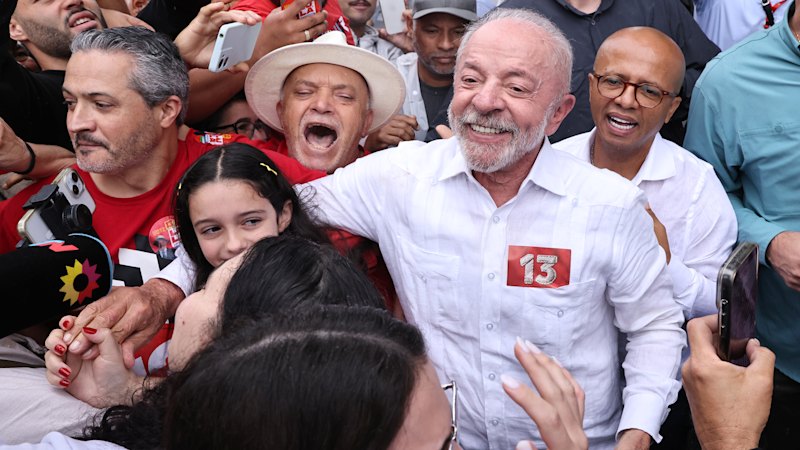
Five years before he stood on Avenida Paulista in a white button-down shirt, his voice raspy from months on the campaign trail, Luiz Inácio Lula da Silva was sitting in a fifteen-square-meter room at the Federal Police headquarters in Curitiba. He had been convicted on corruption and money-laundering charges stemming from the sprawling Lava Jato (Car Wash) investigation, a probe that exposed kickback schemes involving the state oil giant Petrobras and top construction firms. For 580 days, he watched the 2018 presidential race—an election polls suggested he would have won—unfold on a small television screen while Bolsonaro swept to power on a wave of anti-establishment fury.
In politics, prison is usually an obituary. People move on. Alliances calcify around new centers of gravity.
Then, in 2021, Brazil’s Supreme Federal Court annulled Lula’s convictions, ruling that the trial court in Curitiba lacked proper jurisdiction and that the presiding judge, Sergio Moro—who later served as Bolsonaro’s justice minister—had demonstrated bias. Because the statute of limitations had expired on the older charges by the time the cases were transferred, Lula walked back onto the ballot legally cleared to run.
To his supporters, it was vindication—proof that the judicial system had been weaponized to remove a popular leftist leader from the board. To his detractors, it was a technicality that allowed a tainted figure to slip through the cracks of accountability.
Walking through the crowds in São Paulo during the final week of the campaign, you could feel the weight of that unresolved history hanging in the humid air. People didn't just wear red shirts or green-and-yellow jerseys; they wore their grievances like armor. I remember standing near a bus stop in Pinheiros as a light drizzle fell, watching a street vendor pack up his cart of roasted peanuts. He told me, quietly, glancing over his shoulder before speaking, that he hadn't told his own brother who he was voting for. "Why ruin Christmas," he said, "over men who don't know our names?"
That quiet self-censorship is what statistics never capture. When politics becomes existential, ordinary speech becomes hazardous.
Anatomy of an Annulment Challenge
When Jair Bolsonaro’s Liberal Party (PL) filed its formal challenge with the Superior Electoral Court in November 2022, demanding the annulment of votes cast on older electronic ballot boxes, the legal maneuver immediately collided with institutional reality.
Let’s look closely at what was actually argued, stripped of the shouting matches on cable news.
The PL’s petition, prepared by a private technical audit firm hired by the party, did not present physical evidence of altered votes or hacked software. Instead, it argued that electronic voting machines produced prior to 2020 generated internal log files containing a generic identification number rather than a unique serial number tied to each specific terminal. According to the party's lawyers, this technical quirk made it impossible to individually audit those machines, and therefore, they argued, all votes cast on them—more than half of the total ballots nationwide—should be thrown out.
Here is the catch, and it is a massive one.
First, independent electoral observers, including missions from the Organization of American States (OAS) and Brazil’s own Federal Court of Accounts (TCU), had already audited the 2022 election systems and found zero evidence of tampering or discrepancy between the digital tallies and the printed zero-tapes generated before polls opened. Second, every single one of those older machines had been used in the first round of the election on October 2—an election in which Bolsonaro’s Liberal Party won the largest bloc of seats in both the Chamber of Deputies and the Federal Senate.
Alexandre de Moraes, the Supreme Court justice heading the electoral court, pointed directly to that contradiction. He noted that the machines were identical across both rounds of voting and ordered the party to amend its filing to include the first-round legislative races if it genuinely believed the hardware was compromised. When the party declined to challenge the election of its own lawmakers, Moraes rejected the petition outright, calling it devoid of evidence and imposing a fine of 22.9 million reais (roughly $4.3 million) on the coalition for bad-faith litigation.
Think of it like this. Imagine stepping onto an airplane, flying safely to your destination, praising the pilot for landing smoothly, and then—upon discovering your luggage didn't make the connecting flight—demanding that the airline declare the entire aircraft unairworthy for the second leg of the journey, while insisting your first boarding pass remains completely valid. The logic collapses under its own weight.
Yet, logic rarely stops a rumor once it has caught fire on WhatsApp.
The Architecture of Doubt
Why did millions of ordinary, hardworking Brazilians genuinely believe the system had failed them?
To dismiss them simply as gullible is lazy—and dangerous. It ignores the very real economic and social tremors that made people receptive to conspiracy theories in the first place.
Between 2014 and 2022, Brazil endured a brutal decade. A historic recession wiped out years of middle-class gains. Inflation chewed through grocery budgets, turning basic staples like arroz e feijão—rice and beans—into luxury calculations at the supermarket checkout. The pandemic killed nearly 700,000 Brazilians, leaving almost no family untouched by grief. When life feels rigged against you at the bank, at the clinic, and at the gas pump, it requires very little effort to believe it is rigged at the ballot box too.
Bolsonaro understood that anger instinctively. For years before a single ballot was cast in 2022, he questioned the integrity of the electronic voting system, suggesting without proof that the machines were vulnerable to manipulation and warning that only three outcomes were possible for him: prison, death, or victory. Later, in June 2023, the Superior Electoral Court would vote 5–2 to bar Bolsonaro from running for public office until 2030, ruling that he had abused political power and misused state media during a July 2022 meeting with foreign ambassadors in which he repeated unsubstantiated claims of electoral fraud.
In the immediate aftermath of the October runoff, however, Bolsonaro did not issue a traditional concession speech. For nearly forty-eight hours, the Palácio da Alvorada remained largely silent. When he finally spoke for barely two minutes, he thanked the fifty-eight million people who voted for him, condemned protesters who were blocking highways across the country, and authorized his chief of staff to begin the transition process—without ever uttering Lula’s name or explicitly acknowledging defeat.
That ambiguity acted like oxygen on embers.
Across the country, groups of die-hard supporters set up encampments outside military barracks in Brasília, Rio de Janeiro, and São Paulo, praying in the rain and begging the armed forces to intervene. Highway blockades by sympathetic truckers briefly threatened fuel and food supplies before federal highway police cleared the roads. People slept on folding chairs on concrete sidewalks for two months, convinced that a secret dossier or a military decree was just twenty-four hours away from overturning the count.
Looking at footage of those encampments, it is hard not to feel a complicated ache. Alongside the fringe agitators were elderly retirees, small business owners, and churchgoers who had poured their savings and their faith into a political movement that promised to protect their values, only to find themselves stranded in the mud outside army gates while the politicians who stoked their hopes quietly packed their offices.
What Comes After the Chime
On January 1, 2023, Luiz Inácio Lula da Silva walked up the ramp of the Palácio do Planalto in Brasília. Beside him walked not a battalion of generals or billionaire donors, but a cross-section of Brazil’s invisible majority: a Black woman who worked as a waste picker, a young Indigenous chief, a boy from the peripheral neighborhoods of São Paulo, a metalworker, an artisan, a person with disabilities. Together, they placed the green-and-yellow presidential sash over his shoulders—a symbolic gesture made necessary because Bolsonaro had flown to Florida two days earlier, breaking decades of democratic tradition by refusing to hand over the sash in person.
One week later, on January 8, thousands of radicalized demonstrators breached police barricades in Brasília, smashing through the glass facades of Congress, the Supreme Court, and the presidential palace, tearing up historic artworks and defacing the seats of government in an eerie echo of the January 6 riot in Washington two years earlier.
The images shocked the world, yet the aftermath revealed something crucial about the resilience of Brazil’s institutions.
Within hours, security forces retook the buildings and arrested more than a thousand participants. Governors from across the political spectrum—including prominent conservative allies of Bolsonaro—flew to Brasília the very next evening to walk arm-in-arm with Lula and the heads of Congress and the judiciary down the plaza between the damaged buildings. Whatever their fierce disagreements over taxes, social spending, or the role of the state, Brazil’s political class drew a hard line at the destruction of the constitutional order itself.
Still, governing a nation split right down the middle is like trying to steer a massive cargo ship through a narrow canal during a crosswind.
Lula returned to office facing a Congress dominated by conservative lawmakers who had no intention of giving him a blank check. Every budget bill, every environmental regulation aimed at curbing deforestation in the Amazon, every tax reform became a trench war of negotiation. Meanwhile, the deeper cultural fracture—between secular urban progressives and devout evangelical conservatives, between coastal metropolises and the booming agribusiness heartland of the center-west—remained wide open, pulsing beneath the surface of everyday life.
Back in Belo Horizonte, our hypothetical family—the Silvas—eventually resumed their Sunday lunches. They didn't solve Brazil’s ideological divide over roasted chicken and cassava flour. They made an unspoken pact instead: no phones at the table, no cable news humming in the background, and no rehashing the numbers from October.
A democracy does not survive because everyone agrees on who should hold power. It survives because enough people agree on what happens when they lose. When the green button is pressed, the little chime rings out, and the numbers settle into the ledger, the real test of a republic begins the next morning—in the quiet, unglamorous decision to keep living alongside the neighbor who voted the other way.