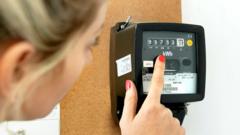
The legacy media loves a seasonal panic. Right on cue, as utility rates tick upward, newsrooms roll out the annual public service announcement: Go to your basement, squint at your meter, and submit a reading right now or face the wrath of estimated billing.
It sounds like sensible, proactive consumer advice. It is actually an outdated ritual that shifts the administrative burden of multi-billion-dollar utility monopolies onto your shoulders, all for a financial payoff that amounts to pocket change.
I have spent over a decade analyzing consumer energy data and corporate utility structures. I can tell you plainly that obsessing over manual meter readings is a distraction from how modern energy billing actually operates. The narrative that a single estimated bill will ruin your finances is a myth perpetuated by legacy systems. If you want to protect your wallet from rising energy costs, you need to stop playing clerk for the power company and start targeting the structural inefficiencies in your home.
The Estimated Bill Myth
The standard argument for manual tracking is fear of the "estimated bill." The theory goes that if you do not provide an exact number, the utility company will fabricate a massive, inflated invoice, effectively stealing your money until the next physical reading corrects the record.
This view misunderstands basic utility regulation.
Utility companies do not pull estimates out of thin air. They utilize historical consumption data, adjusted for seasonal weather patterns and regional degree days. In the vast majority of cases, an estimated bill sits within a slim margin of your actual consumption.
Even when an estimate overshoots your actual usage, the financial damage is temporary. Utilities operate on a closed loop. Every billing cycle is eventually reconciled against a physical reading—either by a technician or when you eventually submit data. If you overpaid in January, your March bill drops proportionally. You are not losing money; you are briefly floating a microscopic, zero-interest loan to a company that already holds your security deposit.
If a temporary $20 variance in a monthly utility bill breaks your household budget, your problem is a systemic cash flow crisis, not an estimated meter reading.
The High Cost of Your Free Labor
Think about the mechanics of the traditional meter-reading crusade.
You find a flashlight. You trudge down to a damp crawlspace or navigate behind a thorny bush outside. You wipe away spiderwebs to read a spinning dial or a fading LCD panel. You log into a poorly optimized mobile app or wait on hold with a customer service line to type in the numbers.
You do this to prevent a temporary estimation error. If you value your time at anything above minimum wage, you are losing money on this transaction.
Time Spent Tracking + App Latency + Mental Overhead > Potential Estimation Variance
The utility company employs automated systems, advanced metering infrastructure (AMI), and algorithmic modeling to predict load demands. When you manually log your data every 30 days to avoid an estimate, you are providing free data validation for a monopoly. They should be paying you for the data point, not threatening you with an estimated invoice.
Smart Meters Will Not Save You Either
The modern counter-argument is that smart meters eliminate this friction entirely. Proponents claim that once a digital smart meter is bolted to your wall, real-time data transmission ensures perfect billing accuracy and magically lowers your consumption.
It does not.
Smart meters do not save energy. They measure it more granularly. The introduction of smart meters is rarely driven by a desire to save consumers money; it is designed to enable Time-of-Use (TOU) pricing.
Instead of paying a flat rate for electricity, smart meters allow utilities to slice the day into peak, off-peak, and shoulder periods. Under the guise of "giving consumers choice," TOU pricing often serves as a stealth rate hike for working families who cannot easily shift their heavy energy usage away from the standard 4:00 PM to 9:00 PM window.
+-------------------+--------------------+--------------------+
| Pricing Model     | Consumer Risk      | Utility Benefit    |
+-------------------+--------------------+--------------------+
| Traditional Flat  | Low (Predictable)  | Low (Fixed Margin) |
| Time-of-Use (TOU) | High (Volatile)    | High (Peak Profit) |
+-------------------+--------------------+--------------------+
If you have a smart meter, staring at your provider's web portal to see your hourly consumption graph is just a digital version of the basement crawl. It is data theater. It creates the illusion of control while your baseline rate continues to climb.
The PAA Delusion: Dismantling the FAQs
When people search for advice during a price hike, they ask the wrong questions because they are trapped in the utility provider's framework. Let us dismantle the premises of the standard inquiries.
Should I submit a meter reading every month?
No. Unless your provider has a documented history of multi-month estimation failures that cause severe billing spikes, monthly submissions are an inefficient use of time. Quarterly or semi-annual checks are more than enough to keep the utility's algorithms grounded.
Can I refuse a smart meter to keep my costs down?
Refusing a smart meter out of fear of TOU pricing is a losing strategy. Many utilities now charge a manual reading fee to consumers who opt out of smart tech. You end up paying a monthly premium just to maintain an older, less efficient billing method. Accept the hardware, but refuse to let it dictate your daily routine.
What is the fastest way to lower my energy bill right now?
The fastest way is never behavioral. It is structural. The media loves to tell you to unplug your phone charger or turn off the lights when you leave a room. This is insignificant. Standby power (vampire load) accounts for a tiny fraction of your bill. The real culprits are space heating, water heating, and cooling.
Where the Real Savings Are Hidden
If you want to cut your energy costs, stop looking at the meter and look at the infrastructure of your home. Energy efficiency is an engineering problem, not a behavioral discipline.
- Kill the Phantom Drafts: A poorly sealed home loses more energy through exfiltration and infiltration than a dozen left-on lightbulbs ever could. Focus on the attic hatch, basement rim joists, and old window casings.
- Audit Your Thermostat, Not Your Meter: If you are still adjusting your thermostat manually throughout the day, you are burning money. Set a fixed, aggressive schedule based on actual occupancy and leave it alone. Constant manual overrides force your HVAC system to run inefficiently to catch up to sudden temperature deltas.
- Target the Hot Water Tank: Water heaters are the second-largest energy consumers in most households. Lowering the tank temperature from 140°F (60°C) to 120°F (49°C) yields immediate, compounding structural savings without requiring you to change a single daily habit.
The hard truth is that energy prices are rising due to macroeconomic factors, geopolitical pressures, and grid infrastructure upgrades. No amount of meticulous meter tracking will alter the commodity price per kilowatt-hour or therm.
Stop playing the utility company's game. Stop acting as their unpaid data collection agent. Close the app, step away from the meter box, and fix your insulation.