The alarm rings at 5:15 AM. It is dark. It is almost always cold. For millions of people, this is the daily negotiation. You lie beneath the warmth of a duvet, staring at the ceiling, calculating exactly how much misery you are willing to tolerate in the pursuit of a better version of yourself.
We are told that running is the ultimate democratic sport. All you need is a open road and the willpower to move one foot in front of the other. But that is a lie.
The truth lives in your joints. It lives in the sharp, localized protest of a plantar fascia stretching to its breaking point, or the dull, rhythmic thud of a knee absorbing three times your body weight with every single stride. Consider a hypothetical runner named Sarah. She isn’t training for the Olympics. She is a thirty-four-year-old accountant trying to clear her head before a day of spreadsheets. Two miles in, the pavement starts talking back. Her lower back aches. Her shins throb.
The barrier to entry isn't willpower. It is engineering.
The Chemistry of Concrete
Human beings were built to run, but we were built to run on earth, clay, and grass. We did not evolve to strike concrete at twelve miles an hour for forty minutes straight. When you run on a modern sidewalk, the ground doesn't give. You give.
To survive this, the running world initiated an arms race of foam and mesh. Brands poured millions into biomechanical labs to solve a basic physics problem: how do we dissipate kinetic energy before it destroys the human skeletal structure?
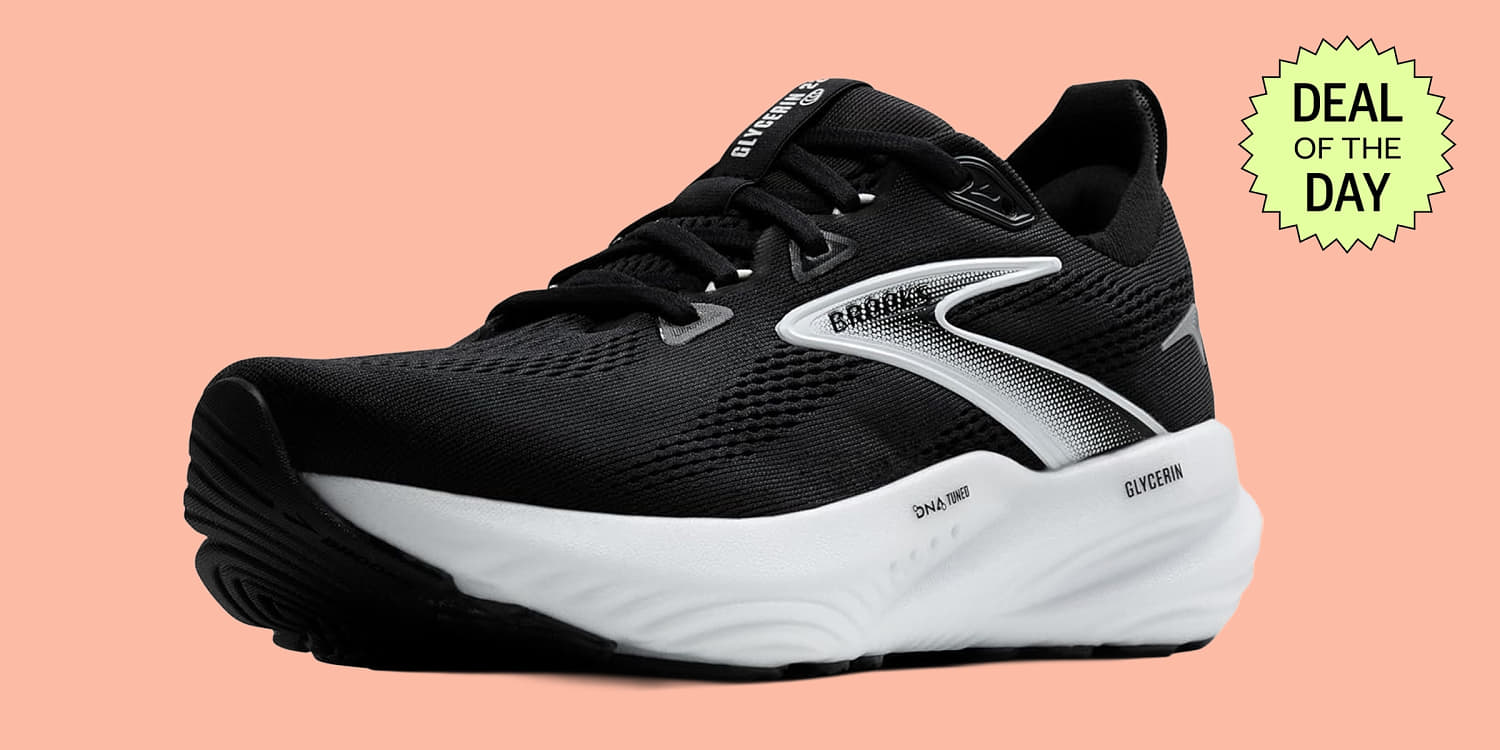
For years, Brooks has been the quiet obsession of people who actually run. They aren't flashy. They don't usually dominate lifestyle mood boards or celebrity streetwear culture. Instead, they sit on the shoe racks of podiatrists and marathon veterans. The magic lies in their proprietary cushioning—a compound engineered to adapt dynamically to your specific weight, stride, and pace. It is smart fluid dynamics disguised as a sneaker.
But quality engineering carries a heavy premium. A premium that keeps a lot of people on the couch.
The Hidden Tax on Self-Improvement
There is a cruel irony in the wellness world. The tools required to prevent injury and sustain a healthy lifestyle are frequently priced as luxury goods. When a high-tier technical running shoe pushes past the hundred-and-fifty-dollar mark, it ceases to be a piece of athletic equipment. It becomes a financial hurdle.
Think about what happens when someone wants to change their life. They buy a cheap pair of sneakers from a department store clearance bin. They head out with pure intentions. Within three weeks, their joints are inflamed, their arches are collapsing, and they decide that running "just isn't for them."
It wasn't a failure of discipline. It was a failure of equipment.
Right now, a major shift is happening across online retail platforms. A massive inventory recalibration has dropped the price of premium Brooks running shoes by a staggering 45 percent. This isn't a minor clearance sale; it is a democratization of high-level biomechanics. The very gear that protects seasoned marathoners from stress fractures is suddenly priced at the level of basic department store footwear.
Anatomy of the Perfect Stride
What are you actually buying when a premium shoe drops to nearly half its price?
It isn't about aesthetic appeal. It is about the geometry of the midsole. Standard shoes use uniform foam that compresses evenly under pressure. Brooks utilizes a decoupled crash pad. Imagine a series of tiny, interconnected shock absorbers running from your heel to your toe. When your foot strikes the ground, the shoe doesn't just squash; it rolls. It guides the foot through its natural gait cycle, preventing the inward rolling known as overpronation, which is the root cause of most runner knee injuries.
The upper mesh is equally deliberate. It isn't just fabric; it is a engineered weave that expands as your foot swells from heat and prolonged impact.
When you strip away the marketing jargon, a great running shoe does something profound: it makes you forget it exists. It removes the friction between your mind and the road.
The Window Closes Fast
Retail dynamics are notoriously unsentimental. When premium athletic gear drops by nearly half its value, it creates a highly predictable surge. Sizes vanish within hours. The common middle-tier sizes—the eights, nines, and tens—are usually the first to disappear from the inventory sheets, leaving behind only the statistical outliers.
The road is still waiting. It will be dark again tomorrow at 5:15 AM. The concrete will still be unyielding, and the negotiation under the duvet will remain just as difficult. But the physical tax of the pavement doesn't have to be absolute.
The door to a painless stride is open, but only until the inventory runs dry.