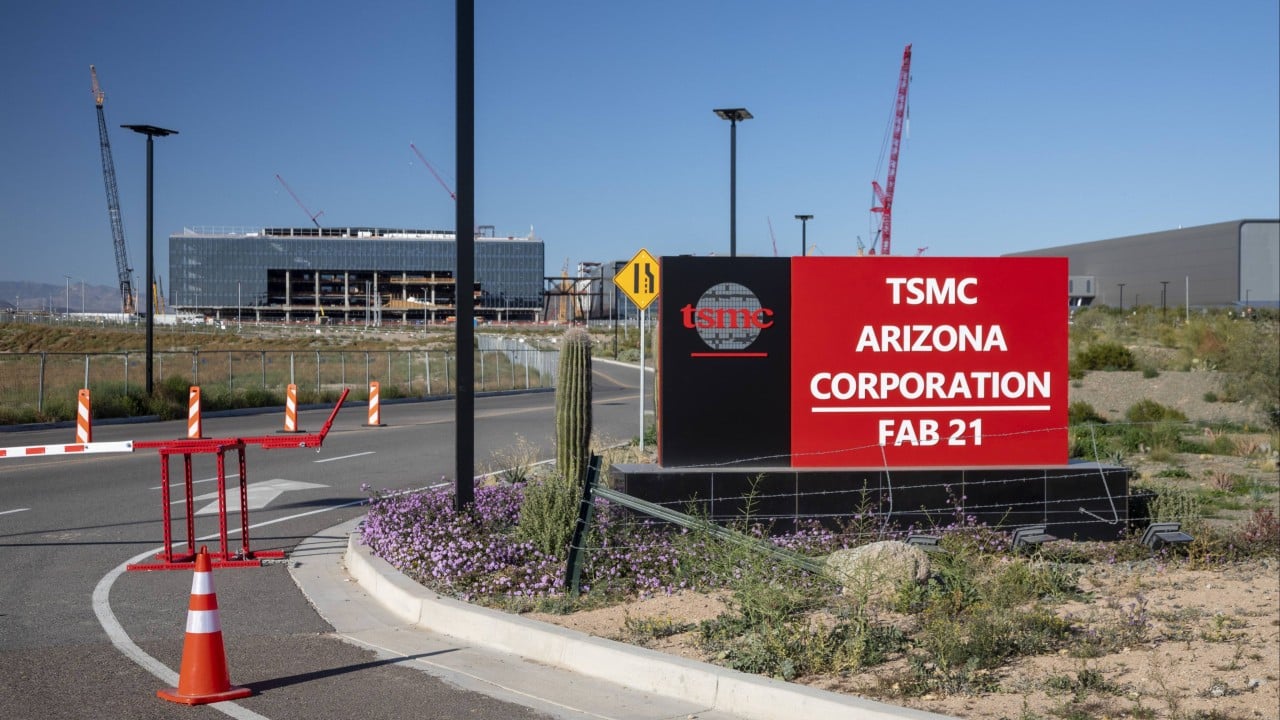
TSMC just committed an additional $100 billion to its sprawling Arizona manufacturing footprint, ballooning its total U.S. investment to a staggering $265 billion. On the surface, this looks like a straightforward response to soaring artificial intelligence demand and a massive victory for American technology independence. It is not. Underneath the optimistic press releases lies a complex web of political coercion, margin dilution, and structural labor friction that threatens the very efficiency that made the Taiwanese giant dominant. TSMC is building a fortress in the desert, but the financial and operational toll of doing so may permanently alter the economics of global computing.
The Geopolitical Tax on Microchips
How did we get here?
In early 2026, Washington and Taipei finalized a landmark trade and investment agreement. That deal, combined with relentless pressure to relocate critical semiconductor supply chains away from the Taiwan Strait, forced TSMC's hand. The company is not expanding in Arizona solely because it makes business sense. It is expanding because it must buy political insurance.
Operating in Taiwan is highly efficient. The supply chain is deeply concentrated, allowing engineers to travel between different facilities in hours via high-speed rail. Employees work grueling hours under a rigorous corporate culture. This environment simply does not exist in the American Southwest.
Moving advanced packaging and 2-nanometer wafer fabrication to Phoenix is an incredibly expensive insurance policy. The U.S. government wants leading-edge manufacturing on its soil to protect against a potential blockade or conflict in the Pacific. TSMC is complying, but it is paying a steep premium to do so.
The Margin Squeeze Nobody Wants to Discuss
The financial reality of this expansion is already biting.
During its latest earnings call, TSMC reported blockbuster profits fueled by AI data centers. However, executives admitted that building and operating these overseas facilities will dilute the company's gross profit margins.
Construction costs in Arizona are several times higher than in Taiwan. Labor is scarce. While the U.S. government offers billions in grants and loans, those subsidies are a drop in the bucket compared to a $265 billion capital outlay. The math does not add up. If it costs more to build the factories and more to employ the workers, the chips themselves will inevitably cost more to produce.
TSMC Arizona Investment Timeline
=========================================
2020: Original Commitment      $12 Billion
2024: First Expansion Phase    $65 Billion
2025: Second Expansion Phase   $165 Billion
2026: Latest Commitment        $265 Billion
Cloud providers and tech giants will have to absorb these higher costs. Nvidia, Apple, and AMD rely almost entirely on TSMC to bring their silicon designs to life. If TSMC's margins shrink, the price of the silicon will rise, and those costs will slide directly down to the enterprises training AI models.
The Talent Trap and Cultural Friction
Building a state-of-the-art semiconductor facility is only half the battle. Running it requires an army of highly specialized engineers who are willing to work overnight shifts and respond to equipment failures at 3:00 AM.
In Taiwan, this work ethic is common. In Arizona, TSMC has faced significant cultural pushback from American workers who balk at the grueling schedule and rigid management style. To bridge the gap, TSMC has had to fly in hundreds of Taiwanese engineers. This is a temporary band-aid, not a sustainable human resources strategy.
Buying 900 acres of land and planning twelve facilities does not magically produce the thousands of specialized PhDs required to operate them. The local educational infrastructure is scrambling to keep up, but training a semiconductor engineer takes years of hands-on experience, not a three-month certificate course.
The Loophole in the Commitment
Look closely at the wording of the announcement.
TSMC Chairman C.C. Wei noted that the exact timeline for constructing these new facilities remains flexible. It depends on market demand.
"The progress or the schedule, most of the time, depends on the market situation and our customers' demand." — C.C. Wei, TSMC Chairman
This is a corporate escape hatch. If the AI infrastructure buildout cools off, or if a global economic downturn dampens demand for premium silicon, TSMC can quietly slow-roll its capital expenditure. The $265 billion figure makes for a fantastic political headline, but it is a multi-decade projection, not an immediate cash transfer.
Why Advanced Packaging Alters the Equation
Historically, building a wafer fab in the U.S. was only a partial solution. Chips still had to be shipped back to Asia for advanced packaging—the delicate process of binding multiple silicon dies together to make high-performance AI processors.
By including advanced packaging plants in the new Arizona blueprint, TSMC is attempting to close this loop on American soil. Yet, setting up these highly automated, incredibly complex packaging lines requires even more specialized equipment and talent. It is an ambitious gamble that multiplies the execution risk of the entire project.
The United States is learning that reshoring an industry as complex as semiconductor manufacturing cannot be solved simply by throwing money at it. If TSMC cannot resolve the underlying labor shortages and cultural differences in Phoenix, these multi-billion-dollar facilities risk becoming monumentally expensive monuments to political theater rather than the engines of the next technological era.