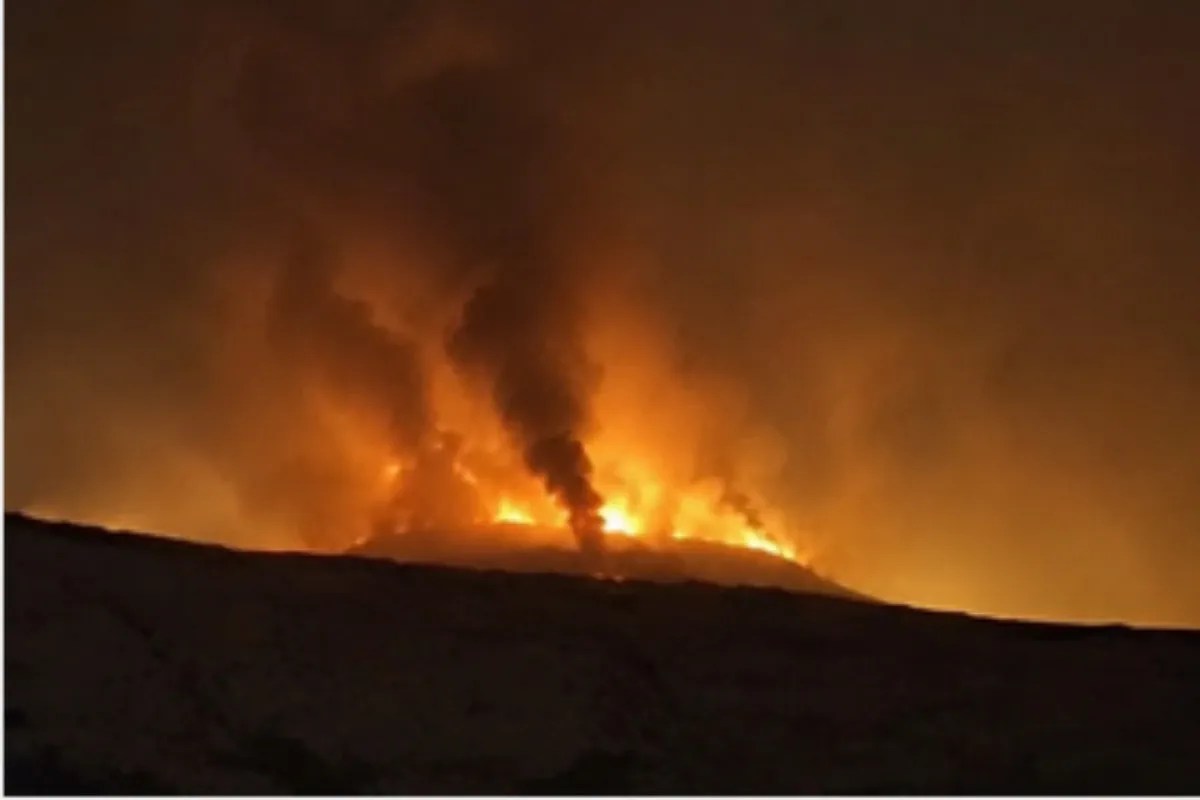
The explosions lighting up the night skies over Iraq, Syria, and Yemen represent the kinetic theater of a failing strategy. Every few weeks, the Pentagon issues a familiar press release detailing precision airstrikes aimed at degrading the military capabilities of Iran-backed militias. The official objective is always the same: to deter future attacks and protect American personnel.
Yet, the attacks keep coming. The drone strikes on remote outposts continue, merchant vessels in the Red Sea still dodge anti-ship ballistic missiles, and the regional influence of Tehran remains stubbornly intact.
The harsh reality of modern asymmetric conflict is that the United States is fighting a high-tech war of attrition against an adversary that has mastered the art of cheap, decentralized warfare. You cannot bomb an assembly line that exists in a hundred separate basement workshops. You cannot deter an adversary whose primary strategic asset is a willingness to absorb damage while inflicting disproportionate financial costs on the West. The current bombing campaign is not a solution. It is an expensive holding action that hides a deeper strategic bankruptcy.
The Broken Mathematics of Modern Interception
Military strategy eventually reduces to basic accounting. In the Red Sea and across the fertile crescent of Iraq and Syria, the financial ledger is overwhelmingly tilted in favor of Iran and its proxies.
Consider the cost equation of a typical aerial engagement. A Houthi rebel group in Yemen launches a one-way attack drone. The drone is constructed using commercial-grade carbon fiber, a lawnmower engine, and a basic GPS guidance chip. The total production cost of this weapon is roughly $15,000.
To intercept this drone before it strikes a commercial vessel or an American destroyer, a US Navy warship fires a Standard Missile-2.
Each SM-2 interceptor costs upwards of $2 million.
Even when the Navy uses cheaper options, such as the rolling airframe missile or close-in weapon systems, the disparity remains absurd. A single night of defending a carrier strike group can easily drain tens of millions of dollars in highly specialized munitions. These interceptors cannot be easily replenished at sea. They require specialized ports, complex logistics chains, and months of manufacturing time back in the United States.
Tehran understands this math perfectly. They do not need to sink an American destroyer to win. They merely need to convince the Pentagon to empty its magazines defending against wooden gliders and cheap fiberglass rockets. By forcing the United States to expend its limited stockpiles of precision-guided munitions on low-value targets, Iran is successfully degrading Western military readiness without ever risking its own conventional forces.
The Fallacy of the Monolithic Supply Chain
Western intelligence agencies often frame the conflict as a simple supply-line problem. The theory goes that if the US Navy can interdict the dhows smuggling Iranian missile components across the Gulf of Oman, or if airstrikes can destroy the depots in western Iraq, the proxy network will starve.
This view is dangerously obsolete.
Decades of economic sanctions have forced Iran to adapt. Instead of shipping fully assembled missiles and drones to its allies, Tehran now exports the technical blueprints, the software, and the specialized machine tools required for local production.
A lathe, a 3D printer, and a shipment of industrial-grade fiberglass are all that is required to build a formidable rocket arsenal. These dual-use items flow easily through legitimate commercial channels.
In the industrial suburbs of Sana'a and Baghdad, local engineers assemble these weapons in makeshift facilities that are virtually invisible to satellite reconnaissance. When an American airstrike destroys a warehouse in eastern Syria, it rarely destroys the capability to build more weapons. It merely destroys a temporary storage facility. Within days, another makeshift workshop miles away is online, assembling the next batch of munitions.
The human capital is already distributed. You cannot bomb the engineering knowledge out of the minds of local technicians who have spent the last decade perfecting the art of building weapons under siege.
The Paradox of Kinetic Deterrence
Washington remains obsessed with the concept of deterrence through dominant force. The prevailing assumption among policymakers is that if the US strikes hard enough, the leadership in Tehran will eventually calculate that the cost of defiance is too high.
This assumption misreads the entire nature of the Iranian regime and its regional allies.
For groups like the Houthis in Yemen or Kata'ib Hezbollah in Iraq, American airstrikes do not deter; they validate. These groups derive their political legitimacy from their active resistance against Western imperialism. An American bomb falling on an empty outpost in the desert is a powerful recruiting tool. It cements their status as the vanguard of the regional resistance, driving fresh recruits and local political support directly to their banners.
Furthermore, the leadership in Tehran is insulated from the direct consequences of these strikes. The casualties of American bombing campaigns are almost exclusively Iraqi, Syrian, or Yemeni fighters.
Tehran is perfectly willing to fight to the last local proxy.
By keeping the conflict localized to these proxy battlegrounds, Iran ensures that the domestic costs of its foreign policy remain negligible. The Iranian public does not see body bags arriving at Tehran's airport. Instead, they see state media broadcasts of burning American bases, presented as proof of the Islamic Republic's growing regional dominance.
The Strategy of Permanent Friction
What is the ultimate goal of Iran's regional network? It is not the total military defeat of the United States in the Middle East. That is a conventional impossibility, and the strategists in Tehran know it.
The goal is to create a state of permanent friction.
By maintaining a constant, low-level threat of violence, Iran increases the political and economic cost of the American presence in the region. They want to make the status quo so uncomfortable, so expensive, and so politically toxic that future American administrations will eventually decide that maintaining bases in Iraq, Syria, and the Persian Gulf is simply not worth the trouble.
It is a strategy of patience.
While American political cycles operate on a two-to-four-year horizon, Iran's strategic planning is measured in decades. They are content to watch the United States deploy expensive carrier groups, scramble advanced fighter jets, and debate regional strategy on cable news, knowing that the structural trends are on their side.
Every Tomahawk missile launched by the United States is a short-term tactical victory that masks a long-term strategic retreat. Until Washington realizes that it cannot bomb its way out of an asymmetric fiscal trap, the explosions in the Middle Eastern night will continue to signify nothing but the slow, expensive erosion of Western influence.