Donald Trump’s decision to escalate military and economic pressure on Iran transformed from a calculated foreign policy maneuver into a severe domestic liability during the midterm elections because it fractured his anti-interventionist base, spiked domestic fuel costs at the worst possible moment on the electoral calendar, and handed opposition strategists a potent narrative about broken promises. What White House advisors initially framed as a short, decisive projection of strength—casually dismissed in private circles as a "little detour"—quickly tangled the administration in a drawn-out geopolitical standoff that alienated the exact swing-state voters who propelled the movement to power.
Politics is rarely derailed by the crisis a president plans for. It is undone by the secondary shockwaves that hit kitchen tables six months later.
When an administration built on the explicit rejection of foreign entanglements suddenly pivots toward brinkmanship in the Persian Gulf, the political math changes overnight. Voters in Michigan, Pennsylvania, and Wisconsin did not cast their ballots for another Middle Eastern quagmire. They voted for cheaper groceries, lower interest rates, and an end to overseas policing. By opening a volatile front with Tehran, the White House inadvertently pulled the rug out from under its own congressional candidates, forcing vulnerable incumbents to defend a foreign policy posture they had spent years campaigning against.
The Anatomy of a Broken Anti-War Brand
To understand why this specific foreign policy pivot inflicted so much damage on the midterm map, you have to look at the coalition mechanics that made Trump’s political rise possible in the first place. For nearly a decade, the core of his appeal rested on a blunt, populist critique of the Washington foreign policy establishment. He mocked the architects of the Iraq War, derided nation-building, and promised that American blood and treasure would no longer be spent policing distant borders.
That message worked. It peeled away working-class voters who felt their communities were bearing the human and financial costs of endless conflicts while coastal elites profited.
When the administration opted for a confrontational posture toward Iran—whether through kinetic strikes, aggressive naval deployments, or sweeping sanctions designed to choke off regional proxies—it triggered an immediate identity crisis inside the conservative movement. The coalition split cleanly down the middle. On one side stood traditional defense hawks who applauded the display of hard power. On the other stood the populist, nationalist wing that viewed any escalation in the Middle East as a betrayal of the "America First" doctrine.
Ideological whiplash is poison during a midterm cycle. Midterm elections are fundamentally turnout battles, and enthusiasm is the currency that wins them. When base voters feel confused or betrayed by the flagship policy of their own party, they do not necessarily switch sides and vote for the opposition. They simply stay home. Precinct-level data from key suburban and rural counties consistently shows that even a three-to-five percent drop in core partisan turnout is enough to flip competitive House seats and sink statewide Senate campaigns.
Campaign managers on the ground felt the chill almost immediately. Door-knockers reported a distinct lack of energy among reliable primary voters who were suddenly spending their time arguing on social media about whether the administration had been captured by neoconservatives. Instead of hammering home a unified message on border security and deregulation, Republican candidates found themselves fielding hostile questions at town halls about troop deployments and the risk of a wider regional war.
How Geopolitics Hit the American Gas Pump
Foreign policy rarely decides American elections on its own, but energy prices almost always do. The fatal flaw in treating Iran as a manageable "detour" lies in basic geography and global commodity markets. You cannot rattle sabers near the Strait of Hormuz without triggering an immediate risk premium in crude oil futures.
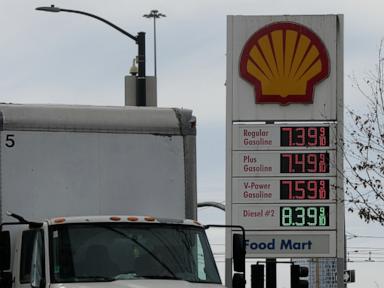
Even without a full blockade of the waterway—through which roughly a fifth of the world’s petroleum liquids pass—traders price in the possibility of disruption. Insurance rates for tankers spike. Shipping routes get rerouted. Refineries hedge against supply shocks. Within weeks, that abstract geopolitical tension translates into a concrete, unavoidable number illuminated in bright LED lights on every street corner in America.
For a hypothetical family living in a Rust Belt suburb, driving forty miles round-trip to work and hauling kids to weekend sports, a fifty-cent jump in the price of regular unleaded is not a macro-economic talking point. It is an immediate, regressive tax that eats directly into their discretionary income.
The timing could not have been worse for the party in power. Midterm campaigns hit their peak intensity between Labor Day and early November, the exact window when household budgets are already strained by back-to-school expenses and looming holiday costs. Every time a voter stood at a pump watching the dollar counter spin faster than the gallon counter, the administration’s economic messaging took a direct hit.
The Inflation Feedback Loop
Higher fuel costs do not stay isolated at the gas station. Diesel powers the freight network that moves every consumer good in the country. When diesel spikes, the cost of shipping produce, building materials, and retail inventory rises in tandem. Businesses pass those transportation surcharges directly to consumers, reigniting inflationary pressures that the administration had claimed were under control.
Opposition strategists recognized this vulnerability instantly. They did not need to lecture voters on the nuances of nuclear proliferation or proxy warfare in the Levant. They simply ran thirty-second television spots showing rising gas prices alongside archival footage of the president promising cheap energy and peace abroad. It was a devastatingly simple visual argument that required zero foreign policy expertise to understand.
The Congressional Messaging Trap
Inside Capitol Hill, the fallout created an impossible rhetorical bind for lawmakers facing tough re-election fights. In a normal political environment, vulnerable incumbents rely on a tightly coordinated messaging discipline dictated by party leadership. They repeat the same talking points on Sunday morning shows, in local newspaper interviews, and in digital fundraising blasts.
The Iran escalation shattered that discipline.
Lawmakers in competitive districts found themselves trapped between two losing options. If they aggressively defended the administration’s hardline stance, they alienated independent voters and anti-war populists who feared the country was sleepwalking into another drawn-out conflict. If they distanced themselves from the White House and criticized the escalation, they risked provoking a furious backlash from the president himself, potentially depressing their own base turnout or inviting primary challenges down the road.
Strategic ambiguity became the default survival mechanism, and voters can smell evasion from a mile away. Candidates began offering word-salad answers when pressed on whether Congress should vote on an Authorization for Use of Military Force. They pivoted awkwardly from questions about Middle Eastern troop levels to talking points about tax cuts. That hesitation projected weakness and confusion, allowing challengers to frame incumbents as rubber stamps for an erratic foreign policy they couldn't even explain.
The Fundraising Drain
Beyond the messaging chaos, the crisis quietly distorted the financial mechanics of the midterm cycle. Major donors have distinct priorities. While defense-aligned contributors welcomed the tough posture toward Tehran, a significant portion of the populist small-dollar donor base grew hesitant.
Small-dollar fundraising relies heavily on emotional momentum and clear, binary grievances. "Build the wall" or "cut taxes" are easy slogans to monetize via text-message blasts. Trying to raise money off a nuanced, escalating standoff in the Persian Gulf proved far harder. Meanwhile, opposition groups capitalized on the anxiety, shattering quarterly fundraising records by warning their supporters that the country was on the brink of an unauthorized war. That financial disparity allowed challengers to dominate the airwaves during the final, decisive weeks of the campaign, drowning out incumbent defenses in media markets across the Midwest and Sun Belt.
Why "Limited" Interventions Never Stay Limited
History offers a grim warning to any president who believes a military or economic confrontation in the Middle East can be neatly compartmentalized. Washington has a long, unbroken track record of underestimating the asymmetric responses of regional actors.
When a superpower applies maximum pressure, the targeted regime rarely capitulates on the timeline dictated by the American political calendar. Instead, it looks for low-cost, high-visibility ways to impose pain and shift the political calculus back onto Washington. That can mean activating allied militias to harass American bases, disrupting commercial shipping lanes, launching cyberattacks against critical infrastructure, or dragging out diplomatic backchannels to prolong the uncertainty.
Each of these countermeasures forces the White House into a reactive posture. Instead of moving on to domestic priorities—passing infrastructure bills, confirming judges, or touting job growth—the president’s daily schedule becomes consumed by National Security Council briefings. Every minor skirmish overseas dominates the cable news cycle for forty-eight hours, crowding out the carefully staged domestic photo-ops designed to boost local candidates.
Attention is the scarcest resource in politics. A president only gets so many news cycles to define the stakes of a midterm election. When those cycles are hijacked by retaliatory strikes, hostage negotiations, or emergency diplomatic summits, the domestic agenda effectively ceases to exist in the public mind. Voters form their impressions based on what dominates their screens, and what dominated their screens was chaos abroad rather than stability at home.
The Suburban Swing Voter Calculation
To appreciate the full scope of the electoral damage, you have to look closely at the demographics of the modern battleground district. Over the past decade, control of the House of Representatives has increasingly hinged on educated, moderately affluent suburban communities outside major metropolitan areas—places like Oakland County in Michigan, Bucks County in Pennsylvania, and the collar counties around Atlanta and Phoenix.
These voters are notoriously pragmatic and deeply averse to volatility. Many of them backed conservative economic policies despite harboring reservations about populist rhetoric, making a calculated bet that deregulation and tax reform would outweigh any stylistic turbulence from the Oval Office.
The Iran confrontation broke that unspoken bargain.
For suburban moderates, stability is the ultimate metric of competence. They want predictable markets, steady interest rates, and a government that manages crises quietly behind closed doors. The spectacle of sudden military escalations, sharp spikes in energy volatility, and public feuds between the White House and allied nations triggered deep anxiety among these swing voters. It reinforced every lingering doubt they had about impulsive decision-making at the highest level.
Polling in these suburban corridors revealed a sharp decline in the administration's approval ratings on "handling foreign affairs" and "keeping the country safe"—metrics that had previously been relative strengths. Once suburban voters lose confidence in the steady hand of the leadership, they tend to use midterm elections as a corrective mechanism, voting for the opposition party specifically to impose checks and balances on executive power.
The Myth of the Rally-Around-the-Flag Effect
A persistent delusion among Washington insiders is the belief that foreign crises automatically boost a president’s domestic standing. This assumption—known as the rally-around-the-flag effect—is rooted in historical anomalies like the immediate aftermath of the 9/11 attacks or the initial phase of the 1991 Gulf War.
In the modern, hyper-polarized media environment, that effect is largely dead.
For a rally effect to occur, two conditions must be met: the threat to the homeland must be universally perceived as direct and existential, and the political opposition must largely unite behind the commander-in-chief. Neither condition existed in the standoff with Iran. The threat felt abstract to the average voter in Ohio or Arizona, and the political opposition immediately attacked the administration’s handling of the crisis as reckless and unnecessary.
Instead of uniting the country, the confrontation hardened partisan lines while simultaneously alienating the administration's own non-interventionist flank. It was the worst of both worlds: all the political risk of a foreign conflict with none of the domestic solidarity that historically accompanied it.
The Long-Term Strategic Hangover
The consequences of miscalculating this geopolitical detour extend well beyond a single set of November ballot boxes. Losing congressional seats alters the balance of power in Washington for the remainder of a presidential term, transforming a governing majority into a defensive crouch.
With opposition lawmakers controlling key committee gavels, the administration immediately faces a barrage of subpoenas, oversight hearings into the intelligence used to justify the escalation, and legislative roadblocks designed to restrict executive war powers. The domestic legislative agenda grinds to a halt, replaced by endless institutional trench warfare.
More fundamentally, the episode exposed a deep, unresolved contradiction at the heart of modern populist conservatism. You cannot simultaneously promise a retreat from global policing and pursue aggressive, unilateral regime pressure in the world's most volatile energy corridor. Eventually, those two impulses collide, and when they do, the political fallout lands squarely on the candidates closest to the voters.
By treating a complex, high-stakes confrontation with Tehran as a manageable side quest on the road to the midterms, the White House ignored the oldest rule in political warfare: you never get to choose which consequences of a crisis the voters decide to remember when they step behind the curtain.