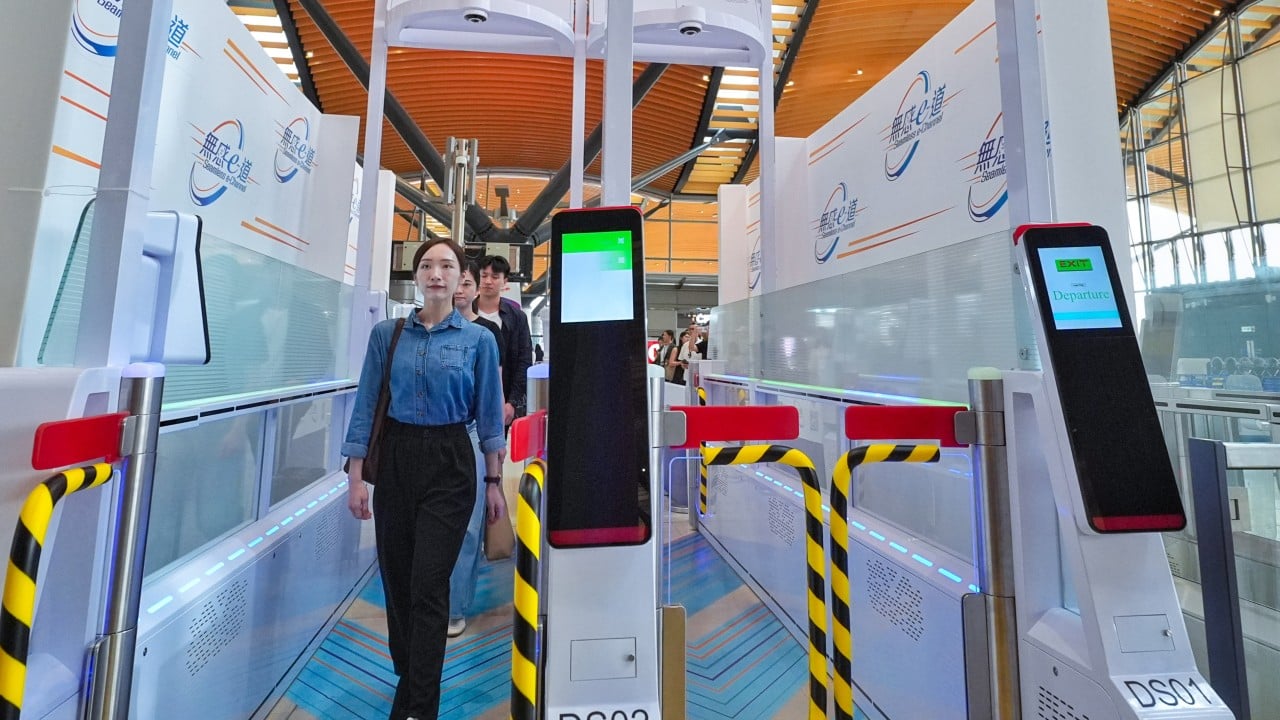
Hong Kong is quietly moving toward a completely open border infrastructure, launching an automated system designed to scan travelers while they walk. On June 25, the Immigration Department will debut its new automated passenger clearance system at the Hong Kong-Zhuhai-Macao Bridge, promising to cut transit times down to five seconds per person. The system requires no physical identity cards, no QR codes, and no fingerprint scans. By utilizing multiple integrated cameras and image analysis, it verifies identities on the move, allowing passengers to step through a constantly open gate.
But the celebratory headlines overlook a stark reality. This technology is launching as a highly restrictive pilot program, restricted to just 50,000 eligible users out of the hundreds of thousands who cross daily. While the government promotes the system as an efficiency triumph, the initial rollout highlights a massive structural bottleneck: the rigid eligibility rules mean the vast majority of cross-border commuters will remain stuck in traditional, slow-moving queues. To truly modernize the busiest border zone in East Asia, the city must move past hyper-exclusive pilot phases and address the deep-seated data synchronization issues that prevent mass deployment.
The Five Second Illusion
The mechanics of the new immigration lanes are a significant departure from standard biometric checkpoints. In a traditional automated gate, a traveler stops, inserts an identification card or scans a mobile barcode, waits for a glass barrier to open, steps forward, and places a thumb on a glass panel. This process takes roughly eight to ten seconds when functioning perfectly, and significantly longer if environmental factors or smudged glass interfere with the reading.
The new system attempts to eliminate these physical touchpoints entirely.
- Multi-angle optical capture: Each lane features five distinct cameras positioned at varying heights and angles. This setup captures facial data dynamically, regardless of a passenger's height or slight head movements, mapping the data against the existing government immigration database.
- Constant motion processing: Passengers are instructed to maintain a normal walking pace and remain roughly an arm's length apart from the person ahead of them.
- Default open physical barriers: Unlike traditional turnstiles that stay locked until verification is successful, these gates remain wide open. They only snap shut if the sensors detect an unregistered individual, an abrupt change in walking speed, or an attempt to tailgate another passenger.
During preliminary trials, officials recorded a verification accuracy rate exceeding 99 percent. Saving three seconds per traveler sounds minor on paper. In a transport hub processing tens of millions of individuals annually, a three-second reduction per person fundamentally alters the compounding math of peak-hour congestion.
Yet, the engineering success hides an administrative bottleneck. The system is only available to Hong Kong permanent residents aged 11 or older who have crossed through the Hong Kong-Zhuhai-Macao Bridge checkpoint at least 10 times within the past 90 days. This ultra-specific frequency requirement instantly disqualifies casual tourists, business travelers, and families who travel over weekends, capping the initial user base at a modest 50,000 people.
The High Cost of Open Gates
Building an infrastructure where barriers remain open by default requires a massive upfront financial investment. The initial setup for just two experimental lanes cost the city six million Hong Kong dollars. This high price tag stems from the sheer processing power needed to execute real-time facial recognition on moving targets without causing system lag.
When a passenger walks into the lane, the system cannot wait for a slow server response. The algorithm must capture the facial features, cross-reference them with a localized biometric database, verify identity, and signal the physical gate to remain open, all within milliseconds. If the system experiences even a moment of latency, the default-open gate will slam shut on an innocent commuter, causing physical injury and immediate infrastructure gridlock.
Beyond the hardware costs, the operational rules place a heavy burden on human behavior. Travelers are explicitly warned that they cannot wear sunglasses, wide-brimmed hats, or face masks. Anyone walking too fast, carrying bulky luggage that alters their physical profile, or failing to maintain an arm's length distance will trigger a security anomaly. When these alerts happen, the gate closes, requiring immediate intervention from on-site immigration officers.
If a system designed for speed requires constant manual resets due to everyday passenger habits, the promised efficiency gains quickly disappear.
Why Biometric Borders Keep Failing the Mass Scale Test
The structural limitation of Hong Kong's new border push is not a flaw in the camera algorithms. It is a symptom of a deeper, systemic challenge plaguing smart border projects worldwide: the difficulty of scaling complex biometric data across diverse populations.
The Registration Bottleneck
For the system to work, a user must first download a specific mobile application, connect it to the city's centralized digital identity platform, and upload a verified selfie. This multi-step digital enrollment works well for tech-savvy professionals, but it acts as a barrier for elderly travelers and minors. By forcing users to navigate a complex app ecosystem before they even arrive at the port, the government limits adoption.
The Siloed Database Problem
Right now, the system operates on a localized loop. It matches the traveler's face against a highly curated subset of pre-registered Hong Kong residents. The real challenge of border control in the Greater Bay Area lies in the integration of data across three distinct legal and political jurisdictions: Hong Kong, Macao, and mainland China. Because these three regions maintain entirely separate data privacy laws and independent IT networks, creating a truly unified, cross-border walk-through lane remains impossible under current regulations.
The Peak Flow Threshold
During national holidays, border checkpoints face massive crowds that move in dense packing formations. The requirement to maintain an arm's length distance between travelers works beautifully in a controlled testing environment. In the middle of a chaotic Sunday evening rush, maintaining a perfect physical cushion is entirely unrealistic. If the open gates are forced to shut down or revert to manual mode during peak traffic hours, they fail exactly when they are needed most.
Bridging the Efficiency Gap
To transform this expensive six-million-dollar pilot project into a meaningful infrastructure upgrade, the Immigration Department must alter its deployment strategy.
First, the strict 10-crossings-in-90-days requirement must be discarded. Frequency of travel has no bearing on whether a facial recognition algorithm can identify a person. If a permanent resident has a verified smart identity card and a registered digital profile, they should be allowed to use the lane immediately. Expanding the pool of eligible users is the only way to alleviate pressure on the standard immigration lanes.
Second, the physical design of the lanes must evolve to handle natural human behavior. Rather than relying on a single straight path where passengers must self-regulate their distance, future designs should utilize curved guide rails or subtle floor markings. Visual cues can naturally pace walking speeds and maintain safe distances without requiring explicit instructions or security intervention.
Ultimately, the goal of border automation should not be the creation of an exclusive fast lane for a tiny fraction of frequent commuters. True modernization means designing systems robust enough to handle the chaotic reality of mass public transit. Until the city opens these lanes to the broader public and addresses the underlying cross-border data silos, five-second clearance will remain an expensive novelty rather than a structural solution.