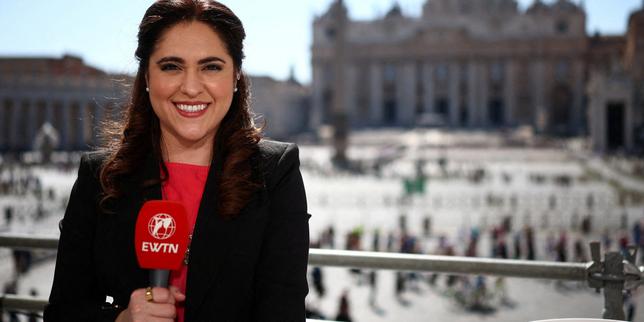
Pope Leo XIV has shattered centuries of Roman Curia tradition by appointing a laywoman to lead the Dicastery for Communication, a powerful department governing the Holy See’s global media apparatus. This move marks the first time a non-cleric and a woman will command an executive branch of this size within the Vatican. While initial headlines treat this purely as a victory for gender equality, the reality is far more pragmatic. The Vatican is facing a catastrophic trust deficit and an archaic media infrastructure. This appointment is an aggressive corporate restructuring masquerading as progressive reform.
For decades, the Holy See has managed its messaging through a messy patchwork of independent fiefdoms. Vatican Radio, the L'Osservatore Romano newspaper, and the Press Office frequently operated out of sync, leading to public relations disasters. By placing a seasoned media executive with zero clerical ties at the helm, the Pope is signaling that professional competence now supersedes theological credentials in the war for global public opinion.
Breaking the Lavender Ceiling in the Roman Curia
To understand the weight of this decision, one must look at the historical layout of Vatican governance. For over a millennium, administrative power in the Catholic Church was tied strictly to Holy Orders. Bishops and cardinals ran the departments. Laypeople, when hired, were relegated to translation work, archival maintenance, or technical support.
This structure created a dangerous echo chamber. Clerics trained in canon law and theology were suddenly expected to manage multi-million-dollar broadcast budgets and navigate a hostile 24-hour news cycle. The results were often disastrous. Press releases were written in dense, ecclesiastical Latinate prose that secular journalists either misunderstood or ignored entirely.
By appointing a laywoman, Leo XIV bypasses the traditional clerical network. This isn't just about representation. It is about accountability. A lay prefect cannot rely on the protective shield of clerical privilege. She can be hired, evaluated, and, if necessary, fired based purely on performance metrics. This introduces a corporate logic to a bureaucracy that has historically measured time in centuries rather than fiscal quarters.
The Financial Bleeding of a Broken Media Engine
The Vatican is not just fighting an ideological battle; it is fighting a financial one. The Dicastery for Communication consumes a massive chunk of the Holy See’s annual operating budget. Despite this heavy investment, the returns have been dwindling.
- Redundant Operations: Separate editorial teams historically covered the same papal events for print, radio, and digital, tripling production costs.
- Declining Revenues: Traditional print subscriptions for official Vatican publications have cratered globally.
- Unmonetized Digital Footprint: While the Pope boasts millions of followers across various social platforms, the Holy See has struggled to convert digital attention into sustainable financial support or effective institutional influence.
The new prefect faces the immediate, brutal task of streamlining this operation. Centralizing these disparate media arms means cutting redundancies, retraining lifers, and shifting resources toward targeted digital campaigns. It will inevitably cause friction with entrenched interests inside the Vatican walls who view their independent media operations as personal fiefdoms.
The Strategy Behind Selective Openness
A major challenge for the incoming administration will be balancing the Church’s ancient dogma with the demands of modern transparency. The Vatican Press Office has long operated on a philosophy of controlled containment. When a crisis breaks, the instinct has been to hunker down, issue a minimal statement, and wait for the news cycle to move on.
That strategy is dead. In an ecosystem driven by algorithmic speed, silence is interpreted as guilt. The new media chief will likely push for a proactive communication model. This involves anticipating controversies, briefing journalists before rumors harden into headlines, and using data analytics to track how papal messages are received in different regions.
However, this corporate approach faces an existential hurdle. A secular corporation can pivot its messaging or change its product line to suit market trends. The Catholic Church cannot rewrite its doctrine to win a news cycle. The new prefect must figure out how to present an uncompromising, ancient message using highly sophisticated, modern psychological tools.
Discontent in the Ranks
Not everyone in Rome is cheering this appointment. A quiet but fierce resistance is brewing among traditionalist factions within the Curia. To these critics, placing a layperson—and a woman—in charge of an executive department undermines the theological nature of Church governance. They argue that communication of the Catholic faith is an extension of the teaching authority of the episcopate, not a corporate marketing campaign.
There are also practical concerns about internal authority. In the strict hierarchy of the Vatican, rank is everything. A lay prefect, regardless of her title, does not hold the sacramental authority of a cardinal. When she sits across the table from the heads of the Secretariat of State or the Dicastery for the Doctrine of the Faith, she will be operating at a structural disadvantage. Whether she can command the respect of old-guard prelates remains an open question.
The success of this experiment depends entirely on the explicit, unwavering backing of Pope Leo XIV. If the Pope wavers or shifts his focus to other theological battles, the curial bureaucracy will swallow this appointment whole, rendering the new prefect a figurehead while the real decisions revert to the shadows.
The Blueprint for Global Religious Messaging
What happens next in Rome will serve as a case study for religious institutions worldwide. From Islam to evangelical Protestantism, ancient faiths are wrestling with how to maintain authority in an age of hyper-individualism and fragmented media.
The Vatican's gamble is that professional management can salvage institutional credibility. If this restructuring succeeds, it will likely trigger a wave of lay appointments across other non-theological Vatican departments, such as finance, human resources, and cultural heritage. The wall between the sanctuary and the administrative office is cracking.
The incoming prefect is not entering a boardroom; she is entering a minefield. Her first hundred days will be defined not by sweeping theological statements, but by the quiet, brutal work of line-item vetoes, staff reassignments, and the enforcement of professional standards on an institution that has resisted them for a thousand years.