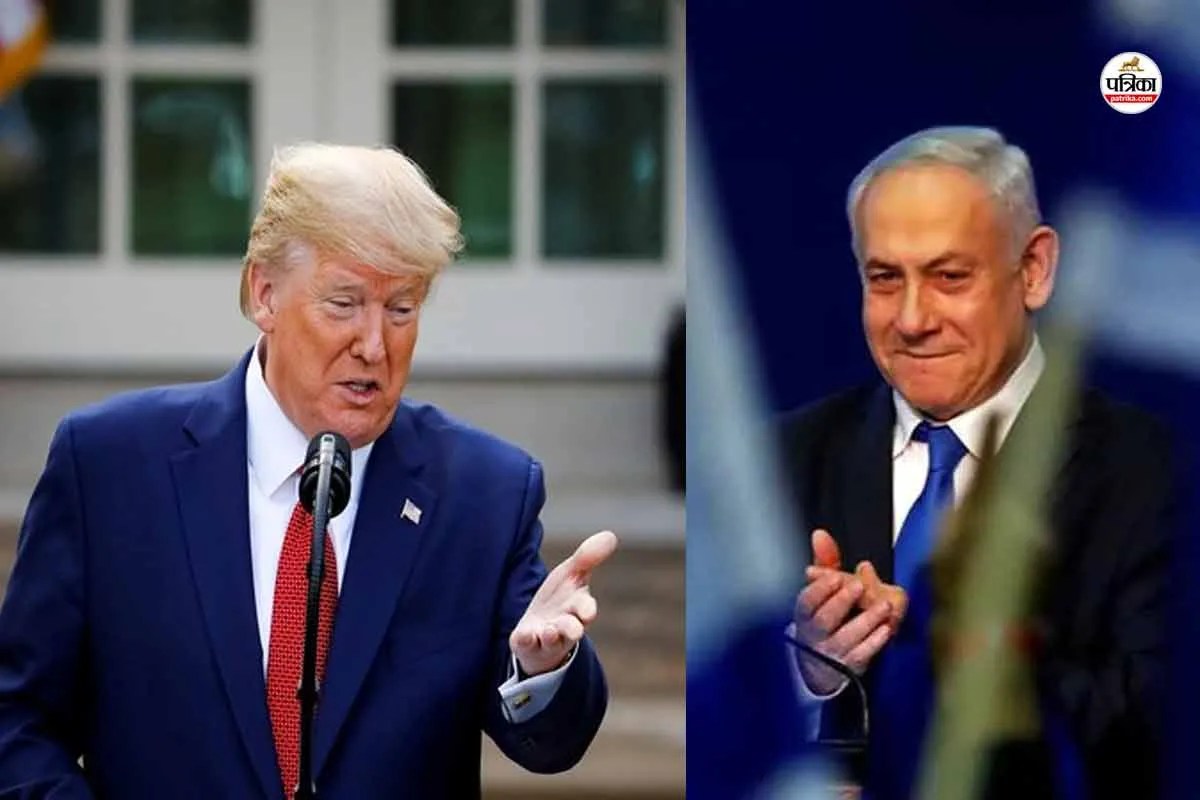
U.S. President Donald Trump announced in early November 2026 that Washington will stop providing roughly $4 billion in annual military aid to Israel after the end of 2026, shifting the relationship toward direct weapons sales instead. The move triggered immediate political shockwaves in Jerusalem, where opposition leaders accused Prime Minister Benjamin Netanyahu of folding under pressure and leaving Israel exposed at a moment of steep defense costs and depleted stockpiles.
On paper, this looks like a sudden rupture between two long-aligned capitals. In practice, it is messier, more calculated, and far less settled than either Trump’s television interviews or Israeli opposition attacks suggest. Meanwhile, you can read related events here: अमेरिका में इतिहास रचने वाली कीशा लांस बॉटम्स कौन हैं और जॉर्जिया चुनाव के असली मायने क्या हैं.
Washington Politics Met a Shifting Strategic Ledger
Anyone who has watched defense budgets in Washington for three decades knows that aid packages rarely move in a vacuum. When Trump went on television to say the United States would halt roughly $4 billion in annual assistance—citing the existing multi-billion-dollar framework that runs into 2028—he framed the decision around cost and domestic politics. He argued that Israel no longer needs the money and complained that critics on the left use the payment as a convenient political target during election season.
Domestic American politics mattered, no question. Skepticism over foreign grants has grown on both sides of the aisle, though for very different reasons. Progressive critics have pushed back hard against unconditional military transfers tied to regional conflicts, while fiscal conservatives have questioned sending billions abroad when domestic spending and emergency war requests already strain federal budgets. To understand the bigger picture, we recommend the recent analysis by TIME.
Yet stopping grant aid does not mean stopping weapons. Trump explicitly said Washington will continue selling arms to Israel and step in if circumstances demand it. Defense analysts have pointed out an uncomfortable catch behind that distinction. Direct aid comes with statutory tracking, congressional oversight, and predictable multi-year planning. Ad-hoc sales, emergency authorizations, and special wartime funding can move money at massive scale with less routine scrutiny. A headline about cutting $4 billion sounds like retrenchment, but the actual flow of hardware and funds could look very different once the accounting is done.
Why Jerusalem Blowback Hit So Hard
In Israel, the reaction was swift and sharp. Opposition figures framed the announcement as a major diplomatic setback for Netanyahu. Democrats leader Yair Golan warned that ending American assistance would shift heavier financial weight onto Israeli taxpayers while defense spending sits at extraordinary highs, offensive munitions need replenishment, and air-defense interceptors have been heavily drawn down after prolonged fighting.
Even former security officials and Israeli ministries voiced surprise at the pace and abruptness of the rollout. Retired Major General Giora Eiland, a former head of Israel’s National Security Council, called the announcement an unexpected blow with real potential damage. When defense planners and finance officials learn of a major shift through media reports rather than quiet, coordinated channels, anxiety spreads fast.
Opposition leaders seized on the optics immediately. Accusing a sitting prime minister of surrendering a hard-won security pillar is standard political warfare in Jerusalem, especially amid coalition maneuvering and post-election strain. Still, the criticism taps into a real vulnerability. Replenishing interceptor stocks, maintaining readiness across multiple fronts, and funding long-term procurement are expensive propositions.
The Hidden Agreement Narrative and Its Flaws
Trump claimed that he and Netanyahu had discussed ending the aid for a couple of years and had already agreed on the step. That claim adds a twist that complicates the opposition’s "capitulation" story.
Netanyahu has periodically spoken about moving Israel away from aid dependency over time toward a more reciprocal partnership. For years, hawks and economic liberals alike in Israel have debated whether free grant money—much of which had to be spent inside the United States—came with strings, political baggage, or distortions to domestic defense industry planning.
Here is where the two versions diverge sharply. Gradual weaning over a decade or a multi-year transition is one thing. Cutting off roughly $4 billion at the end of 2026—ahead of the 2028 expiration of the 2016 memorandum of understanding—is another. Legal and budgetary experts have noted that unwinding existing multi-year commitments and congressional appropriations on a compressed timeline is far trickier than announcing a cutoff on television.
To make that concrete, consider a hypothetical example. Suppose a defense ministry budgets three years of interceptor purchases assuming a predictable annual grant stream, then suddenly faces a budget gap right as suppliers demand cash upfront. Even if the ally can buy weapons commercially, higher borrowing costs, cash-flow timing, and delivery queue priorities can squeeze the budget in ways a press release never mentions.
What Changes on the Ground and What Does Not
For readers trying to separate noise from substance, three practical questions matter most over the coming months:
- Delivery timelines: Buying weapons is one thing; getting them delivered ahead of rival buyers is another. Arms queues depend on production capacity, export approvals, and prioritization decisions in Washington.
- Fiscal trade-offs: Replacing grant support with direct purchases or domestic spending forces tough choices inside Israel’s budget between military readiness, debt service, and civilian programs.
- Political leverage: A move framed as "weaning" an ally off aid also shifts political leverage in both capitals, giving Washington room to treat future support as transactional while giving Israeli rivals ammunition to question Netanyahu’s stewardship.
At the same time, it is a mistake to treat the end of grant aid as the end of U.S.–Israeli military ties. Shared intelligence, joint systems, combat integration, and arms sales run deep. A shift from grants to purchases changes the bill and the politics around it, not the underlying reality that both governments still rely on each other in a volatile region.
Politics in Jerusalem and Washington thrives on dramatic slogans like total surrender or total break, yet real security policy is always written in budgets, contracts, and delivery schedules.
Trump's Israel Aid Decision Sparks Political Showdown
This video is relevant because it covers the political fallout and opposition pushback in Israel following Trump's announcement to end annual U.S. military aid.