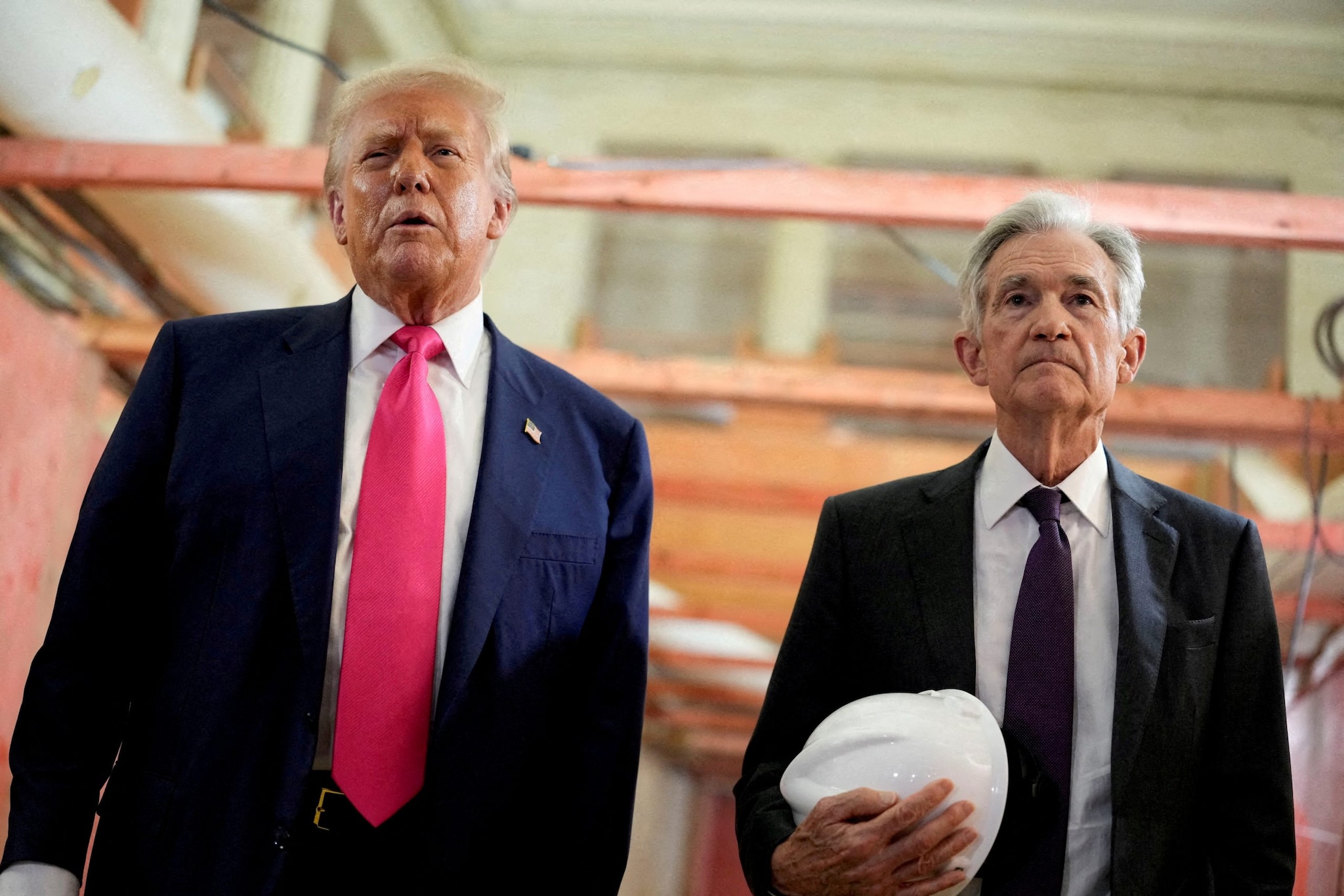
Donald Trump is back at it, and this time he’s not just complaining about interest rates. He’s explicitly threatening to fire Federal Reserve Chair Jerome Powell if the man doesn't pack his bags and leave the central bank by next month. Honestly, it’s a mess. We’ve seen this movie before, but the 2026 version has a weird twist involving a $2.5 billion building renovation and a Department of Justice probe that looks a lot like a political squeeze play.
You’re probably wondering why this matters right now. Powell’s term as Chair ends on May 15, 2026. Usually, that’s when a Fed chief quietly returns to a cushy teaching job or a hedge fund. Not Powell. He’s vowed to stay on the Fed’s governing board until his separate term as a governor expires in 2028. Trump isn't having it. "Well then I'll have to fire him, OK?" Trump told Fox Business on Wednesday. It’s a direct challenge to the independence of the most powerful financial institution on the planet.
The Renovation Drama and the DOJ Pretext
Trump isn't just citing high interest rates anymore. The new weapon is a $2.5 billion renovation project at the Fed’s headquarters. The White House is leaning on a DOJ investigation into how that money was spent to justify ousting Powell. Powell, for his part, isn't budging. He’s called the investigation a "pretext" to force him out because he won't cut rates on command.
Think about that for a second. We’re talking about a criminal probe where a federal prosecutor already admitted they found no evidence of a crime. Yet, the threat remains. It’s a classic power struggle. Trump wants his hand-picked successor, Kevin Warsh, in the seat immediately to kickstart the economy with lower rates.
The Battle for Control
- Trump's Pick: Kevin Warsh is already waiting in the wings, but his nomination is stuck in the Senate Banking Committee.
- The Holdout: Senator Thom Tillis is blocking the nomination, calling the investigation into Powell "political retribution".
- The Loophole: Trump might try to bypass the Senate by appointing an "acting" chair, like economist Stephen Miran, using decades-old legal theories that haven't been tested in court.
Can the President Actually Fire the Fed Chair
This is where it gets legally sticky. Historically, the President can only fire a Fed governor "for cause"—basically, if they do something illegal or incredibly negligent. Trump claims the renovation "mismanagement" is that cause. But the Supreme Court is currently chewing on cases that could change the rules entirely.
In August 2025, Trump already tried to fire Fed Governor Lisa Cook over fraud allegations that never led to charges. If the courts side with the White House, the "independence" of the Fed becomes a myth. Every future president could just fire the person in charge if they don't like the current interest rate. That’s a scary thought for the markets.
Why Investors Aren't Panicking Yet
You’d think the stock market would be tanking on this news. It’s not. Prediction markets like Kalshi show that traders only give a 14% chance that Trump actually successfully removes Powell before May 15.
Most pros think this is just noise. They’ve seen Trump’s "fire and fury" before. They know the legal hurdles are massive and that Powell is a fighter. Plus, the S&P 500 actually jumped 1% recently because Trump hinted at talks with Iran, which mattered more to traders than a domestic spat over office renovations.
What Happens if Powell Stays
If Powell sticks to his guns and stays on the board after May 15, things get awkward. He’d no longer be the Chair, but he’d still have a vote on interest rates. Imagine your old boss staying in the office next door, constantly voting against your new plans. That’s the environment Trump is trying to avoid.
Powell's term as a board member doesn't expire until January 2028. By staying, he acts as a firewall for the Fed's traditional role. He’s basically telling the White House that the central bank doesn't take orders from the Oval Office.
Your Next Steps
- Watch the Senate Banking Committee: If Tillis flips and Warsh gets a vote, Powell’s leverage drops significantly.
- Follow the Supreme Court: Any ruling on "presidential removal power" this spring will be the real signal for whether the Fed’s independence is dead or alive.
- Don't overreact with your portfolio: The markets have priced in a lot of this political theater. Watch the actual rate decisions, not the tweets.
The fight isn't just about Powell's job. It’s about who controls the value of your dollar. If the Fed becomes just another arm of the White House, the "data-dependent" era is over, and the era of "political-dependent" money begins. Keep your eye on May 15—that’s the real deadline.