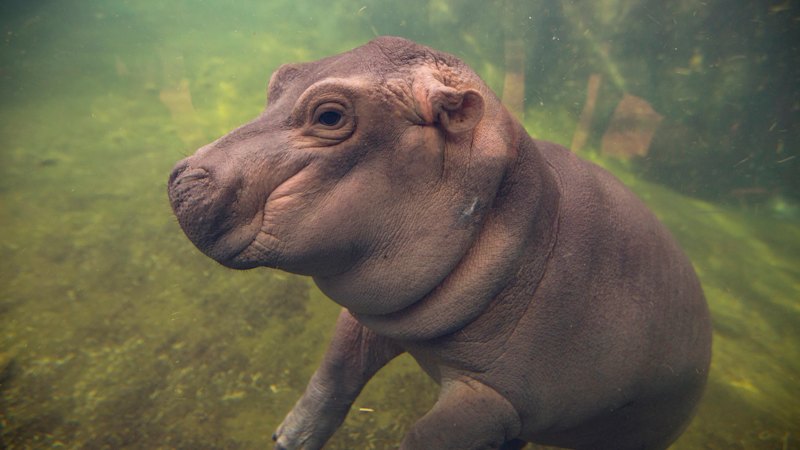
When a beloved zoo animal dies after swallowing a visitor's dropped hat, the public reaction follows a predictable script of grief, outrage, and calls for a ban on the careless guest. Yet treating these fatalities as isolated freak accidents ignores a systemic design flaw built into the core business model of modern zoological parks. Zoos maximize emotional engagement by removing visual barriers between the public and the exhibits, inadvertently creating a direct pipeline for fatal foreign body ingestion.
The death of Fiona, a hippopotamus whose passing after ingesting a visitor's hat sparked widespread mourning, is not an anomaly in wildlife management. Across North America and Europe, veterinary necropsy reports routinely list plastic bags, sunglasses, coins, pacifiers, and articles of clothing as primary causes of death for captive megafauna, aquatic mammals, and primates. Every time a smartphone slips out of a back pocket or a wind gust carries a baseball cap over a viewing rail, a multi-ton animal or a delicate primate is exposed to an acute medical emergency that veterinary science is rarely equipped to resolve. If you liked this article, you might want to look at: this related article.
To understand why a single piece of fabric or plastic can bring down an animal weighing several thousand pounds, you have to look at the evolutionary biology of captivity versus the mechanics of modern exhibit design.
The Anatomy of a Fatal Mistake
Wild animals do not possess an innate instinct to reject synthetic polymers or woven textiles because those materials do not exist in their evolutionary history. A hippopotamus, a sea lion, or a giraffe explores its environment orally. In the wild, an object floating on the surface of a river or resting on the savanna floor is either vegetation, wood, bone, or stone. Their digestive tracts evolved over millions of years to process tough, fibrous plant matter or crush bone, not to break down polyester blends, rubber soles, or lithium batteries. For another look on this development, check out the latest coverage from Al Jazeera.
When a hippopotamus swallows a hat, the problem is rarely immediate choking. The danger lies in the complex geometry of the gastrointestinal tract. Hippos possess a multi-chambered stomach—specifically a three-chambered foregut designed to ferment massive quantities of grass slowly. Unlike ruminants such as cows, they do not chew cud, meaning large, unchewed items pass directly into chambers where microbial fermentation occurs.
A synthetic hat does not ferment. Instead, it absorbs digestive fluids, swells, and acts as a biological plug. Once that object lodges at the pyloric sphincter or twists within the intestinal loops, peristalsis—the wave-like muscle contractions that move food through the gut—turns destructive. The intestines continue to contract violently against an immovable object, cutting off blood supply to the tissue. Necrosis sets in within hours. By the time a keeper notices that an animal is lethargic or refusing food, the internal damage is often irreversible.
The Veterinary Nightmare of Megafauna Surgery
In domestic veterinary medicine, removing a swallowed sock from a Labrador Retriever is a routine, forty-five-minute procedure. Performing the same operation on a three-thousand-pound hippopotamus or a walrus is a logistical and physiological nightmare that carries an extraordinarily high mortality rate.
First, there is the problem of anesthesia. Large aquatic and semi-aquatic mammals possess a dive reflex that slows their heart rate and restricts blood flow to peripheral tissues when they are sedated. Getting the dosage right requires precise weight estimates, and even a slight miscalculation can trigger fatal respiratory arrest. Furthermore, the sheer mass of the animal crushes its own lungs and major blood vessels when it lies immobile on a concrete floor for hours.
Second, standard surgical instruments are useless. A human or canine endoscope cannot reach the stomach of a hippo or an elephant. Even if a surgical team manages to open the abdominal cavity—cutting through skin up to two inches thick—the internal organs are so heavy and pressurized that safely manipulating the intestines without causing fatal tears is nearly impossible. Post-operative recovery is equally bleak, as keeping a massive surgical incision sterile in an animal that naturally wallows in mud and water defies basic hospital hygiene.
The Invisible Barrier Illusion
If the biological stakes are this high, why are visitors still able to drop objects directly into animal enclosures? The answer lies in a major philosophical shift in zoo architecture that began in the late twentieth century.
Decades ago, zoos were built like prisons. Animals were kept behind thick iron bars, heavy chain-link fences, and tall concrete walls. Those barriers were ugly, depressing for the public, and psychologically damaging to the animals, but they were remarkably effective at keeping foreign objects out. It is difficult to accidentally drop a hat through a two-inch steel mesh.
Modern zoo design abandoned cages in favor of landscape immersion. The goal of immersion architecture is to trick the human brain into believing there is no separation between the observer and the wild habitat. Designers replaced bars with dry moats, water-filled trenches, low wooden railings, and cantilevered viewing decks that hang directly over the exhibits.
This aesthetic triumph created a severe operational vulnerability. By removing overhead netting and vertical fencing to give visitors an unobstructed sightline for photography, zoos eliminated the physical buffers that catch dropped items. A viewing deck positioned twelve feet above a hippo pool offers an incredible view, but it also turns gravity into a weapon.
| Barrier Type | Visitor Experience | Animal Welfare | Debris Vulnerability |
|---|---|---|---|
| Iron Bars / Mesh | Poor (Obstructed view) | Low (Stress-inducing) | Very Low |
| Floor-to-Ceiling Glass | High (Close proximity) | Moderate (Acoustic isolation) | Near Zero |
| Open Moats / Railings | Maximum (Unobstructed) | High (Naturalistic space) | Extreme |
| Fine Overhead Netting | Moderate (Visual grid) | High (Secure environment) | Low |
Zoos face an expensive dilemma when trying to retrofit these spaces. Installing floor-to-ceiling tempered glass eliminates the risk of dropped items entirely, which is why it is standard for great ape enclosures and underwater viewing tunnels. However, glass is astronomically expensive to install across massive outdoor savannah or river habitats. It requires constant cleaning to remove fingerprints and algae, scratches easily, and creates glare that ruins visitor photos—a major concern in an era where social media sharing drives ticket sales.
The Economics of Visitor Accountability
When an animal dies from ingesting visitor debris, public anger invariably targets the individual who dropped the item. Demands for criminal prosecution or lifetime bans flood social media. While holding guests accountable for reckless behavior—such as intentionally throwing food or climbing over guardrails—is justified, focusing solely on individual negligence misses the broader systemic issue.
Zoos operate on tight margins and rely heavily on high-volume attendance to fund conservation programs, breeding initiatives, and basic operations. On a busy Saturday, a major metropolitan zoo might host twenty thousand visitors. Statistically, if twenty thousand people lean over an open railing carrying loose hats, sunglasses, phones, and water bottles, items will fall into the exhibit. It is a mathematical certainty, not a question of moral failing.
Some facilities have attempted to mitigate this through behavioral nudges and strict entry policies. Certain safari parks and aviaries require guests to secure loose items in lockers before entering walk-through zones. Others employ staff members stationed at high-risk viewing platforms specifically to remind guests to hold onto their belongings.
Yet enforcement remains inconsistent. Banning hats, sunglasses, and smartphones at the front gate is commercially impossible; visitors would simply stop coming if they could not shield themselves from the sun or take pictures of their children. Instead, zoos rely on passive signage—small plaques bolted to railings warning guests not to drop items. Decades of behavioral psychology research show that passive warning signs become invisible to crowds distracted by live animals and mobile screens.
The Unreported Toll of Near-Misses
For every high-profile death like Fiona's that makes international headlines, dozens of near-misses occur quietly behind the scenes. Keepers spend the first hour of every morning walking the perimeter of exhibits with trash pickers before the animals are released from their night houses. They routinely pull pacifiers, wrappers, lens caps, and toys out of the grass and water.
When an animal is seen swallowing an object, veterinary teams often resort to aggressive, risky interventions before symptoms appear. Depending on the species, keepers might administer massive doses of mineral oil, laxatives, or bulk-forming fiber in a desperate attempt to push the object through the digestive tract naturally. In primates, vets sometimes train animals to trade dropped items for high-value treats like grapes or marshmallows—a conditioning technique known as stationing and retrieval.
This training works remarkably well for intelligent species like chimpanzees, gorillas, and orangutans, who understand the concept of barter. You cannot train a hippopotamus, a crocodile, or a sea turtle to hand back a baseball cap. Once the object hits the water, the animal's natural foraging instinct takes over, and the clock starts ticking.
Engineering a Safer Future
Solving this crisis requires abandoning the idea that public education alone will stop accidental drops. Signs do not stop wind gusts, and lectures do not stop toddlers from throwing toys over a fence. The burden of protection must shift back to physical engineering.
Forward-thinking institutions are beginning to experiment with secondary containment barriers that preserve sightlines without leaving exhibits wide open to the sky. High-tensile, black-coated stainless steel mesh—often called zoo mesh—is thin enough that the human eye looks right through it, yet strong enough to stop a falling smartphone or a blown hat. When angled inward over a viewing platform, it catches dropped items before they reach the exhibit floor, allowing staff to retrieve them safely.
Other facilities are redesigning viewing platforms so they sit behind, rather than over, water features and moats, using dense plantings of thorny or thick native vegetation as a natural buffer zone between the railing and the animal's accessible space. If a hat falls into a five-foot-wide patch of dense reeds before reaching the hippo pool, the crisis is averted.
Until these physical safeguards become mandatory standards across accredited zoological institutions rather than optional upgrades, the pattern will repeat itself. Visitors will continue to lean over open railings to get a better angle for a photograph, a gust of wind will catch an unsecured hat, and veterinary teams will be forced to fight a losing battle against human clutter inside the stomach of an animal that never stood a chance.