Commercial aviation relies on a terrifying assumption. We assume the two people locked inside the reinforced cockpit door want to land the plane, not plow it into the ground. That terrifying assumption shattered completely when a routine Flydubai flight from Dubai to Tel Aviv turned into a mid-air nightmare.
Israeli officials didn't mince words after the smoke cleared. Prime Minister Benjamin Netanyahu and defense chiefs confirmed that the cockpit attack was a deliberate, radicalized attempt to crash a jetliner full of passengers. It wasn't just a sudden cockpit brawl or a mental health breakdown. It was an active hijacking attempt that came within seconds of absolute catastrophe.
The Chaos in Jordanian Airspace
Flight 1073 was cruising smoothly over the Middle East when the routine journey flipped upside down. According to investigative reports and passenger accounts, the first officer launched a brutal surprise attack on the captain using a cockpit tool. Blood splattered the flight deck as the captain fought for his life.
Then came the dive. The Boeing 737 suddenly pitched downward, plunging nearly 14,000 feet in less than a minute. Passengers screamed as overhead bins flew open and the cabin pressure plunged. The aircraft broadcasted emergency squawk codes, signaling unlawful interference to air traffic controllers on the ground.
For a brief, agonizing window, ground radar tracked the rogue aircraft hurtling toward a steep descent while Israeli fighter jets scrambled in response. The margin for error was measured in seconds.
Ordinary People Stopping a Disaster
Modern aviation security protocols are built to keep people out of the cockpit. Post-9/11 reinforcement means passengers aren't supposed to get in, no matter what. But when the captain managed to open the reinforced door during the desperate struggle, normal passengers became the last line of defense.
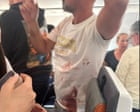
Israeli travelers and deadheading airline crew members on board didn't hesitate. They rushed the flight deck, pulled the attacker off the wounded pilot, and restrained him using makeshift ties. Meanwhile, off-duty pilots who happened to be riding in the back stepped forward, took control of the blood-stained flight deck, and safely diverted the plane to Tabuk Airport in Saudi Arabia.
Without that split-second civilian intervention, the flight would have ended in a smoking crater.
The Aftermath and Accountability
Intelligence agencies quickly dug into the background of the co-pilot, uncovering extremist digital footprints that pointed straight toward radical indoctrination. Yet weeks after the emergency landing, the fallout is creating a bitter bureaucratic war.
Survivors are fighting for formal recognition as victims of hostile acts, pushing through complex legal battles against both the airline and government authorities for security lapses. While Israeli leaders handed out medals of bravery to the passengers who saved the day, the underlying vulnerabilities in international flight security remain glaring.
Commercial aviation assumes the best of humanity at 35,000 feet. This time, humanity had to save itself.