Three Russian cruise missiles landed on NATO soil on November 20, 2026, and not a single allied interceptor fired a shot.
That single detail tells you almost everything you need to know about the real crisis playing out along Poland's eastern frontier. When news broke that Russia's war had spilled into Poland as missiles crashed near the Ukraine border, most headlines treated it like another routine border scare. It wasn't. Between the timing of the strike, the age of the weapons recovered from the mud, and the weather-grounded jets overhead, this incident exposed uncomfortable cracks in how NATO defends its eastern flank.
If you're trying to separate political posturing from what actually went down in southeastern Poland, here is the full picture.
The Night Russia's War Crossed Into Poland
Early on the morning of November 20, Russia unleashed a massive aerial barrage against Ukraine—more than 400 drones and over 80 guided missiles in a single wave. By dawn, Polish emergency services and military investigators were fanning out across three separate crash sites in southeastern Poland:
- Nowy Lipowiec in Biłgoraj County, roughly 50 to 60 kilometers inside Polish territory
- Rudnik nad Sanem in Nisko County, deeper in the Podkarpackie region
- Mołodycz, sitting around 30 kilometers from the Ukrainian border
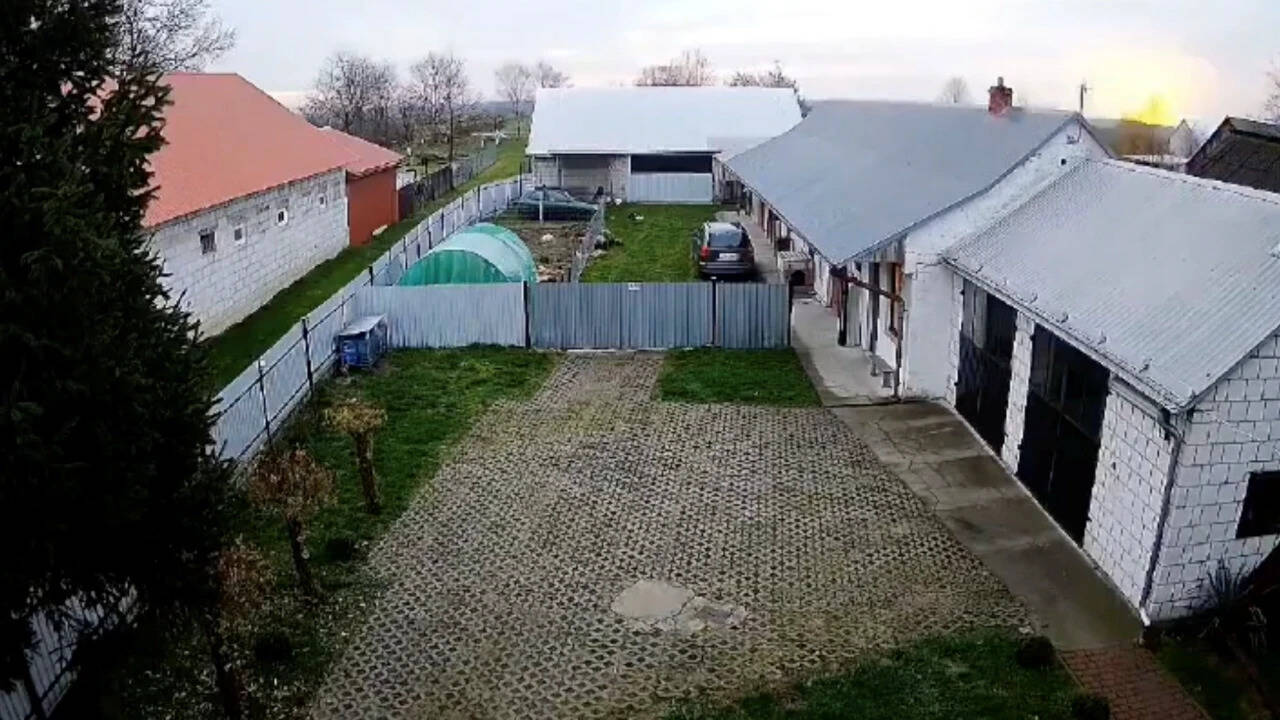
Nobody was killed or injured. That's pure luck. Surveillance footage near Chmielek captured a bright flash as at least one warhead detonated above ground, scattering metal fragments across a wide stretch of countryside.
Initially, Polish Defense Minister Władysław Kosiniak-Kamysz suggested the wreckage included two cruise missiles and a jet-powered drone. Once prosecutors in Lublin finished examining the serial numbers and twisted airframes, the picture got sharper. All three objects were Russian-made Kh-101 air-launched cruise missiles.
Then came the part that rattled defense analysts in Warsaw and Kyiv. Prosecutor General's office representative Przemysław Nowak—alongside Polish investigative teams—confirmed the missiles weren't dusty Cold War leftovers. They were manufactured in the fourth quarter of 2026 at the Dubna machine-building plant. Russia isn't scraping the bottom of old Soviet depots; it's firing Kh-101s straight off the assembly line despite years of Western microelectronics sanctions.
And Moscow wasn't done testing boundaries. Just days later, on Monday night, another Russian unmanned aerial vehicle briefly crossed into Polish airspace during a nighttime strike on western Ukraine.
Why Nobody Shot the Missiles Down
Here is the question every taxpayer in Central Europe immediately asked. NATO spends billions monitoring that border, Polish F-16s and allied quick-reaction aircraft were scrambled through the night, and yet three hostile cruise missiles flew up to 60 kilometers into a NATO member state before crashing on their own.
Why didn't anyone pull the trigger?
According to Polish operational briefings, an allied pilot actually received clearance to engage. They held fire because severe weather made it impossible to get visual or optoelectronic confirmation of the target.
That sounds reasonable on paper. In peacetime, strict rules of engagement stop nervous pilots from accidentally blasting a civilian crop duster or a stray weather balloon out of the sky.
Honestly, though, those rules fall apart during a mass saturation attack next door. Russia knows exactly what kind of cloud cover sits over the Carpathian foothills in late November. If NATO pilots require clear visual confirmation before firing over Polish soil, Moscow gets a predictable blind spot every time bad weather rolls in. Radar tracks alone weren't enough to greenlight a kinetic intercept under existing peacetime protocols, leaving ground communities to hope the incoming hardware landed in empty fields instead of apartment blocks.
Accident or Calculated Provocation
Whenever Russian hardware lands in Poland—like the cruise missile incursion back in July 2026—two competing theories immediately collide.
The Case That It Was Deliberate
Polish Prime Minister Donald Tusk didn't mince words. He called the November 20 breach an intentional provocation, pointing out that NATO Secretary-General Mark Rutte agreed the timing looked anything but accidental.
Look at what was happening on the ground in Poland that exact weekend. Roughly 2,800 troops from 11 countries—led by the UK and France under the "Coalition of the Willing"—were kicking off their first major military exercise in southeastern Poland to rehearse post-war peacekeeping and security guarantees for Ukraine. Dropping three brand-new Kh-101 missiles right next to a multinational NATO training zone sends an unmistakable message without crossing the threshold into an overt declaration of war.
As Maksym Beznosiuk at the Armed Conflict Location & Event Data (ACLED) project noted, this kind of ambiguity is a feature, not a bug. Podkarpackie and Lubelskie provinces are the exact logistics arteries funneling Western weapons into Ukraine. Keeping civilian aviation nervous and forcing Warsaw to second-guess whether an incursion is accidental or hostile achieves Moscow's goal at zero military cost.
The Case for Electronic Warfare or Technical Failure
On the flip side, U.S. President Donald Trump told reporters that Moscow likely landed the weapons in Poland by mistake. Military analysts who track missile telemetry agree that accidental spillover is plausible during an 80-missile salvo.
When Ukraine fires heavy electronic warfare jamming across its western oblasts to blind Russian navigation systems, spoofed GPS signals can knock a cruise missile off its programmed waypoints. Combine that with rushed wartime quality control at Russian factories—where technicians are slapping together guidance boards with workaround components—and a missile aimed at Lviv can easily overshoot by 40 kilometers into Biłgoraj County.
Moscow, predictably, denied everything. When Poland's Foreign Ministry summoned Russian Ambassador Georgy Mikhno to hand him a sharp diplomatic protest, Mikhno walked out claiming Warsaw had presented zero verifiable evidence and was relying on unsubstantiated assumptions. Standard Kremlin playbook. Deny, demand forensic proof you'll never accept, and let NATO allies argue among themselves.
NATO's Credibility Problem on the Eastern Flank
What makes the November 2026 incident different from earlier border scares is the growing friction inside the alliance itself.
Warsaw chose not to invoke Article 4 of the NATO treaty, which triggers formal emergency consultations among allies. Defense analysts in the region point out that pulling the Article 4 lever every time a missile strays across the border dulls its political impact. Instead, Poland pushed for concrete reinforcement under NATO's Eastern Sentry air-policing mission, including additional airborne early-warning aircraft.
Behind closed doors in Brussels, though, Polish patience is wearing thin.
- The shoot-down debate is back. Reports out of Brussels indicate Polish representatives asked NATO ambassadors to reconsider intercepting Russian missiles over western Ukraine before they cross into Polish airspace. Washington and Berlin have consistently resisted that idea, fearing it drags NATO directly into active combat with Russian forces.
- Silence from Washington raised eyebrows. Polish officials openly questioned the muted public response from the White House compared to European leaders like French President Emmanuel Macron, who condemned Russia's actions as an irresponsible gamble.
- Words aren't stopping debris. NATO Secretary-General Mark Rutte flew to Warsaw on November 21 and promised the alliance would defend every inch of Polish territory. Defense Minister Kosiniak-Kamysz welcomed the solidarity, yet bluntly reminded allies that commitments require physical action, not just speeches.
Think about the asymmetry here. If three Polish or American cruise missiles crashed 60 kilometers inside Russian territory—even by accident—Moscow would treat it as an act of war. When Russian Kh-101s land in Polish forests, NATO holds a meeting and issues a diplomatic note.
How to Follow This Story Without Falling for Noise
Border incidents in Eastern Europe generate an absurd amount of panic and bad information within minutes of the first explosion. Whenever sirens go off in Lublin or Podkarpackie, social media floods with recycled 2022 footage, fake evacuation orders, and premature claims that Article 5 is about to be triggered.
If you're tracking security developments along NATO's eastern border—whether for business, travel, or geopolitical analysis—use a strict filter before reacting:
- Watch official Polish prosecutor and Operational Command (DORSZ) briefings first. Early politician quotes often blur drones, decoy targets, and cruise missiles. Forensic serial-number reports from Lublin or Warsaw prosecutors take 48 to 72 hours, and they're the only source that confirms actual weapon types and manufacturing dates.
- Track flight-radar activity over Rzeszów-Jasionka. That airport is the main logistics hub for Ukraine aid. Real escalation doesn't look like angry press conferences; it looks like sudden commercial airspace closures, NATO E-3 Sentry AWACS planes running tight racetrack orbits over eastern Poland, and tanker aircraft stacking up near the border.
- Ignore Article 5 chatter unless sustained strikes occur. Under NATO doctrine, Article 5 collective defense applies to an armed attack, not isolated spillover debris—even when that debris looks suspiciously deliberate. The real indicator to watch is whether NATO changes its rules of engagement to allow radar-only intercepts in bad weather.
Until NATO updates those rules of engagement and deploys denser ground-based air defenses along the Bug and San river valleys, southeastern Poland remains caught in a dangerous gray zone—technically at peace, yet regularly catching the shrapnel of a war next door.
Russian Missile In Poland? Object Crashes Near Ukraine Border — This news report covers the initial reports and investigation launch following the missile crash near Poland's border with Ukraine.