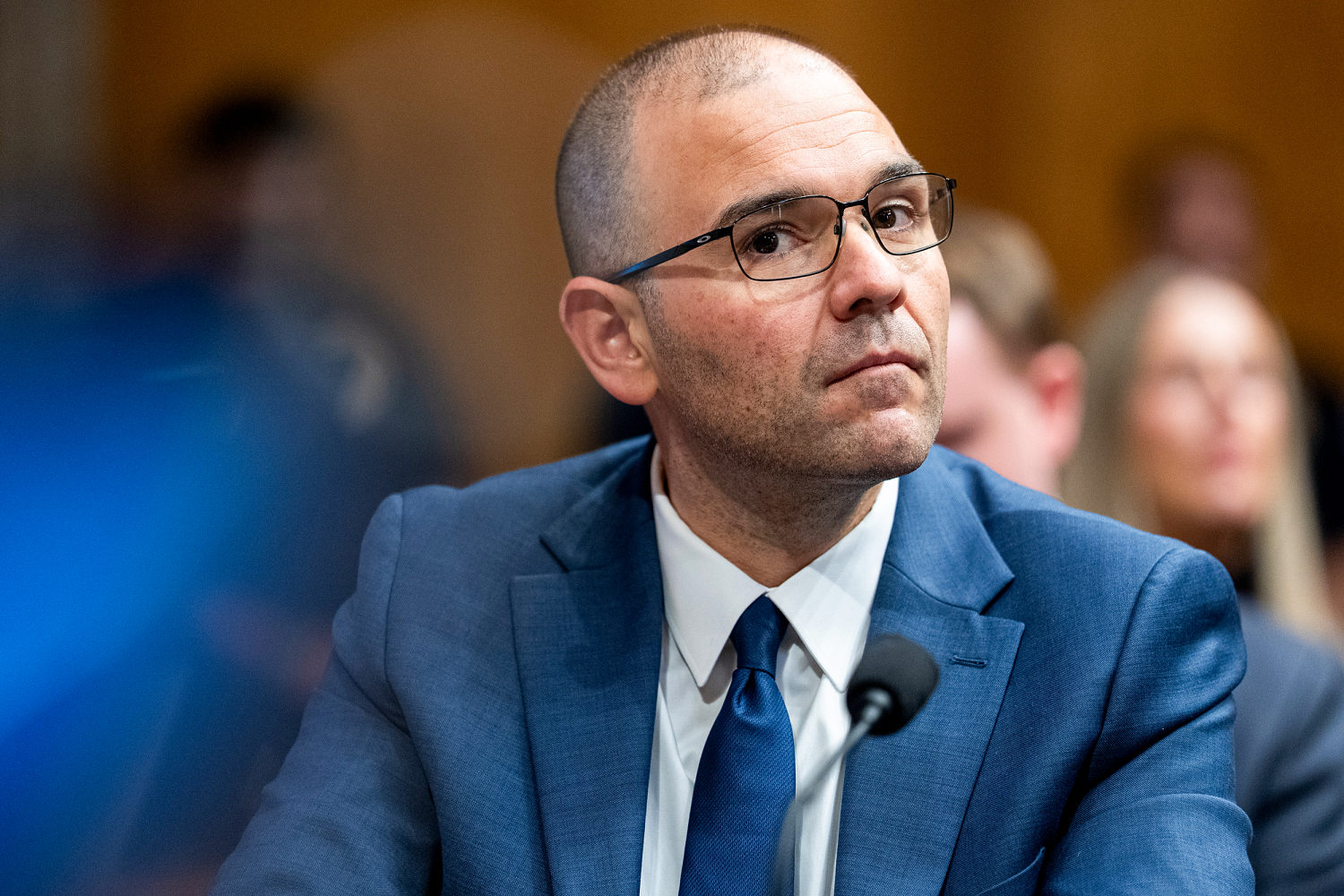
Watch a four-minute Senate confirmation clip from November 2026 and you can see a federal nomination collapse in real time. During his hearing before the Senate Homeland Security and Governmental Affairs Committee, Michael LoSapio—President Donald Trump's nominee to lead the Cybersecurity and Infrastructure Security Agency—told lawmakers he did not believe the Jan. 6, 2021, assault on the U.S. Capitol was an attack.
That single answer immediately threw his confirmation into jeopardy.
You don't need a background in Washington politics to understand why those seven words triggered an instant bipartisan backlash. CISA is the federal agency tasked with protecting America's critical infrastructure, defending government networks against foreign hackers, and helping state and local officials secure election systems. Putting someone in charge of threat assessment who refuses to call a televised breach of the Capitol an attack raises obvious questions about how that leader defines national security threats.
Inside the Senate Hearing Exchange
According to reporting from the Associated Press and NBC News, the exchange unfolded on Thursday, Nov. 19, 2026, when Democratic Sen. Richard Blumenthal of Connecticut pressed LoSapio on both the 2020 presidential election and the events of Jan. 6. Blumenthal has routinely asked Trump administration nominees about those two topics during confirmation hearings to test their independence and adherence to basic facts.
LoSapio, who serves as chief information security officer at the data analytics firm Palantir, tried to sidestep the political minefield by leaning on his private-sector background. When Blumenthal asked whether the Capitol was attacked on Jan. 6, LoSapio replied, "No, I don't believe it was an attack." He added that he wasn't involved in politics at the time and only knew what he had seen on the news.
Blumenthal didn't let it go. He asked LoSapio if he was alive on the planet on Jan. 6 and repeated the question. LoSapio held firm and answered "No" a second time.
The nominee took a similar approach when asked who won the 2020 presidential election. Rather than acknowledging Joe Biden's certified victory, LoSapio stated he wouldn't answer a question about an election held six years earlier, noting only that his sole involvement had been voting for Trump. Blumenthal accused him of dodging straightforward questions in a way that demonstrated a lack of objectivity.
Why Republican Support Evaporated Within Hours
You might assume partisan loyalty would insulate a Trump nominee in a Republican-led Senate, especially with GOP lawmakers rushing to confirm judicial and executive picks before Democrats take control of Congress in January 2027. In LoSapio's case, that calculation failed almost immediately.
Within hours of the hearing, Republican Sen. Thom Tillis of North Carolina—a crucial vote on the Homeland Security Committee—announced that he would oppose LoSapio's nomination. As reported by The Guardian and Punchbowl News, downplaying or denying the violence of Jan. 6 has remained a strict red line for Tillis throughout his tenure.
Other senators also signaled opposition following the testimony, leaving LoSapio without a clear path to confirmation. In committee math, losing even a single majority-party member on a closely divided panel can stall a nomination indefinitely.
The History Behind CISA and Election Security
To grasp why this hearing hit such a raw nerve, you have to look at CISA's specific history with Donald Trump and election administration. Congress created the agency in 2018 during Trump's first term to coordinate cybersecurity defense across federal agencies and private-sector partners.
Two years later, CISA found itself at the center of a political storm. Following the November 2020 election, then-CISA Director Chris Krebs and a coalition of federal and state election officials issued a joint statement calling the 2020 election the most secure in American history and rejecting claims of widespread voting machine fraud. Trump fired Krebs days later.
Ever since that moment, the CISA director's chair has been one of the most politically fraught jobs in Washington. When Trump returned to the White House in 2025, previous director Jen Easterly stepped down. The agency went nearly two years without a Senate-confirmed leader.
- Acting leadership: Nick Andersen has led CISA in an acting capacity since February 2026.
- Stalled nominations: Another Trump pick, Sean Plankey, withdrew his nomination in April 2026 after his confirmation process stalled.
- Shifting federal support: In July 2026, Homeland Security Secretary Markwayne Mullin—whose department oversees CISA—warned states that the administration could withhold federal election security assistance unless local officials used a specific federal database to maintain their voter rolls.
Against that backdrop, senators on both sides of the aisle were looking for reassurance that a permanent director would stabilize the agency and maintain trust with state election administrators. Instead, Cybersecurity Dive noted that LoSapio also side-stepped questions about CISA's budget, staffing levels, and operational priorities during his testimony.
Two Competing Perspectives on the Testimony
When you strip away the cable-news shouting, two distinct arguments explain why LoSapio's remarks sparked such fierce debate.
From the perspective of critics—including Senate Democrats and Republicans like Tillis—threat intelligence requires an objective baseline of reality. Over 140 police officers were injured during the Jan. 6 breach, property across the Capitol complex was destroyed, and Trump himself initially described the events on Jan. 7, 2021, as acts of violence and destruction before later reframing the day during his 2024 campaign and issuing roughly 1,500 pardons and 14 commutations upon returning to office. Critics argue that if an intelligence or cybersecurity chief bends factual descriptions to avoid offending the president, state officials and private utilities won't trust the agency's warnings during an actual crisis.
Supporters and allies of the nominee view the exchange differently. From their vantage point, Senate confirmation hearings have turned into partisan loyalty traps where Democrats force nominees into semantic debates over six-year-old political controversies rather than examining their technical qualifications. LoSapio framed his refusal to label Jan. 6 an attack as an effort to stay out of a political dispute as a private-sector technologist entering public service.
What Actually Matters for Cybersecurity Leaders
I've watched plenty of technical executives struggle when they transition from corporate boardrooms to congressional witness tables. In the private sector, avoiding controversial political labels is smart risk management. You keep your head down, focus on software architecture, and leave public messaging to the communications team.
Washington doesn't work that way, especially when you're auditioning to run an agency built on public trust.
CISA doesn't have regulatory authority to force state election directors or power grid operators to adopt its security patches. Its entire influence rests on voluntary cooperation. Local officials share sensitive network data with CISA only because they believe the agency's analysts are driven by evidence rather than partisan pressure. When a nominee refuses to answer basic factual questions about past elections or physical breaches of federal buildings, that voluntary trust erodes before day one.
How to Follow What Happens Next With CISA
If you track federal cybersecurity policy, election infrastructure, or Senate confirmation battles, keep your eye on three concrete indicators over the coming weeks:
- Committee calendar moves: Watch the Senate Homeland Security and Governmental Affairs Committee schedule to see whether Chairman Rand Paul or committee leadership pulls LoSapio's nomination from a formal vote rather than risking a public defeat on the committee floor.
- Acting leadership continuity: Track directives coming from Acting CISA Director Nick Andersen, who remains responsible for coordinating cyber defense and state-level election support while the permanent seat stays vacant.
- January 2027 congressional transition: Pay attention to how the incoming Democratic majority in Congress reshapes oversight hearings and confirmation standards for any replacement nominee the White House puts forward in early 2027.
You can watch the exchange from the confirmation hearing in Trump's CISA nominee says Jan. 6 was not an 'attack', which captures the direct questioning between Sen. Richard Blumenthal and Michael LoSapio.