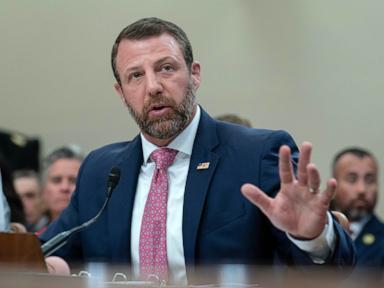
When thousands of flights freeze on the tarmac at once, Washington immediately looks for someone to put under oath. Senator Markwayne Mullin stepping into a congressional hearing after a historic nationwide ground stop isn't just routine political theater. It's the exact moment where aging aviation infrastructure collides with congressional oversight, and frankly, most coverage misses why these hearings actually matter to anyone holding a boarding pass.
A nationwide ground stop is the nuclear option of air traffic control. It happens rarely, usually when a critical safety or communications system fails across the entire National Airspace System, leaving the Federal Aviation Administration (FAA) with zero confidence that planes can safely navigate or receive hazard warnings. When that switch gets flipped, every departure in the country halts, cascading into thousands of delayed and canceled flights within minutes. Don't forget to check out our previous coverage on this related article.
Why Mullin and Congress Are Turning Up the Heat
You don't need to be an aviation insider to see why lawmakers treat a nationwide ground stop as an existential threat. The U.S. aviation network moves millions of passengers and billions of dollars in cargo every single day, operating on razor-thin scheduling margins where a two-hour disruption takes three days to untangle.
When a hearing convenes around a figure like Markwayne Mullin—whether questioning administration officials, transportation leaders, or addressing the fallout from his seat on Capitol Hill—the core tension always comes down to accountability versus modernization. Lawmakers love dramatic questioning on C-SPAN. Airlines love blaming federal technology. Meanwhile, the FAA is stuck maintaining legacy computer systems built decades ago while trying to manage record passenger volume. If you want more about the context of this, BBC News offers an informative breakdown.
Here's what actually drives the friction in these hearings:
- Legacy tech debt. Many core aviation alerting and air traffic systems still rely on code architectures written in the 1980s and 1990s. Patching them works until it doesn't.
- Funding bottlenecks. Congress routinely debates multi-year FAA reauthorization bills and annual appropriations, yet modernization budgets often get squeezed or delayed by unrelated political standoffs.
- Contractor accountability. Major upgrades to air traffic infrastructure involve sprawling federal contracts that frequently run over budget and years behind schedule.
- Communication failures. During a ground stop, airlines and passengers are often left in the dark about whether an outage will last twenty minutes or six hours.
The Anatomy of a Nationwide Ground Stop
Most travelers assume a ground stop means bad weather or a localized radar glitch. Those happen every week at individual hubs like Newark, Atlanta, or Chicago O'Hare. A nationwide ground stop is completely different.
The most infamous modern precedent occurred in January 2023, when a corrupted database file brought down the FAA's Notice to Air Missions (NOTAM) system. That was the first nationwide ground stop since the terrorist attacks of September 11, 2001. Because pilots legally cannot take off without verified NOTAM safety alerts—which warn crews about closed runways, broken lights, or temporary flight restrictions—the FAA had no choice but to freeze departures across the entire United States.
Within hours, more than 10,000 flights were delayed and over 1,300 were canceled.
Think about the domino effect of that single failure. Aircraft end up in the wrong cities. Flight crews time out under strict federal duty-hour regulations. Maintenance schedules collapse. Even after the computer system reboots, airlines spend the next 48 to 72 hours repositioning planes and crews just to get back to baseline.
Why Backup Systems Fail to Save the Day
People always ask the same obvious question during congressional hearings. Why didn't the backup system kick in?
The answer is ugly but simple. In tightly coupled legacy networks, a corrupted data file or bad software update often replicates straight from the primary server to the backup server in milliseconds. If the backup simply mirrors the primary system, it inherits the exact same flaw. True resilience requires independent, isolated redundancy—and building that into a live, 24/7 airspace network without shutting it down is like changing the engines on an airplane mid-flight.
What Congressional Hearings Actually Change
If you've watched enough Capitol Hill hearings, you know the script. Senators get five minutes each to grill witnesses, deliver sharp soundbites for evening news clips, and demand guarantees that "this will never happen again."
Does it work? Partially, though not in the way most people think.
A hearing won't magically rewrite millions of lines of legacy code overnight. What it does do is force internal agency audits into the public record, accelerate inspector general investigations, and lock executive agencies into specific timeline commitments. When a senator puts an administrator on the record promising a system migration by a hard deadline, missing that date becomes a career-ending political liability.
There is also a genuine policy debate playing out behind the microphones. Some lawmakers push for aggressive privatization or spinning off air traffic control functions, arguing that federal procurement rules are too slow for modern software engineering. Others—including many aviation unions and rural state representatives—warn that corporatizing air traffic control would prioritize major hub airports while gutting service and safety investments in smaller communities.
How to Protect Yourself When the System Freezes
You can't control FAA server architecture or Senate committee schedules, but you can stop yourself from getting stranded in a terminal food court for three days the next time a ground stop hits.
- Book the first flight out. Early morning departures (before 8:00 AM) use aircraft that parked overnight at your airport. When a midday ground stop ripples through the network, afternoon and evening flights take the worst beating.
- Download your airline's app before you leave home. The moment a ground stop is announced, gate agent lines stretch for hundreds of feet. Rebooking through the app takes thirty seconds and grabs the remaining seats before the people standing in line even reach the counter.
- Know the Department of Transportation rules. When a delay or cancellation stems from an FAA ground stop, airlines classify it as outside their control—meaning they generally don't owe you hotel vouchers or meal stipends. However, if you choose not to travel because of a significant delay or cancellation, federal rules entitle you to a full cash refund to your original payment method, not just a travel credit.
- Monitor the FAA National Airspace System Status map. Before heading to the airport during major aviation news, check
nasstatus.faa.govdirectly. It shows live ground stops, ground delay programs, and airport closures minutes before airline gate displays update.
Watch the hearing transcripts closely for one specific detail—not the political sparring, but whether Congress attaches binding, multi-year modernization funding to the oversight fallout. Without dedicated money shielded from annual budget fights, the next historic ground stop isn't a question of if, only when.


