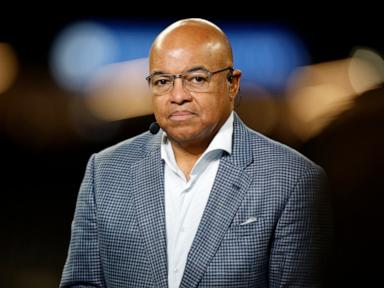
When you tune into NBC's Sunday Night Football and hear a different voice welcoming you to Soldier Field, it feels jarring. Mike Tirico isn't just another play-by-play announcer. He's the steady heartbeat of primetime sports television. So when news breaks that Mike Tirico will miss NBC's Sunday night game in Chicago because of a health issue, fans immediately start asking two things. First, is he okay? Second, who on earth steps into the biggest booth in sports on short notice?
Here's the reality of live television. The show never stops, even when its biggest star is sidelined.
Tirico's absence from the Chicago broadcast highlights just how rare it is for him to miss a shift. Throughout his decades-long career spanning ESPN and NBC, his durability has become legendary in broadcasting circles. When a broadcaster with an ironman streak steps back for a health issue, it's a legitimate story—not just for NFL fans, but for anyone who understands the grueling logistics of network television.
Why Mike Tirico Missing Sunday Night Football Is Such a Big Deal
You don't accidentally land the lead chair on Sunday Night Football. Tirico took over the role full-time in 2022 after Al Michaels moved to Amazon's Thursday Night Football, and he hasn't missed a beat. Working alongside Cris Collinsworth, Tirico anchors the most-watched primetime television show in America.
Ratings routinely cross the 20-million viewer mark. That's massive pressure.
Most casual fans don't realize how much heavy lifting the play-by-play announcer actually does before kickoff. It isn't just showing up at 7:00 PM on Sunday and reading off a roster sheet. Tirico's preparation routine is famously obsessive. He spends his entire week dissecting coaching tendencies, memorizing backup offensive linemen, interviewing coordinators, and mapping out storylines so that a three-hour broadcast feels effortless.
When Tirico has to step away due to a health issue, NBC loses its quarterback.
I've watched countless sports broadcasts fall apart when a last-minute substitution happens in the booth. Chemistry takes years to build. Timing between a play-by-play voice and a color analyst like Cris Collinsworth relies on subtle head nods, breath control, and unspoken cues. You can't fake that overnight.
The History Behind Tirico's Rare Broadcast Absences
To understand why this Chicago absence grabbed headlines, you have to look at Tirico's track record. The guy practically lives on airplanes and in production trucks. He hosts the Olympics, the Triple Crown, major golf tournaments, and the NFL.
He rarely calls in sick. In fact, his few documented absences over the years stand out specifically because they almost never happen.
Take his past health scares, for instance. Back in 2025, Tirico famously had to exit the Kentucky Derby broadcast mid-show due to a severe nut allergy reaction—a terrifying moment that required immediate medical attention while millions watched live. Before that, during his ESPN days, he dealt with brief illness-related absences that forced networks to scramble.
Each time, the pattern is the same:
- NBC prioritizes his health immediately, pulling him from travel and broadcast duties without hesitation.
- A trusted veteran from the network's deep bench steps into the booth.
- Tirico returns the following week as if nothing ever happened.
Honestly, sports media puts an unhealthy glorification on working while sick. Fans love the "flu game" narrative when Michael Jordan drops 38 points in Utah, and broadcasters often feel that same pressure to push through laryngitis, migraines, or stomach bugs. Stepping back when your body says no isn't weakness. It's basic professionalism. If your voice is shot or you're physically compromised, you can't deliver the standard an NFL primetime audience expects.
Who Steps Into the NBC Booth When Tirico Is Out
When NBC Sports gets the call that Tirico can't make the trip to Chicago, the network's contingency plan kicks into high gear. Unlike smaller networks that might panic, NBC keeps a stacked roster of play-by-play talent specifically for moments like this.
Noah Eagle is usually at the top of that list. If you've watched Big Ten football on NBC, NBA games, or the Paris Olympics, you already know how good he is. He has the pedigree, the vocal cadence, and the composure to handle a massive audience without looking overwhelmed.
Another frequent option in NBC's ecosystem is Terry Gannon or Paul Burmeister, depending on who is already assigned to college football or studio coverage that weekend. Sometimes, NBC even looks toward seasoned veterans like Mike Crispino or leans on their Notre Dame broadcast team.
Here is what happens behind the scenes during an emergency broadcast swap:
- The Friday Night Scramble: Usually, health decisions happen 24 to 48 hours before kickoff. Travel logistics change immediately. Flights to O'Hare are booked, hotel rooms are reassigned, and production credentials are reprinted.
- The Production Meeting Crash Course: By Saturday morning, the replacement announcer is on Zoom calls with Cris Collinsworth, executive producer Fred Gaudelli, and director Drew Esocoff. They have to compress a week's worth of prep into a few hours.
- Sponsor Reads and Promos: This is the part fans never think about. Tirico pre-records dozens of promotional voiceovers and live-read sponsor integrations. The replacement has to re-record all of them before Sunday afternoon so the broadcast doesn't sound disjointed.
It's a high-wire act without a net.
Soldier Field Adds Extra Difficulty for a Backup Announcer
Missing a game in a dome like Indianapolis or Atlanta is one thing. Missing a Sunday night game in Chicago is an entirely different beast.
Soldier Field is notorious among broadcasters for its brutal conditions, especially late in the season. The wind whipping off Lake Michigan swirls unpredictably inside the bowl, playing havoc with kicking games, deep passes, and microphone audio. Even with heated booths, the elements dictate the flow of the game.
For a replacement announcer stepping in cold, Chicago demands instant adaptability. You can't rely on scripted narratives when a 25-mph crosswind turns a high-scoring shootout into a punt-heavy slugfest. You have to read the field conditions in real time, track defensive substitutions through cold-weather gear, and keep the energy up during sluggish third quarters.
Tirico excels in messy, weather-impacted games because he knows when to let the stadium noise breathe and when to inject urgency. A fill-in announcer has to find that balance on the fly while sitting next to Cris Collinsworth, who has spent nearly two decades in that exact booth.
What Fans Often Misunderstand About Sports Broadcaster Health
Whenever a high-profile broadcaster misses a game due to a "health issue," social media immediately spirals into wild speculation. People assume the worst, invent rumors about contract disputes, or claim the network is hiding something.
Let's clear that up. Networks use the broad term "health issue" for one simple reason: medical privacy.
Broadcasters aren't NFL players. They don't have to publish an injury report listing whether they have strep throat, food poisoning, vertigo, or a lingering respiratory infection. Under standard employment and privacy norms, NBC isn't going to broadcast Tirico's specific symptoms unless Tirico himself decides to share them on social media.
When you see an official statement from NBC Sports PR saying Mike Tirico is out due to a health issue, take it at face value. In a job where your vocal cords and mental sharpness are your only tools, even a moderate illness makes a three-hour live broadcast impossible. Try talking nonstop at high volume with zero pauses for three hours while fighting off a fever or sinus infection. You wouldn't make it past the first quarter.
How NBC Protects the Broadcast Quality Without Its Lead Voice
If you're tuning into the Chicago game expecting a drop-off in production value, you probably won't notice much of a difference after the opening kickoff. That's a credit to NBC's production machine.
Fred Gaudelli and Drew Esocoff have run Sunday Night Football for years, and they build the broadcast around visual storytelling rather than relying solely on the play-by-play voice. When a backup announcer steps in, the production truck adjusts subtly to help them succeed:
- More reliance on Collinsworth: Cris naturally takes on a slightly larger conversational role early in the game to help the fill-in announcer settle into a rhythm.
- Tighter graphics packages: Spotters and statisticians feed concise, bulleted notes directly to the announcer's monitor so they don't have to dig through binders mid-play.
- Sideline integration: Melissa Stark gets leaned on a bit more for injury updates and coaching adjustments, giving the booth extra breathing room.
It's a team sport in the truck, just like it is on the field.
If you want to keep tabs on Tirico's recovery and see who officially gets the nod for the Chicago booth, check NBC Sports' official PR feed on X or their Sunday afternoon pregame coverage on Football Night in America. That's where Maria Taylor, Jason Garrett, and Tony Dungy will address the booth change directly before kickoff, giving you the exact lineup right before the ball is teed up at Soldier Field.