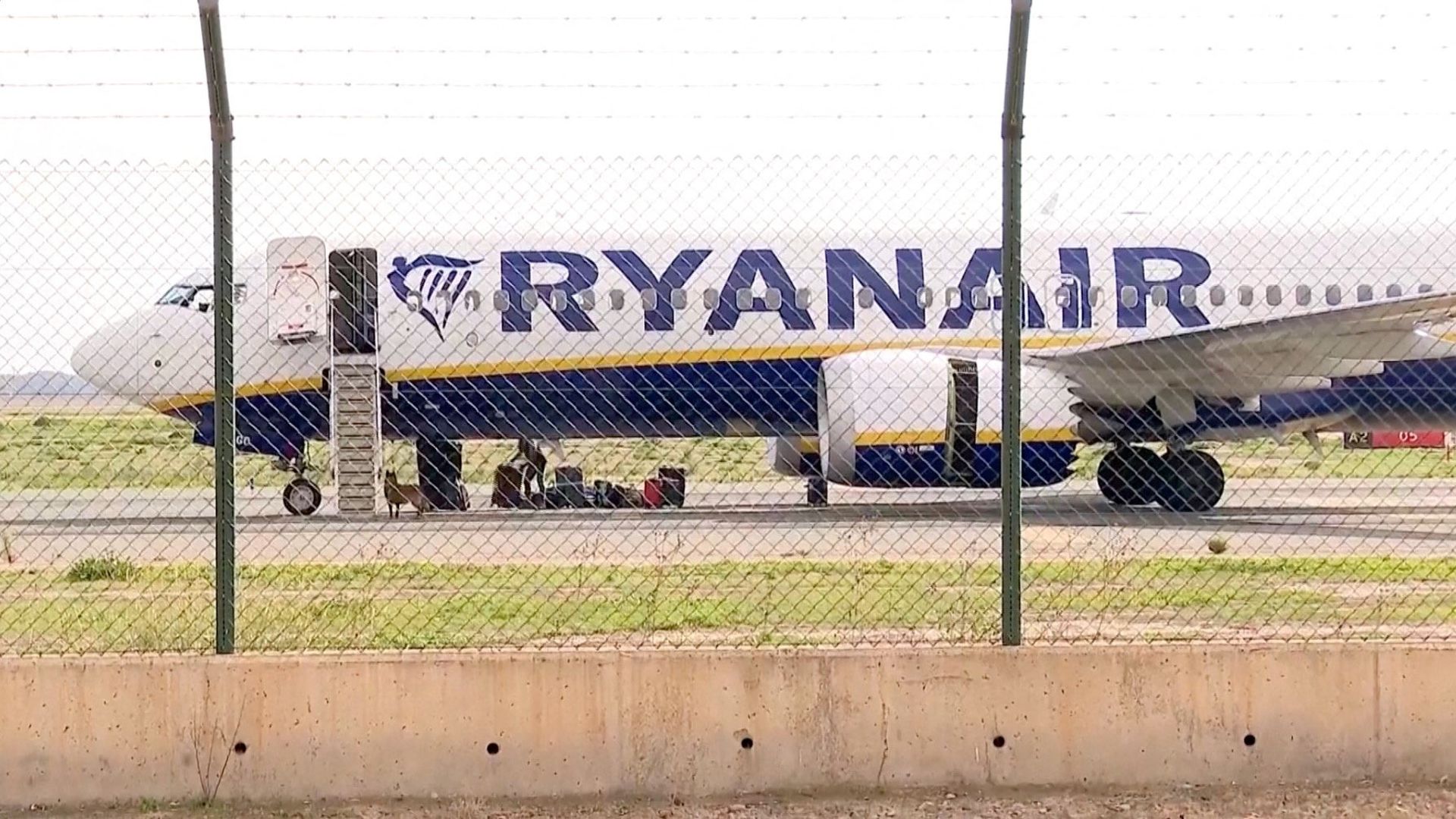
Two jets depart from major UK airports, and suddenly, emergency protocols lock down entire terminals while fighter jets scramble into European airspace. That's the chaotic reality when bomb threats hit multiple commercial flights simultaneously, turning routine travel days into high-stakes security operations.
Most travelers assume a bomb threat on an airplane means a dramatic mid-air standoff or a chaotic evacuation down inflatable slides. Honestly, the real story is far more calculated, bureaucratic, and expensive than what you see in thriller movies. When reports surface of bomb threats targeting multiple flights—including departures out of UK hubs—aviation authorities don't guess. They trigger an uncompromising global safety net that prioritizes zero risk over billions of dollars in airline schedules.
Let's strip away the sensational headlines and look at how aviation security actually handles coordinated or clustered threats, why UK airports are uniquely equipped for them, and what happens to passengers caught in the crossfire.
Why Multiple Flight Bomb Threats Happen in Clusters
Hoaxers rarely act in isolation. When news breaks of a security scare on one international route, copycat callers and coordinated online actors often flood airline social media accounts and call centers within hours.
We saw a massive wave of this exact pattern across Indian and international carriers in late 2024, where hundreds of flights received anonymous threats via encrypted social media accounts within a single week. Flights originating from or heading toward major international hubs—including London Heathrow and Gatwick—frequently get pulled into these dragnet alerts because of their high-profile passenger manifests and strict regulatory oversight.
Here's the uncomfortable truth about modern aviation security. Airlines cannot afford to ignore a single message, even when intelligence analysts are 99% sure it's a teenager with a VPN.
A single missed warning carries catastrophic human and political consequences. Because of that zero-tolerance baseline, a lone individual typing a twenty-word threat on a burner account can force a wide-body Airbus or Boeing to dump thousands of gallons of fuel, divert to a remote military airfield, and strand three hundred people in a foreign terminal overnight.
The Anatomy of a Threat Assessment
Not every threat triggers a fighter jet escort. Behind closed doors, a specialized group known as the Threat Assessment Committee convenes within minutes of an alert reaching an airline's security desk or airport police.
In the United Kingdom, this process involves rapid coordination between the airport operator, local counter-terrorism police, the Civil Aviation Authority (CAA), and the Department for Transport. They evaluate the warning using specific, rigid criteria:
- Specificity of the claim: Does the message mention a real flight number, a specific seat row, or a cargo manifest detail that isn't publicly available on flight-tracking apps?
- Origin and delivery method: Was the threat phoned into an air traffic control tower, written on an onboard lavatory mirror, or blasted across X (formerly Twitter) alongside twenty other flight numbers?
- Corroborating intelligence: Do security services like MI5 or international partners have active chatter linking the route or passenger list to known threat actors?
If the committee classifies the alert as "non-specific" or a low-credibility hoax, the aircraft usually continues to its destination under heightened monitoring. If any detail raises a red flag—or if authorities simply lack enough time to verify the source before the plane crosses an ocean—the flight gets diverted immediately.
How UK Airports Respond to Inbound and Outbound Threats
If you're flying out of London Heathrow, Manchester, or Gatwick when a bomb threat hits, you'll notice the airport's geography suddenly shift. Major British airports are physically designed with isolated "remote stands" located far away from the main passenger terminals and fuel farms.
When a UK-departing flight receives a credible threat before takeoff, air traffic control guides the jet straight to one of these containment zones. The engines shut down. Local police and specialized Explosive Ordnance Disposal (EOD) teams establish a wide perimeter, shutting down nearby taxiways and halting departures across the airfield.
Things get even more intense if the aircraft is already airborne in British or neighboring European airspace.
The Royal Air Force (RAF) maintains Quick Reaction Alert (QRA) stations at RAF Coningsby and RAF Lossiemouth specifically for this scenario. Within minutes of a distress squawk—specifically transponder code 7500 for unlawful interference or 7700 for a general emergency—Typhoon fighter jets launch at supersonic speeds to intercept the airliner.
Passengers looking out the left window often spot a fully armed fighter jet flying just off the wingtip. Those pilots aren't there to shoot the plane down; they're performing a visual inspection of the fuselage, checking for structural damage, and establishing direct radio contact with the flight deck while escorting the jet to a designated diversion airport like London Stansted.
Stansted isn't chosen by accident. Located northeast of London in open countryside, it serves as the UK's primary designated airport for hijacked or threatened aircraft because its layout allows emergency services to isolate a massive jumbo jet without paralyzing the entire city's airspace.
What Passengers Actually Experience During a Diversion
Forget the calm, orderly boarding process you're used to. Once a threatened aircraft touches down on a remote tarmac, the cabin atmosphere changes instantly.
Flight attendants immediately instruct everyone to leave all carry-on bags in the overhead bins. People always argue about this. They want their laptops, their passports, their duty-free bags. Cabin crew have to be ruthless here because a single blocked aisle or a punctured evacuation slide caused by a rolling suitcase can cost lives if an actual device detonates.
Depending on the severity of the threat, passengers exit either via mobile airstairs surrounded by armed tactical officers or down emergency evacuation slides. Once on the tarmac, you aren't walking straight into a warm terminal with coffee shops.
- Tarmac containment: Buses transport passengers to a secure holding hangar or an isolated processing area away from the general public.
- Secondary screening: Every passenger goes through intensive physical pat-downs, and bomb-sniffing dogs inspect the group while tactical teams sweep the cabin and cargo hold.
- Bag-by-bag reconciliation: Ground crews unload every single piece of checked luggage onto the tarmac. Passengers are often brought out in small groups to physically point to their own suitcases before bomb technicians clear the bags for re-loading.
- Law enforcement interviews: If the threat originated inside the cabin—such as a note found in a lavatory or an alarming AirDrop message sent via local Bluetooth—police will interview passengers and check devices before releasing anyone.
This entire process routinely takes between six and twelve hours. By the time the aircraft is cleared, the original pilots and cabin crew have almost always exceeded their legally mandated maximum duty hours. Even if the plane is completely safe, it cannot fly until the airline flies in a fresh replacement crew.
The Hidden Financial and Operational Fallout
A single false alarm doesn't just ruin your vacation; it wrecks airline economics for days.
When a wide-body aircraft like a Boeing 777 or Airbus A350 diverts mid-route, the immediate fuel dump alone can cost upwards of $50,000 depending on the aircraft's weight and altitude. Add in emergency landing fees at an unscheduled airport, hotel vouchers and meal allowances for 300 stranded travelers, compensation claims, and the knock-on delays for every subsequent flight that aircraft was scheduled to operate that week.
A single major diversion easily costs an airline $250,000 to $500,000.
When multiple flights face coordinated threats on the same day, the financial bleed runs into the millions. Worse, it ties up scarce counter-terrorism police units, bomb disposal robots, and military interceptors, pulling critical security resources away from other genuine national security priorities.
Why Catching the Culprits Is Harder Than You Think
You might wonder why anyone risks decades in federal prison just to disrupt a flight out of London. Under UK law, communicating false information about a bomb on an aircraft carries a maximum sentence of seven years in prison, while federal charges in the United States carry up to twenty years alongside massive financial restitution orders.
Yet perpetrators keep doing it because modern digital anonymity makes them feel untouchable.
Hoaxers use stacked VPNs, encrypted email providers based in non-extradition jurisdictions, and disposable VoIP numbers to route threats through three or four different countries before hitting an airline's server. Unraveling that digital trail requires international subpoenas and diplomatic cooperation between agencies like the UK's National Crime Agency (NCA), the FBI, and Interpol.
Even so, law enforcement does catch them—especially when perpetrators slip up on operational security or brag online. In recent high-profile cases across Europe and North America, investigators have tracked down juvenile and adult hoaxers alike by cross-referencing IP leaks, payment methods used for VPN subscriptions, and linguistic patterns across social media platforms. When caught, courts rarely show mercy, slapping offenders with prison time and lifetime flight bans.
Practical Steps If Your Flight Is Caught in a Security Alert
You can't stop a hoaxer from targeting your flight number, and you can't speed up a bomb squad sweep. You can, however, protect your time, your money, and your sanity when an alert hits your itinerary.
- Keep essentials on your person, not in the overhead bin. If you have to evacuate an aircraft during a security threat, you leave your carry-on behind. Keep your passport, wallet, phone, and critical daily medications in your jacket pockets or a small wearable pouch during takeoff and landing.
- Document the airline's official reason for the delay. Under UK261 and EU261 passenger rights regulations, bomb threats and air traffic control security restrictions count as "extraordinary circumstances." That means airlines don't owe you cash compensation for the delay itself, but they are legally required to provide food, drinks, hotel accommodation, and rebooking on the next available flight. Save every receipt if airline staff are overwhelmed and tell you to book your own hotel.
- Monitor your airline's app instead of standing in the gate line. When three hundred people rush a single customer service desk at a diversion airport, the line moves at a glacial pace. Use the airline's app or call their international support line immediately while walking off the jet bridge to grab the last available seats on alternative routes.
- Never joke about security—ever. It sounds obvious, yet passengers get arrested every single month for muttering frustrated jokes about bombs in their luggage while standing in slow security lines or sitting on delayed planes. Airport police treat every verbal statement literally, and a careless comment will land you in handcuffs faster than you can explain it was sarcasm.
Next time you see breaking news about bomb threats disrupting flights out of UK airports or across international corridors, look past the initial panic. The massive delays, fighter escorts, and terminal lockdowns aren't signs of a failing system. They're proof that aviation security refuses to gamble with human lives, no matter how costly or inconvenient the precaution becomes.


