The tea had barely cooled in Kylin Villa when the cameras stopped clicking, leaving three men with enough combined firepower, capital, and silicon to bend the century out of shape.
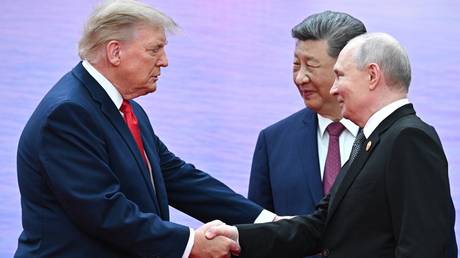
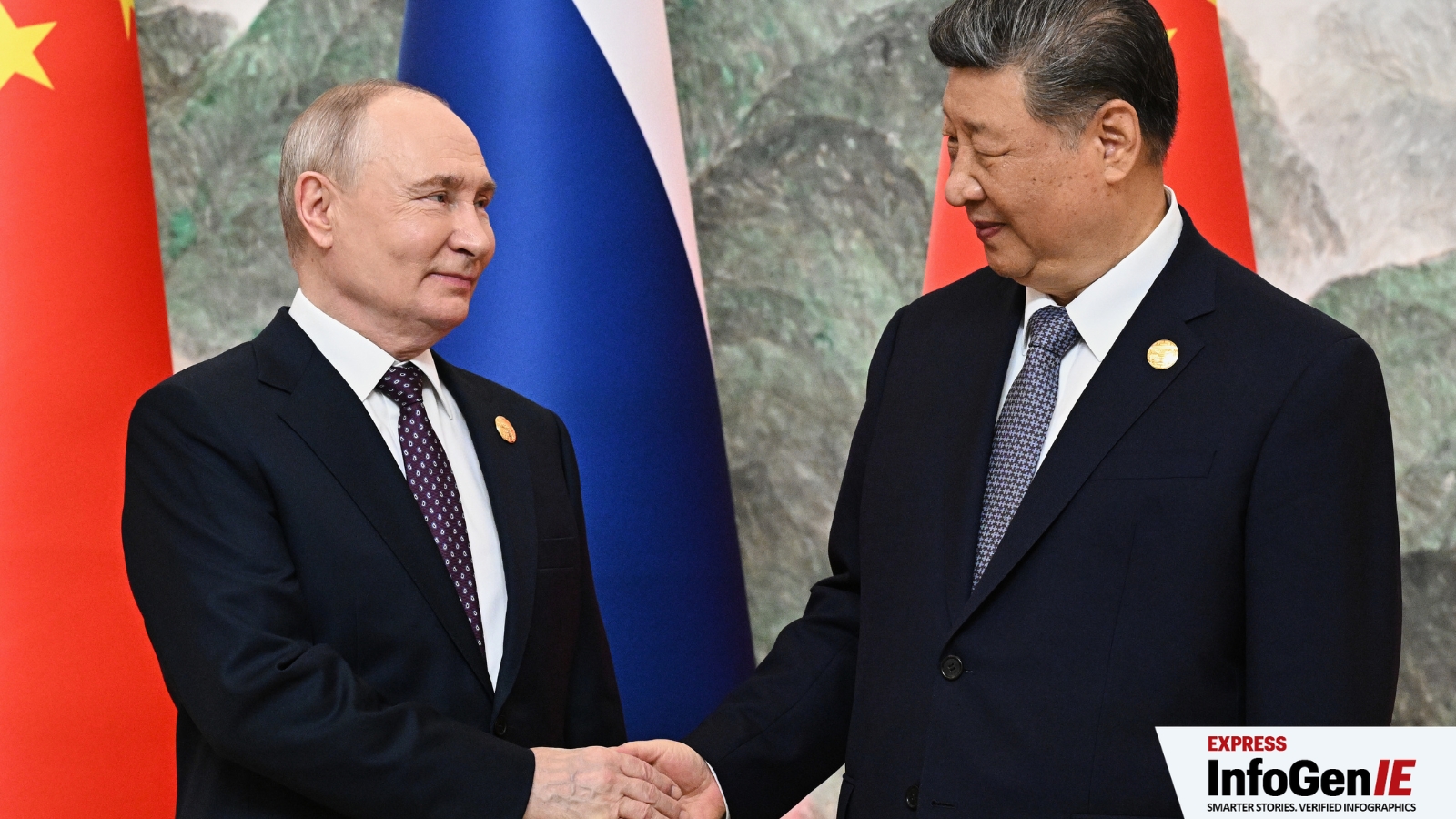
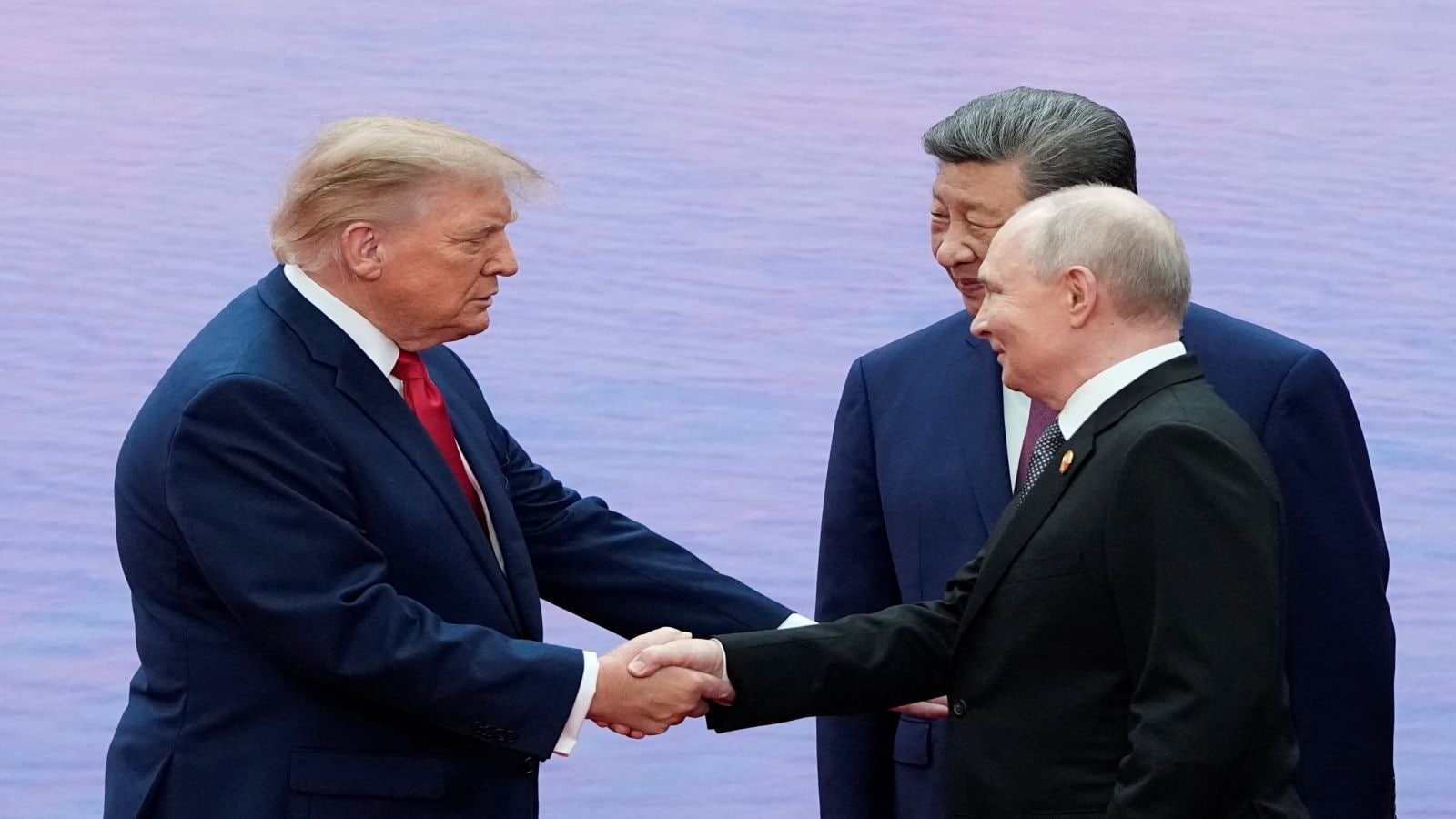
Shenzhen. November 19, 2026. Outside the villa’s manicured grounds, the city hummed with the frantic, electric pulse of modern manufacturing—glass towers reflecting a sky thick with shipping lanes and factory ambition. Inside sat Donald Trump, Xi Jinping, and Vladimir Putin. For the first time in history, the leaders of the United States, China, and Russia gathered in a three-way summit on the sidelines of APEC.
History.
That was the word Trump used as the meeting began. And on paper, it looked like a moment pulled straight from a cold war thriller: trade truces ticking down toward expiration, an ongoing conflict with Iran and the shadow of the Strait of Hormuz, a war in Ukraine grinding into its fifth year, nuclear arms limits already expired since February, and a fierce tug-of-war over AI chips and export controls.
Yet when the cameras left and the diplomats drafted their four-point declaration, something striking happened—or rather, didn't happen. Ukraine wasn't named in the joint peace text. Iran was conspicuously absent from the written statement, even as U.S. officials later claimed alignment on preventing an Iranian nuclear weapon and keeping the Strait of Hormuz open, while Tehran insisted its future is decided in Tehran.
When three giants sit down with agendas that long, why does the paper come back looking so thin?
I have spent years watching how high-stakes diplomacy sounds from the outside versus how it feels to the people living inside the consequences. In policy briefings, a "trade truce" is a calendar date—like the January 10, 2027 deadline hanging over Washington and Beijing. A "chip export control" is a regulatory footnote or a compliance memo. "Nuclear arms control" is a warhead count on a slide deck.
Out in the real world, those phrases have fingerprints on them. They show up in a logistics manager’s sleepless nights over tariffs and supply chains, in a family in Kyiv or eastern Ukraine listening for sirens after nearly five years of full-scale war, in a merchant seafarer watching oil tankers near the Persian Gulf, and in an engineer whose research lab suddenly depends on whether a high-end accelerator chip can cross a border or a third-country data center.
The Invisible Weight Behind Every Agenda Item
Consider what happens next: a summit ends, a statement is released, and ordinary people go back to checking their phones to see if anything actually changed.
Let’s be honest. Even seasoned analysts walked away from Shenzhen calling it largely symbolic—a moment of optics and positioning rather than a grand bargain. And if you’re reading the headlines wondering whether three leaders just carved up the world behind closed doors, it’s completely fair to feel a knot in your stomach. When heavyweights talk about war, energy, and technology all at once, uncertainty is the first thing that travels.
(Note: The following two figures are hypothetical characters created to illustrate real-world pressures highlighted by experts following the summit; they are not real individuals.)
Take Hannah, a hypothetical supply-chain director in Ohio whose mid-sized industrial firm relies on precision components and rare-earth-linked inputs touched by U.S.-China trade friction. For Hannah, geopolitics isn't an abstract chess match. It’s deciding whether to lock in inventory before a trade truce deadline, absorb higher costs, or explain to her team why a shipment is delayed another month. When Washington tightens scrutiny around AI chips and third-country routes, and Beijing holds leverage over critical supply chains, the ripple doesn’t stop at server farms. It moves through ports, factories, and household budgets.
Now picture Tariq, a hypothetical maritime risk analyst tracking shipping lanes and energy markets exposed to tensions involving Iran and the Strait of Hormuz. After the summit, mixed signals emerged—Washington pointing to shared understandings on nuclear non-proliferation and waterway access, Tehran rejecting outside deal-making, and the formal declaration sidestepping explicit mention of Iran. For someone pricing freight insurance or watching fuel costs, ambiguity is expensive. Markets hate fog almost as much as bad news.
(This is a metaphor: Think of global diplomacy like three heavy freight trains sharing a single stretch of mountain track. Even if the engineers blow the whistle together and wave at the station platform, the physics of momentum, weight, and braking distance haven't changed.)
Why Optics Often Outrun Breakthroughs
If you have ever been in a tense negotiation where everyone wants something different—and nobody wants to look weak—you recognize the dynamic immediately.
For Xi Jinping, hosting the trilateral alongside APEC in Shenzhen projected convening power and placed Beijing at the center of great-power choreography. For Vladimir Putin, standing beside the leaders of the U.S. and China offered a high-profile stage to project superpower parity despite ongoing isolation and the war in Ukraine, even as bilateral talks with Trump yielded no visible breakthrough on territory or security guarantees. And for Donald Trump, stepping into the room allowed him to argue for direct engagement across prickly files—from nuclear stockpiles after the expiration of New START in February, to trade, Iran, and technology.
Notice what didn’t happen, though. There was no sweeping Yalta-style division of spheres. There was no sudden peace settlement for Ukraine, where talks have dragged on without resolution. There was no new trilateral nuclear treaty signed on the spot.
Why? Because real compromises require domestic political room, verifiable enforcement, and aligned incentives. A photo op costs a handshake and a carefully worded paragraph. A real settlement costs concessions that leaders often aren't ready—or able—to pay in front of the world.
Some observers have wondered whether Washington could peel Moscow away from Beijing in a kind of modern "reverse Nixon" play. Looking at the sheer depth of ties between Xi and Putin—dozens of meetings over more than a decade and overlapping friction with Washington—that kind of clean wedge looks far harder in practice than it sounds in a clever phrase.
The Real Battleground Is Quiet—and Closer Than You Think
We tend to look for drama in speeches and joint statements. Yet some of the sharpest consequences live in quieter places: export rules on advanced AI chips, enforcement against workarounds, and potential retaliation involving critical minerals or supply chains.
AI chips matter not just because tech companies want faster models, but because compute power shapes economic productivity, defense capabilities, and scientific leadership. When governments restrict where advanced chips go—or how they reach data centers abroad—they are drawing borders around the future economy.
And the calendar isn’t waiting. With the U.S.-China trade truce set to expire on January 10, 2027, and major global gatherings like the G20 in Florida on the horizon, Shenzhen looks less like a finish line and more like a checkpoint. A pause to test temperature, read body language, and see who blinks before the next deadline hits.
Still, it is easy to slip into cynicism when a historic meeting produces modest paperwork. Cynicism feels smart. It protects you from disappointment.
It can also make you blind to what did shift: the willingness to sit in the same room at all, the reminder of how fragile nuclear guardrails have become since February, and the reality that economic, technological, and security disputes are now tangled together so tightly that pulling one thread tugs on everything else.
What You Can Actually Do With Uncertainty
You don’t need a security clearance to navigate a noisy geopolitical moment without losing your footing.
First, separate theater from leverage. Speeches and joint declarations signal posture. Tariffs, export controls, energy flows, and deadlines like January 10 signal real friction. Watch where incentives collide, not just where microphones are placed.
Second, build slack into what you control. Whether you run a business, manage investments, or plan a household budget, brittle plans snap when supply chains hiccup or energy prices jump. Flexibility is an underrated form of strength.
Third, hold two thoughts at once. You can recognize that a summit fell short of solving wars or ending tech rivalries without assuming catastrophe is guaranteed. History rarely moves in a straight line, and human choices still bend the curve.
In Shenzhen, three leaders walked out of Kylin Villa into the light of a busy port city, leaving behind a short declaration, unanswered questions, and a clock still ticking.
Somewhere tonight, a factory floor is running a shift, a tanker is cutting through dark water, and a family is hoping tomorrow feels a little quieter than today.