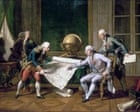
Historical reconstruction of eighteenth-century maritime expeditions typically relies on official admiralty logs, diplomatic dispatches, and archaeological salvage. When an entire fleet vanishes, those institutional pipelines terminate abruptly. The recent resurfacing of private love letters addressed to a French aristocrat connected to the 1785–1788 Jean-François de Galaup, comte de Lapérouse expedition introduces a non-institutional data stream into one of naval history’s most persistent cold cases. By applying forensic historiography and network analysis to these documents, researchers can isolate logistical variables, crew morale metrics, and last-known routing intentions that official French Crown records omitted.
The Structural Deficit in Official Naval Archives
The La Pérouse expedition departed Brest in August 1785 aboard two converted storeships, La Boussole and L'Astrolabe, under direct patronage from King Louis XVI. The mission was designed as a scientific and geopolitical counterweight to the voyages of James Cook, tasked with mapping the Pacific basin, assessing fur trade viability in the North Pacific, and evaluating European colonial footprints in the Southern Hemisphere.
Official documentation of the voyage ends in March 1788, following the ships' departure from Botany Bay in New South Wales. The structural limitation of state-sponsored naval records lies in their curation bias. Captains and senior officers drafted dispatches for the Minister of the Navy, Charles Eugène Gabriel de La Croix de Castries, with an eye toward institutional survival, political patronage, and post-expedition promotion. Operational friction—such as equipment degradation, interpersonal command conflicts, scurvy outbreaks, and unauthorized route deviations—was systematically underreported or sanitized before dispatches were offloaded at intermediate ports like Macao, Petropavlovsk, and Botany Bay.
Private correspondence bypasses this institutional filter. Letters written by officers or aristocrats outside the formal chain of command function as unvarnished telemetry. When such letters survive in private aristocratic estates rather than national archives, they preserve three distinct categories of intelligence:
- Unfiltered Logistics and Material Attrition: Candid assessments of hull integrity, rigging fatigue, and supply depletion that a captain would hesitate to admit to Versailles.
- Social and Command Dynamics: Evidence of factionalism among the aristocratic naval officers (officiers rouges) and the civilian scientific corps, which directly impacted decision-making during crises.
- Informal Routing Hypotheses: Discussions of intended post-Botany Bay trajectories—specifically through Tonga, New Caledonia, and the Santa Cruz Islands—that never made it into formal sailing orders.
Deconstructing the Aristocratic Correspondence Network
In late Ancien Régime France, the naval officer corps was tightly integrated into the court nobility. Expeditions were not isolated scientific ventures; they were extensions of Versailles social networks. Officers maintained continuous written contact with spouses, fiancées, and patrons at court, utilizing merchant vessels from the British East India Company, Dutch East India Company, and Spanish colonial administrations to relay mail back to Europe.
The newly examined letters, directed to a French aristocrat with direct ties to the expedition's inner circle, operate as a secondary black box. To extract valid historical data from romantic or personal correspondence, analysts must separate emotional rhetoric from operational fact. In eighteenth-century epistolary culture, expressions of devotion were routinely paired with precise geographic coordinates, port arrival dates, and personnel updates, as writers sought to anchor their personal narratives in verifiable reality for recipients anxious about maritime mortality rates.
Distinguishing Verified Facts from Epistolary Inference
Rigorous analysis requires strict categorization of the claims contained within private letters:
- Confirmed Telemetry: Dates of port calls, names of surviving officers following the December 1787 massacre at Tutuila (Samoa), and confirmation of which dispatches were entrusted to British vessels at Botany Bay.
- Plausible Operational Context: Descriptions of crew exhaustion, the psychological toll of losing L'Astrolabe's captain Paul Antoine Fleuriot de Langle at Tutuila, and emergency repairs conducted in Australia.
- Speculative Projections: Mention of intended summer itineraries in the South Pacific, which represent command intent prior to departure from Botany Bay rather than confirmed navigational execution.
The Botany Bay Inflection Point
To understand why private letters from early 1788 carry disproportionate analytical weight, one must examine the operational bottleneck at Botany Bay. La Pérouse arrived at the Australian coast in January 1788, days after the British First Fleet under Arthur Phillip had anchored to establish a penal colony.
At this juncture, the French expedition was operating at degraded capacity. Two months earlier, at Tutuila, a landing party seeking fresh water had been attacked, resulting in the deaths of twelve Frenchmen, including Fleuriot de Langle and naturalist Robert de Lamanon. L'Astrolabe had lost its commander and critical longboat assets. Furthermore, the expedition's longboats—essential for charting shallow reefs and executing shore landings—were being rebuilt on the shores of Botany Bay using timber harvested locally.
Official letters handed to British captains for transport back to Europe maintained a tone of controlled confidence. La Pérouse outlined a broad itinerary: sailing north toward New Caledonia, the Santa Cruz Islands, and the Louisiade Archipelago, passing through the Torres Strait, and reaching Île de France (Mauritius) by December 1788.
Private correspondence written during this six-week layover exposes the underlying fragility of that timeline. Without sufficient longboats and with a depleted officer corps, the expedition's margin for navigational error in uncharted coral waters had collapsed. Letters sent to French aristocrats during this window reflect the psychological transition from a triumphant scientific circumnavigation to a high-risk survival transit.
The Mechanics of the Vanikoro Wreckage
Physical evidence discovered in the nineteenth and twentieth centuries established that both La Boussole and L'Astrolabe wrecked on the outer barrier reefs of Vanikoro, an island in the Santa Cruz group (modern-day Solomon Islands), roughly 2,000 miles northeast of Sydney. Archaeological excavations conducted between 1981 and 2008 recovered astrolabes, uniform buttons, skeletal remains, and hull timbers confirming the site of the loss.
However, archaeology reveals where the ships failed, not why they were positioned off Vanikoro's western reefs during a cyclone, nor what transpired among the survivors. This is where private correspondence bridges the evidentiary gap between Botany Bay and the reef impact.
Navigational Vulnerability Factors
- Bathymetric Blindness: Vanikoro is surrounded by a complex, submerged fringing reef system that breaks suddenly from deep ocean swells. Without functioning tenders or extra longboats to scout ahead of the primary vessels, La Pérouse was forced to navigate heavy, square-rigged storeships in close proximity to unmapped hazards.
- Command Centralization: The death of Fleuriot de Langle forced a restructuring of command aboard L'Astrolabe. When two ships sail in tandem through hazardous archipelagos, synchronized signaling and independent tactical judgment between captains are mandatory. The loss of an experienced second-in-command degraded fleet coordination.
- Seasonal Cyclone Exposure: Departing Botany Bay in March placed the expedition directly into the South Pacific tropical cyclone window as it moved north toward the Solomon Islands.
Private letters detailing the state of the ships' rigging, the morale of the replacement officers, and the specific coastal survey priorities dictated by Louis XVI's original instructions clarify why La Pérouse approached Vanikoro closely rather than giving the island a wide berth. King Louis XVI had personally annotated the expedition's instructions, emphasizing thorough cartographic verification over speed. That royal mandate incentivized close-in coastal surveying even when vessel redundancy had been compromised.
Epistolary Provenance and Archival Valuation
The emergence of these letters also highlights a systemic vulnerability in historical preservation: the privatization of primary source data. While state naval archives are indexed, digitized, and cross-referenced, aristocratic family papers remain dispersed across private châteaux, auction houses, and uncatalogued estate collections.
When rare letters surface on the private market or through estate liquidations, their historical utility depends entirely on provenance verification and paleographic authentication. Analysts must validate:
- Paper and Watermark Consistency: Confirming that the rag paper matches eighteenth-century French or British colonial stock available during the voyage's port calls (such as supplies acquired from the British at Botany Bay).
- Postal Markings and Transit Endorsements: Tracing the physical route of the letter via British East India Company packet ships, London clearinghouses, and French royal postal relays.
- Cryptographic or Social Identifiers: Verifying the recipient's identity within the Parisian aristocracy and confirming their documented relationship with the expedition's personnel roster.
If authenticated, such correspondence alters the baseline narrative by humanizing the operational constraints of the voyage. Official histories treat the La Pérouse expedition as a monolithic state enterprise; private letters reveal it as a fragile network of individuals operating at the extreme edge of eighteenth-century logistical reach, acutely aware of their isolation from France.
Limitations of Epistolary Reconstruction
While private correspondence fills critical qualitative gaps, it cannot serve as a standalone solution to the remaining mysteries of Vanikoro—specifically the fate of the survivors who built a two-masted craft from the wreckage of L'Astrolabe and sailed away from the island, never to be seen again.
Letters sent from Botany Bay terminate before the reef strike. They provide zero direct evidence regarding post-wreck survival camps, interactions with the indigenous Melanesian population of Vanikoro, or the intended destination of the survivor craft (whether they attempted to reach the Dutch East Indies, the Philippines, or Botany Bay). Relying too heavily on pre-wreck correspondence risks projecting pre-crisis intentions onto post-catastrophe decision-making.
Furthermore, aristocratic letters carry their own class bias. They reflect the worldview, anxieties, and priorities of the noble officer class while rendering the experiences of the common sailors, marines, and civilian artisans largely invisible.
Integrating Private Archives into Maritime Forensics
To maximize the analytical value of newly surfaced aristocratic letters, maritime historians and archival institutions must move beyond treating them as isolated literary curiosities or auction trophies. The immediate operational priority is the systematic digitization and cross-referencing of these letters against the surviving Service Historique de la Défense rosters and the archaeological inventory from Vanikoro. By mapping the personal relationships, supply complaints, and unofficial itinerary notes documented in private correspondence directly onto the physical artifacts recovered from the reef, researchers can construct a high-resolution model of the expedition's final weeks—transforming romantic relics into hard forensic evidence.