
The air at Woodbine Park smelled like clipped grass and the sharp, metallic tang of Lake Ontario. It was a Saturday that felt heavier than usual. For the boys in the dugout, this wasn't just another game in a local league. It was the moment the dirt under their cleats became sacred ground.
When the Kingston Sentinels took the field for their inaugural home opener in the Ontario Premier League (OPL), the stakes weren't listed on any scoreboard. You couldn't see them in the batting averages or the pitch counts. The real stakes were written on the faces of fathers leaning against the chain-link fence and in the quiet, focused intensity of teenagers who suddenly realized they were no longer playing for trophies. They were playing for a future that, until now, felt like it belonged to someone else, somewhere else.
For years, if you were a ballplayer in Kingston with big-league dreams, you were a nomad. You spent your weekends in the backseat of a sedan, watching the 401 blur past as you chased high-level competition in Toronto or Ottawa. You were an outsider. You were the "kid from Kingston" trying to crack a roster in a city that didn't know your name. But as the Sentinels sprinted toward their positions under the bright midday sun, that narrative shifted. The game had finally come home.
The Weight of the Jersey
Consider a hypothetical player named Leo. He’s seventeen. He has spent a decade of his life waking up at 5:00 AM to hit leather balls into a net in a cold garage. To Leo, the Sentinels jersey isn't just polyester and stitching. It represents the end of the "travel ball" exile. When he buttons it up, he isn't just representing a team; he is representing a lineage of Kingston athletes who never had a premier platform of their own.
The OPL is the elite tier of amateur baseball in the province. It is the hunting ground for scouts and the proving ground for university recruiters. By securing a franchise and hosting these home openers against the likes of the Mississauga Tigers and the Ontario Blue Jays, Kingston has planted a flag.
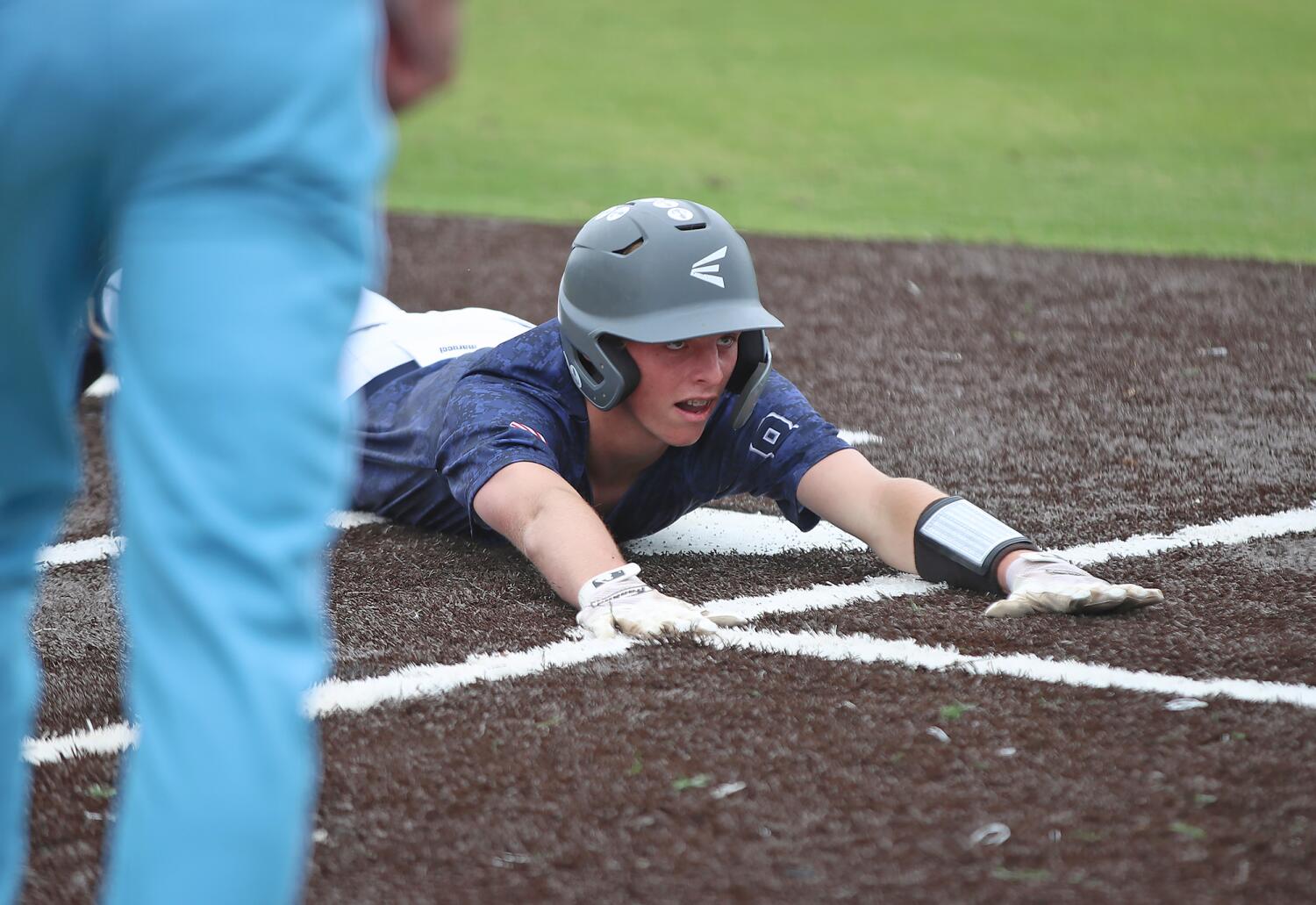
The games themselves were a masterclass in tension. Baseball is a sport of failure, a game where the best players miss seven times out of ten. But on this opening weekend, the Sentinels played with a desperate sort of grace. Every sliding catch in the outfield was a statement. Every crack of the bat echoed off the nearby houses, signaling to the neighborhood that something different was happening here.
Beyond the Box Score
If you look at the statistics, you’ll see wins and losses. You’ll see the 18U and 16U squads grinding through doubleheaders, navigating the psychological warfare of a 3-2 count with the bases loaded. But the box score is a skeleton; the human element is the flesh and blood.
The beauty of the OPL coming to Kingston lies in the quiet moments between innings. It’s the way a younger brother watches from the stands, seeing his sibling compete at the highest level and realizing that he doesn't have to leave home to be great. It’s the coaches, men who have volunteered thousands of hours, finally seeing their vision of a "complete pathway" for local talent become a physical reality.
We often talk about sports as a distraction, but for these families, it is a focal point. The investment is massive. Not just the registration fees or the equipment, but the emotional capital. When a Kingston pitcher stares down a batter from a powerhouse Toronto program, he isn't just throwing a fastball. He is challenging the assumption that small-market kids can’t hang with the giants.
There is a specific kind of pressure that comes with being the first. These Sentinels are the pioneers of the OPL era in Kingston. They are the ones who have to set the culture. If they are lazy, the program withers. If they are disciplined, they build a cathedral.
The Invisible Infrastructure
Success in the Ontario Premier League requires more than just talent. It requires a level of organizational discipline that rivals professional minor leagues. The logistics of hosting these openers—the field maintenance, the officiating, the coordination of multiple age groups—is a monumental feat of community will.
But why does it matter? Why should someone who doesn't know a bunt from a balk care about a group of teenagers playing on a Saturday?
Because a city is defined by what it fosters. When a community creates a space for excellence, it raises the ceiling for everyone. The Sentinels aren't just producing baseball players; they are producing young men who understand that the world doesn't owe them a win. They are learning the brutal, beautiful logic of the diamond: the ball doesn't care who you are or where you're from. It only cares about what you do when it’s flying toward you at ninety miles per hour.
As the sun began to dip toward the horizon on Sunday afternoon, coating Woodbine Park in a long, golden haze, the intensity didn't flicker. The dirt on the uniforms was darker now, a mixture of sweat and the red clay of the infield.
The Sentinels walked off the field not just as a team that had played its first home games, but as a program that had survived its baptism. They proved that the "Kingston" on their chests belonged in the same conversation as the storied programs of the GTA.
The bleachers emptied. The parked cars cleared out. But the energy remained, vibrating in the humid air. The nomad days are over. The gates are open, the lines are chalked, and for the first time, the road to the big leagues runs directly through the Limestone City.
The dirt will eventually be washed out of the jerseys, but the memory of that first pitch, thrown in front of a home crowd that finally had a reason to roar, is permanent.
Night fell over the park, leaving only the scent of the lake and the quiet promise of the next home stand.

-1920w.jpg)