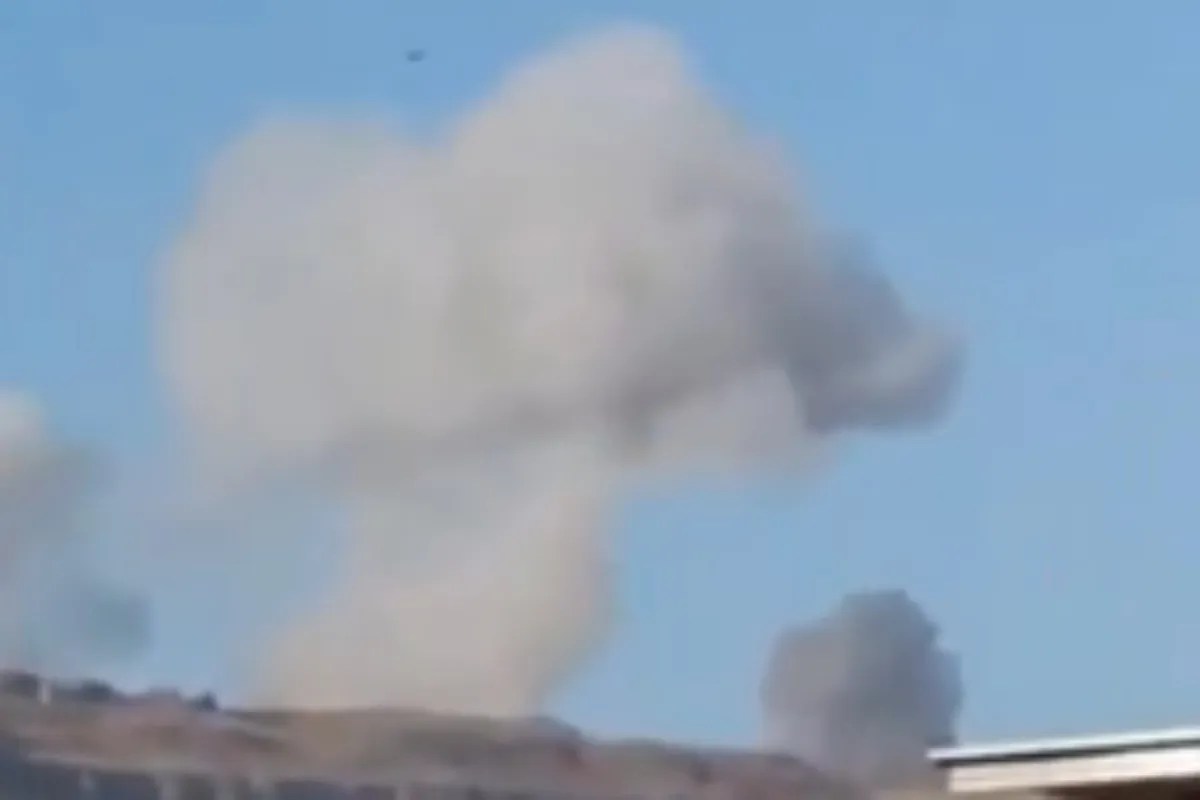
The headlines scream about explosions near Sanaa and the Red Sea, treating every airstrike as a fresh shockwave in an unpredictable theater. Analysts scramble on television, pointing at maps, mumbling about escalating instability and regional flashpoints. They have it entirely backward. What the mainstream media brands as chaos is actually a highly predictable, calculated containment ritual.
Stop looking at the smoke on the horizon and look at the logistics ledgers. Recently making headlines lately: The EU Debt Hole Is A Fiction That Masks The Real Price Of Abandoning Ukraine.
For decades, the lazy consensus in geopolitical commentary has been that military force in the Middle East operates as a blunt instrument of immediate deterrence. If you drop ordinance, the target cowers or backs down. Reality offers a harsher lesson. I have watched analysts burn millions of words and billions of dollars chasing symptoms while ignoring the structural mechanics of maritime choke points.
Let us clear up the vocabulary immediately. A choke point is not merely a narrow body of water where ships pass. It is an economic tollbooth guarded by geography. When disruptions hit the Bab-el-Mandeb strait, the shock is not military; it is financial. Rerouting container ships around the Cape of Good Hope adds thousands of miles and millions in fuel costs per voyage. Who pays for that? You do, every time you buy imported goods. Yet, the pundit class insists on framing every kinetic exchange through the lens of sudden, unprecedented crisis. More information regarding the matter are covered by USA Today.
It is not unprecedented. It is a recurring tax on globalized supply chains.
The mainstream narrative relies on a comfortable illusion: that military intervention restores order. Every time airstrikes hit targets in Yemen, commentators act as though a decisive turning point has arrived. This is magical thinking. Air power alone cannot alter the economic leverage gained by controlling an artillery range overlooking twelve percent of global trade. The geography dictates the power dynamic, not the sortie count.
Consider the alternative perspective that television networks refuse to air. The strikes do not solve the underlying shipping vulnerability; they manage it. They serve as a kinetic status update, a violent punctuation mark in a protracted war of economic attrition. Shipping lines have already priced the disruption into their long-term models. They are not waiting for stability; they are engineering permanent workarounds.
When you strip away the sensationalism, the geopolitical theater reveals a stark truth. The actors involved are not aiming for total victory or total defeat. They are playing a protracted game of margin compression. Every missile launched and every intercepted drone carries a price tag that disproportionately hurts the defender of open trade routes more than the insurgent dug into mountainous terrain.
The real danger is not the escalation everyone fears on cable news. The real danger is the quiet normalization of fractured global trade. Once supply chains adapt to permanent insecurity, the old era of cheap, frictionless shipping is dead. Pretending that another round of targeted bombings will magically reset the clock is not just naive; it is economic illiteracy.
Stop waiting for a diplomatic breakthrough that ignores basic math. The Red Sea is no longer a neutral highway. It is a contested toll road, and the toll is going up.