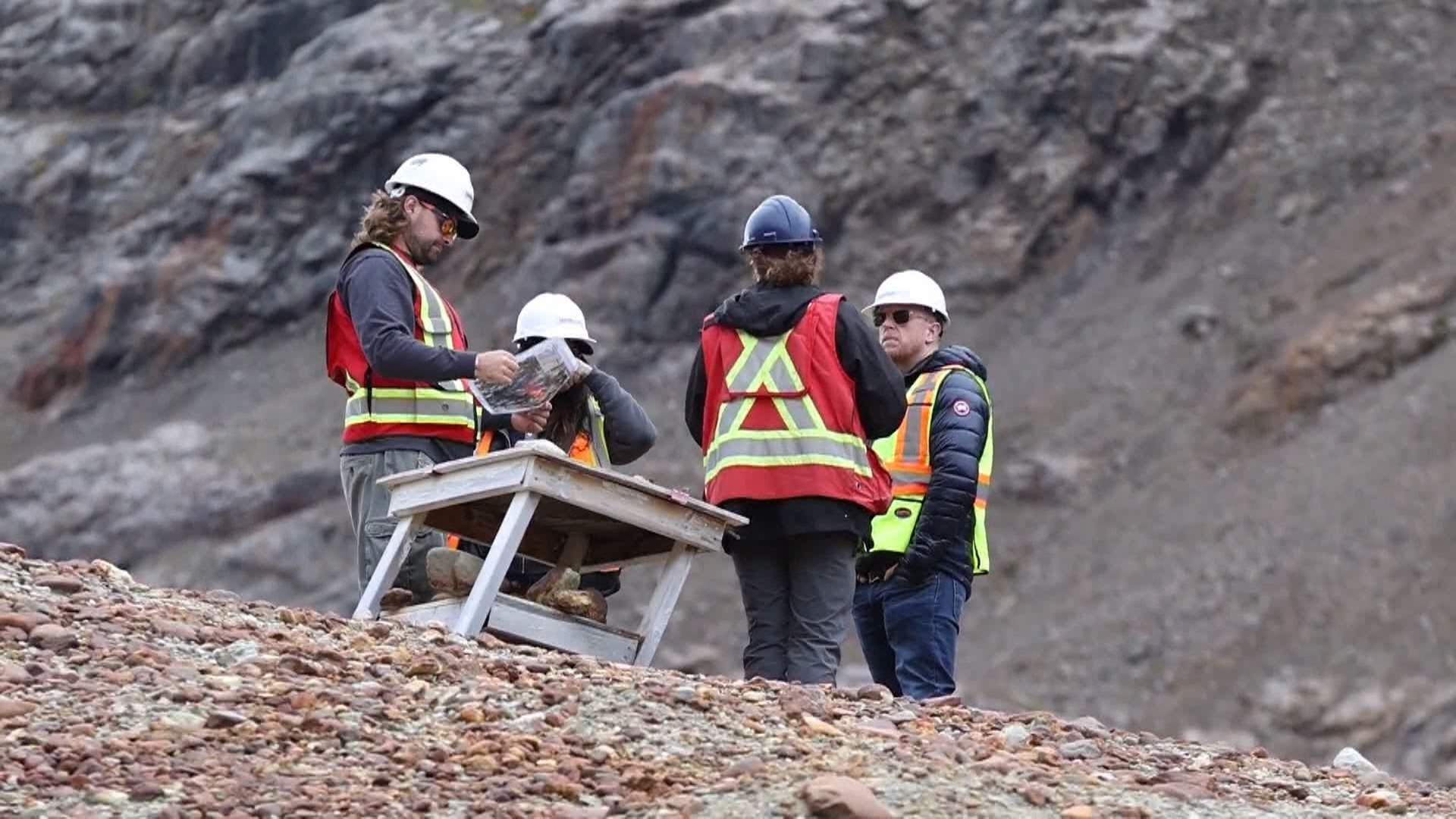
Capital allocation in northwestern British Columbia’s Golden Triangle does not fail at the drill bit; it fails at the intersection of administrative law, Indigenous title, and statutory permitting timelines. When a major mining project in this mineral-rich corridor suffers a judicial setback, surface-level reporting frames the event as an isolated environmental dispute or a sudden regulatory surprise. In reality, court interventions in British Columbia’s extractive sector follow a predictable structural sequence driven by constitutional consultation duties, environmental assessment mechanics, and capital market discount rates.
The Structural Anatomy of a Judicial Setback
A court ruling that halts, remands, or invalidates a mining permit in British Columbia rarely stems from an arbitrary judicial preference. Instead, it reflects a breakdown in the administrative record compiled by provincial ministries—primarily the Environmental Assessment Office (EAO) and the Ministry of Energy, Mines and Low Carbon Innovation (EMLI)—prior to granting statutory authorizations.
To understand why major projects in the Golden Triangle stall in the Supreme Court of British Columbia or the British Columbia Court of Appeal, operators and investors must separate the legal dispute into three distinct operational failure points.
1. The Consultation Adequacy Deficit
Under Section 35 of Canada’s Constitution Act, 1982, the Crown holds a legal duty to consult and, where appropriate, accommodate Indigenous groups when contemplated conduct might adversely impact asserted or established Aboriginal rights and title. While the Crown retains the ultimate constitutional responsibility, procedural aspects of consultation are routinely delegated to project proponents.
A judicial setback occurs when a First Nation demonstrates that the Crown’s decision-making process fell short on the Haida spectrum—a legal sliding scale measuring the strength of the Indigenous claim against the seriousness of the potential adverse impact. In the Golden Triangle, where traditional territories of nations such as the Tahltan, Nisga’a, Gitanyow, and Tsetsaut Skii km Lax Ha overlap or abut major porphyry copper-gold deposits, the threshold for deep consultation is consistently triggered. If the administrative record shows that provincial regulators treated consultation as a procedural checkbox rather than a substantive dialogue capable of altering project design, a reviewing judge will quash the permit.
2. Administrative Reasonableness and the Standard of Review
Following the Supreme Court of Canada’s framework in Canada (Minister of Citizenship and Immigration) v. Vavilov, judicial review of administrative decisions centers on "reasonableness." A court does not re-weigh technical geological or hydrological data; it audits the chain of reasoning used by the statutory decision-maker.
Setbacks arise when an environmental assessment certificate or a Mines Act permit relies on circular logic or unverified future mitigation. For example, if a regulator approves a tailings storage facility in a seismically active, high-precipitation alpine valley by assuming that future adaptive management plans will resolve acid rock drainage risks—without baseline data proving those plans work—the decision fails the Vavilov test for internal coherence.
3. Statutory Sequencing and Permit Fragmentation
Large-scale mines in British Columbia require layered approvals: an Environmental Assessment Certificate (EAC), a Mines Act permit, Environmental Management Act discharge permits, and federal authorizations under the Fisheries Act or the Impact Assessment Act.
Litigation frequently exploits the seams between these stages. Opponents or affected nations challenge early-stage permits—such as bulk sampling, road construction, or exploration camp expansions—arguing that granting incremental authorizations creates irreversible momentum before cumulative effects are assessed. When courts stay a preliminary permit, they effectively freeze the critical path of the entire capital project.
The Economic Mechanics of Delay in the Golden Triangle
The Golden Triangle—roughly bounded by the Stewart-Cassiar Highway (Highway 37), the Iskut River, and the Alaska Panhandle—presents extreme logistical constraints. Elevations are steep, glaciation is active, and weather windows for civil construction are narrow. Consequently, a legal delay is never linear; a six-month court injunction routinely translates into a twelve- to eighteen-month schedule slip.
Seasonal Construction Windows and Sunk Costs
Civil earthworks, road building, and camp mobilization in northwestern British Columbia operate on a strict seasonal calendar, typically running from late May through October. If a court issues an interlocutory injunction in April, the operator misses the entire summer construction window.
During this idle period, fixed overhead continues to burn. Care-and-maintenance costs for remote camps, environmental monitoring obligations, equipment leases, and specialized engineering retainers consume working capital without advancing net asset value. Unlike projects in arid or temperate jurisdictions where crews can remobilize the week after a legal stay is lifted, Golden Triangle operators must wait for the following spring thaw.
The Discount Rate and Net Present Value Erosion
In mining finance, project valuation is governed by Net Present Value (NPV) and Internal Rate of Return (IRR). Because open-pit and bulk-tonnage underground mines require massive upfront capital expenditure (CapEx) before generating a single dollar of cash flow, the timing of first production dictates project viability.
When litigation pushes cash flows out by two years:
- Present Value Compression: Future revenues are discounted more heavily, directly reducing NPV even if metal prices remain constant.
- Cost of Capital Escalation: Institutional lenders and streaming companies reprice political and permitting risk. Debt facilities require higher interest spreads, and equity raises occur at steeper discounts, diluting existing shareholders.
- CapEx Inflation: Delayed procurement exposes the project to multi-year inflation in steel, heavy mobile equipment, and skilled labor—factors that have historically outpaced general consumer inflation in northern British Columbia.
The Transboundary and Downstream Multiplier
A unique variable in the Golden Triangle is geography. The major river systems draining the region—the Stikine, Unuk, Taku, and Nass—flow west across the international border into Southeast Alaska.
This hydrology introduces a cross-border geopolitical dimension that amplifies domestic legal challenges. Downstream Indigenous tribes in Alaska, commercial fishing associations, and state-level stakeholders monitor British Columbia’s permitting docket closely. While Alaskan entities lack direct constitutional standing under Canadian Section 35 jurisprudence, their technical critiques of tailings dam integrity and water quality modeling frequently inform the evidentiary records filed by Canadian litigants and environmental non-governmental organizations (ENGOs).
Furthermore, past tailings failures in British Columbia have permanently altered the evidentiary burden for water management. Regulators and courts scrutinize dam breach runout models, glacial lake outburst flood (GLOF) risks, and selenium treatment efficacy with heightened skepticism. Any ambiguity in geochemical characterization becomes an immediate vulnerability during judicial review.
Distinguishing Verified Structural Realities from Market Speculation
When news breaks of a court setback in the Golden Triangle, market commentary rapidly blurs the line between legal reality and speculative panic. Separating the two requires disciplined categorization.
Established Operational Facts
- Jurisdictional Authority: British Columbia’s Declaration on the Rights of Indigenous Peoples Act (DRIPA) and the updated Environmental Assessment Act (2018) legally embed consensus-seeking mechanisms and Indigenous-led assessment pathways into the permitting architecture. Projects initiated under older regulatory regimes face friction when transitioning into this modernized framework.
- Infrastructure Dependency: The viability of the Golden Triangle relies on public-private infrastructure—specifically the Northwest Transmission Line (NTL) and Highway 37. Legal challenges targeting linear access roads affect not only single-asset juniors but also regional multi-deposit development strategies.
- Remand vs. Cancellation: In Canadian administrative law, a successful judicial review almost always results in the decision being remanded (sent back) to the original statutory decision-maker for reconsideration in accordance with the court’s reasons, rather than an outright, permanent ban on mining.
Analytical Hypotheses and Forward Risks
- Precedent Contagion: While each judicial review turns on its specific administrative record, a ruling that tightens the definition of adequate baseline water data or consultation scope effectively raises the compliance floor for every neighboring project in the Stikine and Nass watersheds.
- M&A Valuation Haircuts: Senior producers looking to acquire Golden Triangle developers will increasingly structure deals with contingent value rights (CVRs) or milestone-based payments tied explicitly to the survival of permits past the statutory judicial review limitation period (typically 30 to 60 days post-issuance in British Columbia).
- The Consent Threshold: For large-footprint projects requiring new tailings impoundments, a purely technical regulatory approval without a formal Impact Benefit Agreement (IBA) or consent-based framework with the primary affected First Nation carries a near-certain probability of litigation.
De-Risking Project Execution in High-Friction Jurisdictions
Operators and capital allocators cannot eliminate judicial risk in British Columbia, nor can they rely on provincial ministries to shield permits from constitutional challenges. De-risking requires internalizing legal resilience into early-stage engineering and corporate strategy.
1. Front-Load Baseline Environmental Data
Do not treat baseline environmental studies as a minimum regulatory compliance exercise. Collect multi-year hydrological, meteorological, and geochemical data well before entering the formal Environmental Assessment process. When technical models are backed by five years of empirical site data rather than regional extrapolations, opposing experts struggle to demonstrate administrative unreasonableness in court.
2. Audit the Crown’s Consultation Record
Proponents must maintain a parallel, forensic log of all consultation activities. Because the Crown’s failure to document accommodation becomes the proponent’s operational delay, project teams should ensure that every First Nation concern raised during technical working groups receives a written, traceable response detailing either a design modification or a rigorous technical explanation for why a modification is unfeasible.
3. Align Engineering Design with Indigenous Land-Use Priorities
Tailings placement, water discharge points, and road alignments should be co-designed with local Indigenous knowledge holders prior to locking in the Feasibility Study. Moving a waste rock dump or switching from wet tailings to filtered dry-stack tailings increases upfront CapEx, yet that capital expenditure functions as an insurance policy against multi-year judicial injunctions that destroy far more value.
4. Stage Capital Commitments Around Limitation Periods
Board-level stage-gate approvals for major construction contracts must account for the post-permit judicial review window. Deploying heavy civil mobilization capital the day a permit is signed exposes the balance sheet to maximum loss if a stay application is filed three weeks later. Hold major irreversible capital commitments until the statutory window for filing a petition for judicial review expires, or until initial stay motions are resolved.
Strategic Mandate for Capital Allocators
Treat permitting and legal durability as primary geological variables rather than secondary administrative tasks. When evaluating or managing assets in British Columbia’s Golden Triangle, discount any project timeline that assumes linear regulatory approval without negotiated Indigenous consent agreements. Reallocate early-stage capital away from rapid resource expansion and directly into baseline water science, dry-stack tailings engineering, and binding bilateral governance frameworks—the only mechanisms proven to insulate net asset value from judicial remand.