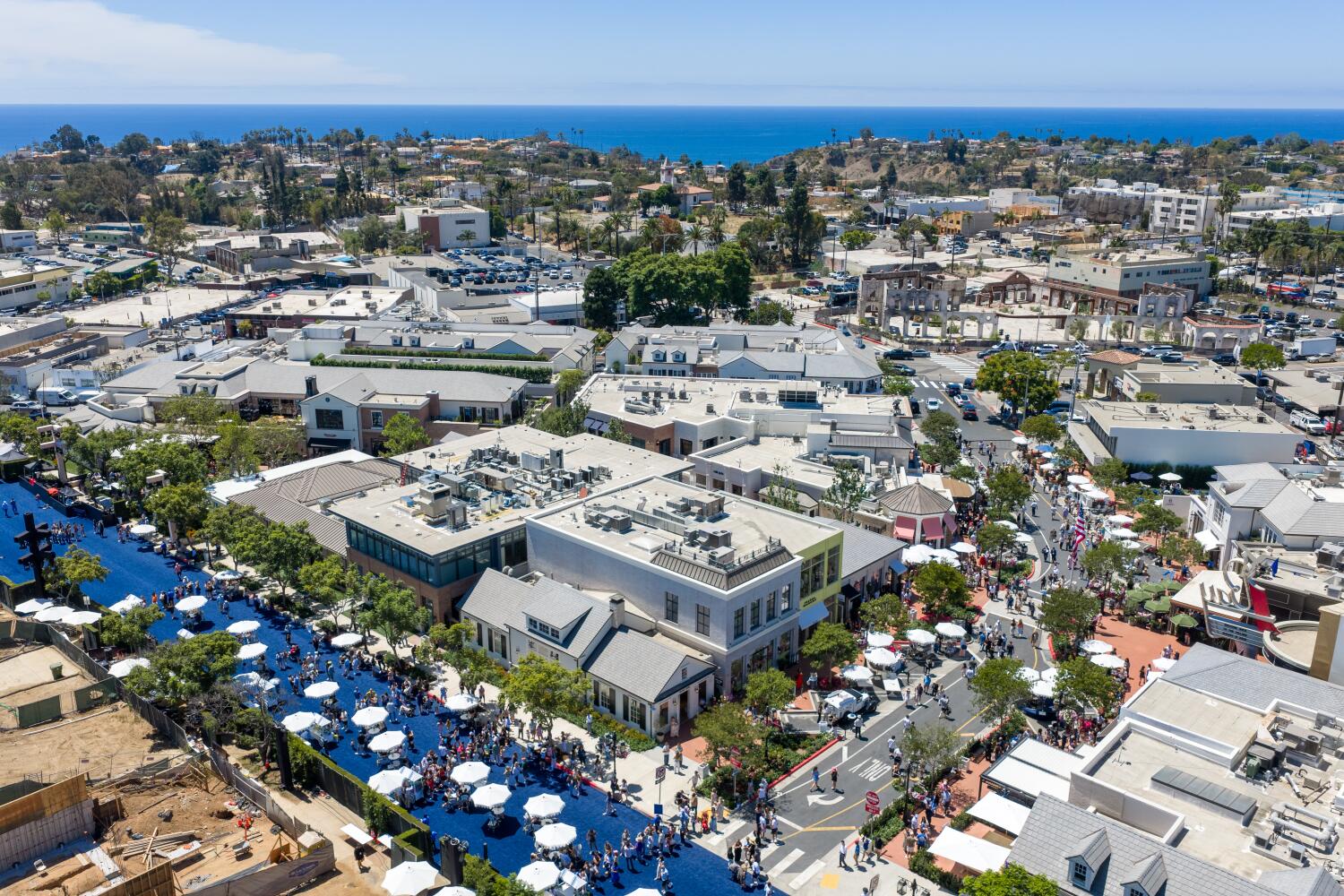
Every local rag and retail consultant is weeping tears of joy over the ribbon-cutting at Palisades Village. They call it resilience. They call it a milestone for a fire-weary community pulling itself up by its bootstraps.
It is a comforting delusion. For a more detailed analysis into similar topics, we recommend: this related article.
Slapping fresh coats of paint, high-end boutiques, and artisanal coffee shops onto a burn scar does not fix the underlying pathology of Southern California high-risk real estate. It just creates a prettier target for the next inevitable windstorm.
I have watched developers pour hundreds of millions into luxury retail strips designed to withstand high-end consumer whims while completely ignoring the brutal mathematical realities of wildfire economics. We are celebrating the triumphant return of valet parking and designer handbags in a zone where insurance carriers are fleeing faster than residents during a Red Flag warning. For broader information on the matter, comprehensive coverage can also be found on Forbes.
Retail therapy is not disaster recovery.
The Myth of the Bounce Back
The lazy consensus in commercial real estate holds that physical storefronts represent economic pulse points. When a shopping center reopens, the neighborhood lives again.
That logic belongs in a Hallmark movie, not a balance sheet.
Palisades Village is a masterclass in aesthetic escapism. It offers a curated illusion of permanence in a geography defined by transience. But let us look at the actual mechanics of what happens when you anchor community revival to high-margin retail in an uninsurable fire corridor.
Insurer withdrawal is not a temporary glitch. It is a structural shift in risk assessment. When major carriers pull out of California or cap their exposure, the cost of capital skyrockets. Storefronts can sell all the cashmere sweaters they want, but if the underlying properties cannot secure affordable casualty coverage, the entire asset class sits on a razor edge.
We are not witnessing a triumphant rebirth. We are watching a well-marketed denial of gravity.
The Insurance Reality Check
People love to ask why local businesses struggle to stay open after a catastrophe. The standard narrative blames supply chain bottlenecks, municipal red tape, or consumer hesitancy.
Those are symptoms. The disease is risk mispricing.
For decades, local governments subsidized lifestyle choices in high-hazard zones by pretending that natural disasters were statistical anomalies rather than recurring cycles. Developers built opulent retail villages because local zoning permitted it and cheap insurance absorbed the downside.
Now, the math has caught up. Reinsurance markets globally are tightening. When state-backed insurers of last resort become the only game in town, the financial foundation of suburban luxury shopping crumbles.
Imagine a scenario where a commercial tenant signs a ten-year lease in a newly minted retail hub, only to see their property insurance premium quadruple at the next annual renewal. Can they pass those costs onto shoppers browsing for luxury candles? Only up to a point. Then margins vanish, vacancies spike, and the triumphant milestone turns into a ghost town with nice landscaping.
Why Aesthetic Resiliency Fails
Retail centers like Palisades Village rely on foot traffic, high dwell times, and consumer confidence.
Fire seasons do not care about foot traffic.
When smoke fills the basin for weeks, retail sales plummet regardless of how many chic outdoor dining patios you install. Consumer confidence is fragile. People do not stroll down Main Street sipping artisanal matcha when their primary anxiety is whether their homeowner's policy will drop them before winter rains trigger mudslides.
We keep treating physical reconstruction as a substitute for environmental adaptation. Building prettier shopping centers in high-risk zones without fundamentally changing how we handle land use, building materials, and risk distribution is just rearranging deck chairs on a very expensive, very dry yacht.
What True Economic Strategy Looks Like
If we actually wanted to build durable communities instead of Instagram backdrops, we would stop subsidizing high-risk sprawl and start reallocating capital toward structural hardening, decentralized water grids, and defensible infrastructure.
Instead, we get a ribbon-cutting ceremony. Politicians get their photo ops. Developers lock in their initial phase returns. And the public is fed a feel-good narrative about fire-weary communities bouncing back, as if enthusiasm alone can repeal the laws of thermodynamics.
Stop confusing retail activity with economic health. A community is not resilient because it can buy a $90 candle after a disaster. It is resilient when its financial structures can survive the next inevitable shock without needing a bailout or a PR campaign.
The shops are open. The valets are parking cars. And the underlying vulnerability hasn't changed by a single inch.