The headlines scream about a historic escalation. The International Atomic Energy Agency board votes to report Tehran to the United Nations Security Council for the first time in two decades, and the pundit class loses its collective mind. They treat this bureaucratic maneuver like a digital clock ticking down to zero hour. It is a comforting narrative for people who love red tape, press releases, and the comforting illusion that institutional paperwork can rewrite geopolitics.
It is also entirely detached from physical reality.
Strip away the diplomatic theater and the emergency briefings in Vienna, and you are left with a simple truth: paper resolutions do not stop centrifuges. For twenty years, the playbook has remained identical. A milestone is crossed, a resolution is passed, a stern letter is drafted, and absolutely nothing fundamental changes on the ground in Natanz or Fordow. Pretending that moving a dossier from the IAEA board room to a paralyzed UN Security Council alters the physical math of uranium enrichment is not just lazy analysis. It is professional malpractice.
The Myth of the Automatic Escalation Trap
Every time the IAEA board initiates a referral, the standard commentary relies on a predictable cadence of fear. The lazy consensus assumes that this bureaucratic mechanism triggers a predictable domino effect: report to New York, debate in the chamber, imposition of sweeping international sanctions, and eventual economic or military crisis.
This model ignores how global supply chains and regional power dynamics have evolved over the last decade.
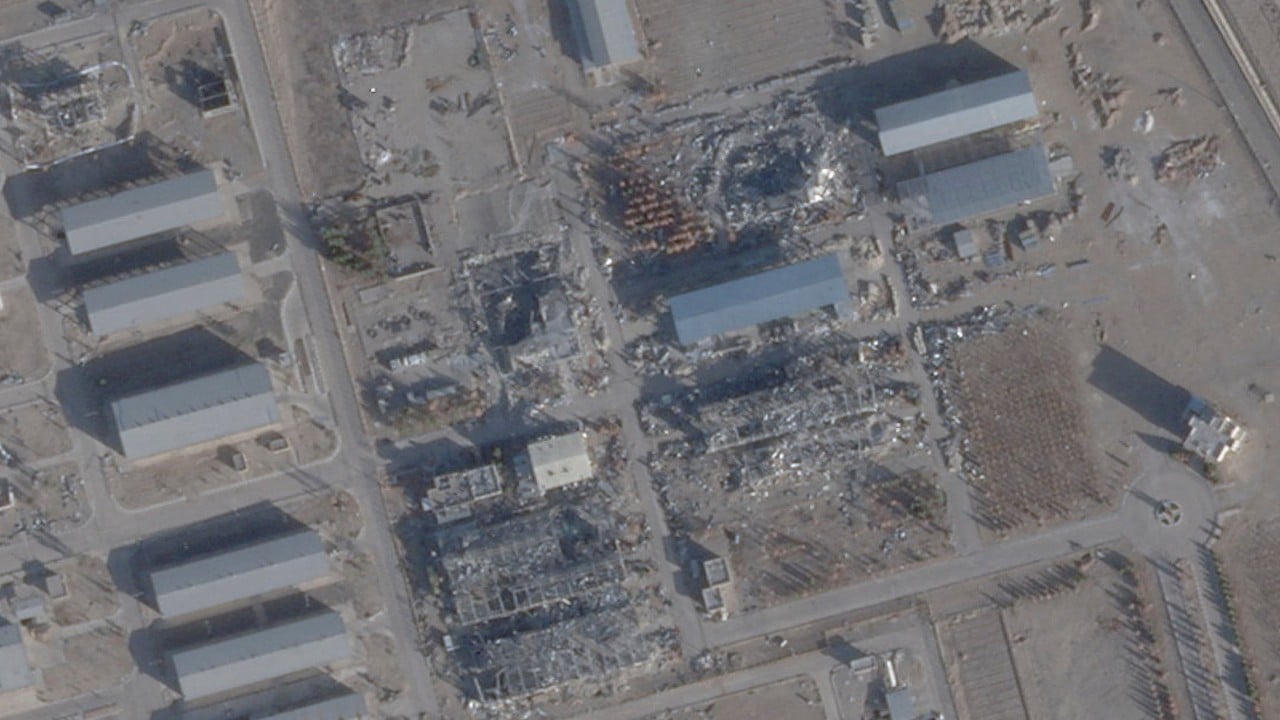
Sanctions are not a magical switch that turns off industrial capacity; they are a friction tax. When you isolate an economy for decades, it stops being vulnerable to external financial leverage and instead builds deep immunity through gray-market trade, bilateral currency swaps, and localized supply chains. Iran’s nuclear program is no longer dependent on western high-tech components or open-market procurement channels. It is indigenous. It is resilient. It is baked into the concrete and bedrock of facilities that cannot be bombed out of existence by a strongly worded resolution.
When analysts argue that this referral brings the world to a turning point, they are projecting their own faith in international law onto actors who view international law as a tactical variable. The UN Security Council is structurally paralyzed. Russia and China possess vetoes, and neither has any strategic incentive to implement punitive measures that would push Tehran further into a corner or disrupt their own regional trade architecture. Treating the Security Council like a functional enforcement agency is like calling the fire department while your house is already burned to the foundation and hoping they can fine the spark.
What the Pundits Miss About Enrichment Math
Let us look at the actual physics of the program, because the mainstream media consistently misrepresents what enrichment levels actually mean in practice.
The obsession centers around the stockpile of uranium enriched to sixty percent U-235. The talking point repeats ad nauseam that sixty percent is just a short technical step away from ninety percent weapons-grade material. Technically, yes. The physical effort required to go from zero to twenty percent is roughly eighty percent of the total separative work units needed to reach weapons grade. The final push from sixty to ninety percent is mathematically trivial in terms of engineering investment.
Yet focusing solely on the enrichment percentage misses the strategic window of vulnerability.
The real metric that matters is breakout time combined with weaponization capability—the difference between having enriched metal and having a functional, deliverable warhead. Inspectors obsess over grams of isotope while ignoring the complex diagnostics of high-explosive lens implosion systems and missile re-entry vehicle integration. Those engineering milestones require cold tests, computer simulations, and material science breakthroughs that cannot be easily measured by counting centrifuge cascades in an underground bunker.
By hyper-focusing on the IAEA board vote, the media distracts the public from the reality that the technological threshold has already been crossed. The knowledge is baked into university curricula, domestic industrial networks, and decades of institutional trial and error. You cannot sanction an equation. You cannot refer an intellectual property to the Security Council.
The Real Cost of Diplomatic Posturing
Diplomacy that relies on hollow escalation does not preserve peace; it erodes credibility.
When international bodies issue red lines and enforce them with paperwork, they signal weakness to regional competitors. Saudi Arabia, the United Arab Emirates, and Israel watch this dance in Vienna and recognize that western security guarantees are increasingly administrative rather than kinetic. If the UN Security Council fails to deliver immediate, tangible consequences—which it will—the deterrent value of international institutions drops to absolute zero.
This creates a dangerous vacuum. When states realize that multilateral organizations are incapable of managing proliferation threats through institutional channels, they take matters into their own hands. Sabotage, cyber warfare, targeted assassinations, and regional proxy conflicts escalate precisely because conventional diplomacy has retreated into the safety of procedural symbolism.
The IAEA is doing its job by documenting safeguards violations. That is its mandate. The agency is an inspectorate, not a global police force. The failure lies entirely with political leaders and commentators who demand that a thermometer solve a fever.
Stop reading the tea leaves of Vienna board votes. Stop waiting for the Security Council to save the non-proliferation regime. The architecture built in 1968 is dead, and no amount of emergency resolutions will resurrect it.