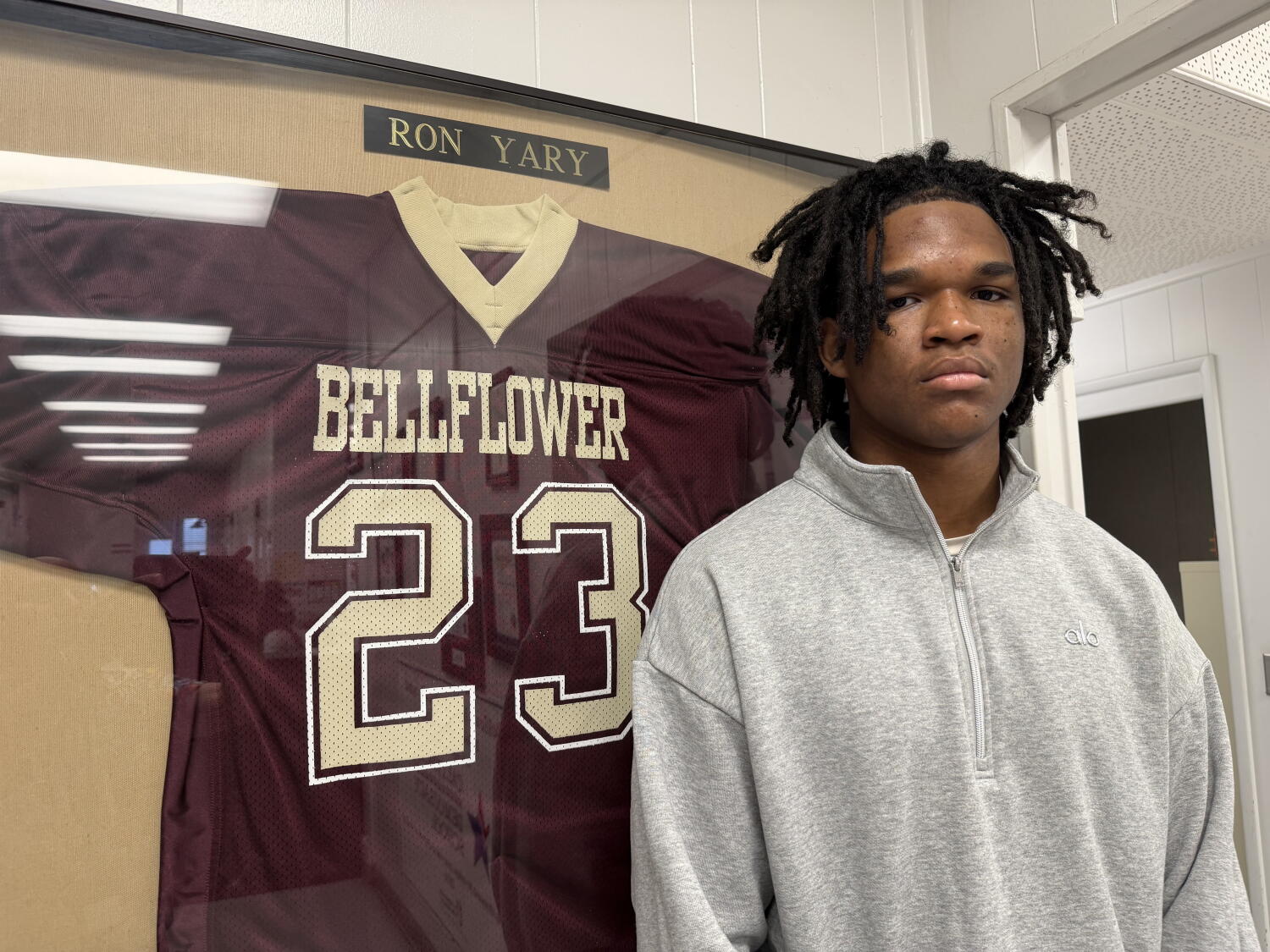
High school football operates on an unforgiving timeline. Programs invest months of grueling winter conditioning, spring camps, and summer heat into building a cohesive unit, only for a single awkward tackle or non-contact cut to alter an entire autumn. When a standout athlete goes down, the shockwave hits the depth chart, the locker room psyche, and the recruiting radar all at once. For Bellflower football, the absence of Austin Miller left a glaring void that exposed the delicate mechanics of modern prep sports roster construction.
Austin Miller is officially set to return to the field, injecting a vital spark back into the Bellflower program. Yet, an athletic comeback is rarely just a matter of physical clearance. It is a complex physical and psychological hurdle where medical milestones intersect with competitive pressure.
The Anatomy of the Recovery Timeline
Medical clearance represents only the final checkbox on a long ledger of rehabilitation. When a high-level high school football player suffers a significant injury, the road back demands a precise sequence of physiological adaptations. Tendons, ligaments, and bone structures heal at fixed biological rates, regardless of how badly a coach wants a playmaker back under the Friday night lights.
Physical therapists and athletic trainers working with elite teenagers face a unique challenge. Unlike professional athletes whose livelihoods depend solely on their bodies, teenagers are still developing physically. Growth plates, muscular imbalances, and rapid skeletal changes complicate rehabilitation protocols. When Miller hit the training room, the objective extended beyond returning to his baseline strength. The training staff had to bulletproof his joints against the specific rotational torque and lateral shearing forces inherent to high school football.
Rebuilding confidence remains the hidden half of any serious sports injury recovery. A player can squat massive weight in a controlled gym environment, yet still hesitate the first time they face an unscripted pass rush at full speed. This psychological hesitation often manifests as subtle shifts in biomechanics. Protecting an injured limb subconsciously alters running form, which inadvertently raises the risk of a secondary injury somewhere else in the kinetic chain. Overcoming this barrier requires a gradual exposure to live contact, moving from controlled individual drills to full-speed, chaotic team environments.
The Ripple Effect on Program Strategy
The loss of a primary contributor forces coaching staffs to abandon their ideal playbook. Without a dynamic weapon like Miller, offensive coordinators must simplify schemes, lean heavily on alternative personnel packages, and manage game scripts with extreme caution. Opposing defenses respond by rolling coverages, locking down remaining perimeter threats, and forcing backups to beat them in high-leverage situations.
This disruption trickles down to the broader ecosystem of high school athletics. College scouts tracking a program come to evaluate specific matchups. When a marquee player misses crucial games during the evaluation window, recruitment momentum can stall. Programs must actively communicate medical timelines to collegiate coaching staffs, providing verified testing metrics and game film from prior seasons to maintain interest.
The return of a player of Miller's caliber alters the geometric reality of the offense. Defences can no longer afford to over-commit resources to one side of the formation. Spacing improves, rushing lanes widen, and the play-calling menu expands exponentially. For Bellflower, this integration requires a delicate balance. Pushing a returning player into a full snap count immediately risks fatigue-related breakdowns, while easing them back too slowly might disrupt the rhythm of teammates who adapted to new roles during their absence.
The Broader Reality of Prep Sports Health
The narrative surrounding a star player returning from injury usually focuses on Hollywood-style redemption arcs. The reality is far more clinical, methodical, and occasionally stressful. High school sports organizations face mounting scrutiny regarding player safety, load management, and the long-term health of adolescent athletes.
Modern athletic departments increasingly rely on advanced tracking data, GPS vests, and workload monitoring tools that were once exclusive to elite college and professional programs. Even at the prep level, coaches track acceleration metrics, total distance covered, and impact loads to ensure players are neither under-prepared nor overworked upon their return. This technological shift has transformed sports medicine from an intuitive art into a data-driven science.
Yet, numbers on a spreadsheet cannot fully measure competitive hunger. The mental strain of watching from the sideline tests an athlete's identity. For many teenagers, sports provide a primary social anchor and a sense of purpose within the school community. Losing that outlet breeds frustration, making the eventual return to the gridiron as much an emotional release as a physical test.
As Bellflower reintegrates Miller into the active roster, the focus shifts from what was lost during the recovery months to what is possible down the stretch. The true measure of this comeback will not be found in a single highlight-reel play or an individual stat line. It will be determined by how seamlessly the individual pieces lock back into the collective machine when the game accelerates and the margin for error narrows to zero.