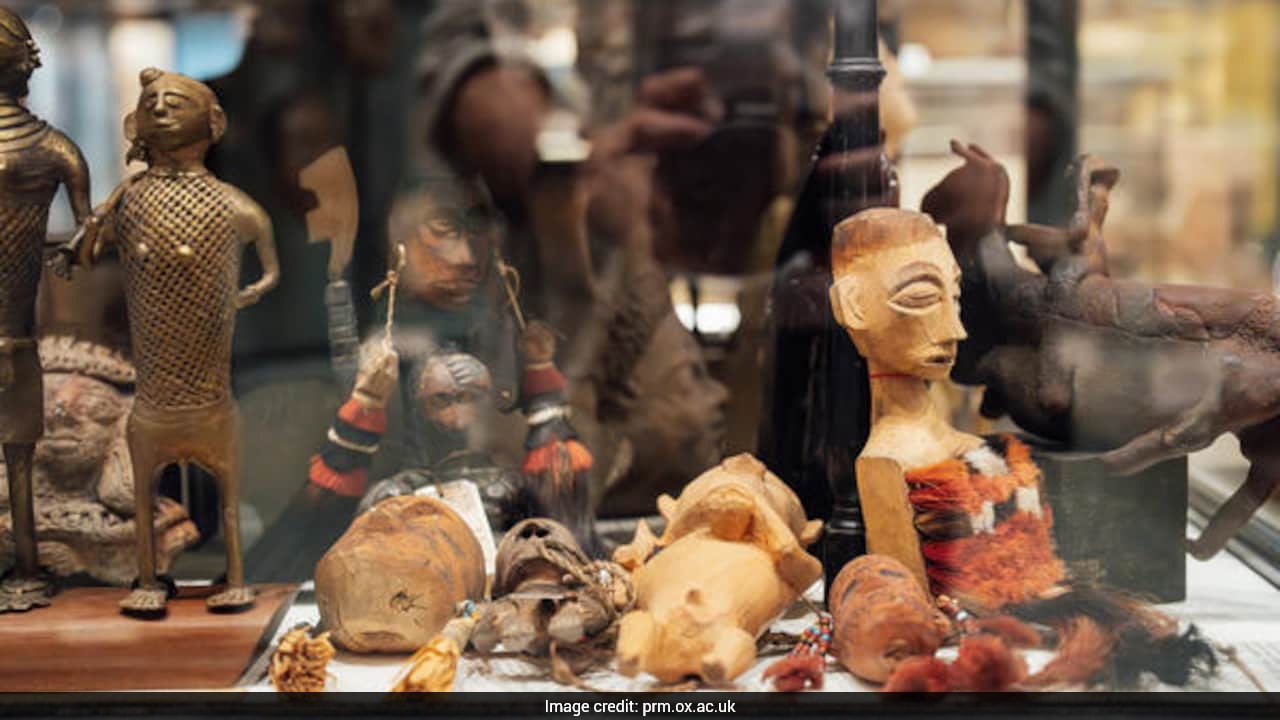
Everyone is clapping because the Pitt Rivers Museum at Oxford just handed back 39 ancestral human remains to the Naga people of Northeast India. Stop clapping. You are watching a masterclass in institutional PR laundering disguised as moral enlightenment.
The mainstream press treats this repatriation like the final, heartwarming chapter of colonial reckoning. Headlines celebrate the somber ceremonies, the emotional handovers, and the long-overdue justice delivered by British academics. That narrative is lazy. It is comfortable. And it completely misses the structural reality of how Western institutions operate when the heat gets too high.
When a museum returns human bones after a century of hoarding them in cardboard boxes, it is not dismantling colonialism. It is performing a strategic amputation to save the rest of the body.
The Anatomy of a Reputational Bailout
For decades, the Pitt Rivers Museum sat on one of the largest collections of human remains in the United Kingdom—roughly 2,000 sets of bones, skulls, and hair locks looted by British administrators, soldiers, and Victorian anthropologists. During the 19th and early 20th centuries, the Naga Hills were treated as an open-air laboratory for British racial theorists. Colonial officers collected human skulls—many taken from the traditional morungs, or youth dormitories, where Naga warriors kept ancestral and trophy skulls—and shipped them to Oxford to measure cranial capacities and invent pseudoscientific hierarchies of human civilization.
The Naga people did not forget. Their descendants have spent years organizing through groups like the Forum for Naga Reconciliation (FNR) and the Recover, Restore and Decolonise (RRaD) team. They did the grueling archival work. They tracked down the provenance records that Oxford’s own curators let gather dust.
Yet, when the handover finally happens, who gets the glowing press coverage? Oxford.
I have worked alongside heritage consultants and museum boards across Europe for fifteen years. I have seen institutions spend hundreds of thousands of pounds on "decolonization task forces" while fighting tooth and nail behind closed doors to keep high-value bronzes, textiles, and sacred objects locked in their vaults. The playbook is always identical. When public pressure reaches a boiling point, you find the most morally indefensible items in the basement—usually human remains—and stage a tearful, high-profile repatriation.
Human remains are the ultimate low-hanging fruit for Western museums. Under modern ethical frameworks like the UK’s Human Tissue Act 2004 and the Guidance for the Care of Human Remains in Museums, holding onto non-European skulls is a public relations liability with zero upside. You cannot put them on display anymore without triggering protests. They generate no ticket revenue. By returning 39 Naga remains, Oxford sheds an immense ethical burden while keeping thousands of other looted Naga artifacts—ceremonial spears, textiles, woodcarvings, and jewelry—safely behind glass.
The Provenance Trap Nobody Talks About
If you ask the average observer why repatriation takes so long, they will tell you it is because of complex legal hurdles and careful historical research. That is the polite fiction museums feed journalists.
In reality, the provenance system itself is rigged to exhaust the claimants.
To get their ancestors back, the Naga delegation had to navigate a bureaucratic maze designed by the very institutions that stole the remains. Museums demand absolute proof of origin, precise genealogical links, and formal governance structures before they will even entertain a claim. Think about the absurdity of that requirement. British colonial officers ripped these remains out of Naga villages during punitive expeditions—often burning the villages to the ground in the process—and scribbled vague notes like "Naga Hills, 1879" on an index card. A century later, Oxford asks the descendants to provide airtight paperwork proving which exact clan owns which skull.
Even when the Naga team succeeded, look at the timeline. It took years of sustained pressure, international academic partnerships, and exhausting fundraising just to get 39 sets of remains out of Oxford. Meanwhile, there are still hundreds of Naga artifacts sitting in British, German, and Swiss collections, untouched by this sudden wave of institutional generosity.
What People Actually Get Wrong About Repatriation
When people search for news on museum repatriations, they usually ask two questions: Does returning these items erase history? and Who pays for the return? Both questions rest on completely flawed premises.
- The "Erasing History" Myth: Critics of repatriation argue that Western museums are universal encyclopedias that preserve world history for everyone. This is nonsense. The 39 Naga remains were not on public display at the Pitt Rivers Museum; they were locked in storage drawers, unseen by the public and untouched by researchers for decades. Returning them does not erase history—it ends a century of historical concealment.
- The Financial Shell Game: The public assumes the penitent museum foots the bill for its colonial crimes. Often, the burden of travel, community consultations, ritual preparations, and legal coordination falls heavily on the indigenous communities and external grants. The museum absorbs the applause; the victims absorb the logistical trauma.
The Uncomfortable Truth About The Naga Case
Let us be brutally honest about the internal friction this creates on the ground. Repatriation is not a tidy fairy tale where everyone holds hands and heals overnight. It is messy, politically charged, and fraught with local consequences that Western commentators refuse to acknowledge.
The Naga homeland is not a monolith. It spans multiple Indian states—primarily Nagaland, Manipur, Assam, and Arunachal Pradesh—as well as parts of Myanmar, encompassing dozens of distinct tribes with their own languages, customs, and histories of inter-tribal conflict. Furthermore, over the last century, the vast majority of the Naga population converted to Christianity, fundamentally altering their spiritual relationship with pre-Christian ancestral practices and headhunting traditions.
When 39 unprovenanced or loosely provenanced human remains arrive back in Nagaland, what do you actually do with them?
You cannot simply hand a skull back to a specific grandmother when the colonial collector failed to write down the village name. The Forum for Naga Reconciliation and the RRaD team have had to invent entirely new frameworks for collective mourning and dignified reburial because the traditional clan-based rituals were severed by British guns and missionary zeal a hundred years ago.
This is the downside to rapid repatriation that even fierce advocates must admit: returning looted heritage without funding the long-term local infrastructure to care for it can dump a massive spiritual and political crisis onto a community. If Western museums simply drop a crate of bones at the airport and wash their hands of the aftermath, they are committing a second act of colonial negligence.
Stop Celebrating Handovers and Start Auditing Inventories
If we want real accountability rather than curated PR moments, the entire model of museum restitution needs to be inverted. Right now, the burden of proof sits on the colonized. That has to end.
- Mandatory Open-Source Audits: Every Western museum holding colonial-era collections must publish full, unredacted digital inventories of every human remain and sacred object in their possession, complete with acquisition notes. The Pitt Rivers Museum took steps in this direction by removing human remains from display in 2020, which was a start, but most institutions still hide behind opaque internal databases.
- Reverse the Burden of Proof: If a museum cannot produce a clean, non-coercive bill of sale or documented consent from the original community, the default legal assumption must be theft. The claimant should not have to hire historians to prove an item was stolen; the museum must prove it was acquired ethically.
- Endowment Transfers, Not Just Object Transfers: Repatriation without restitution is hollow. If Oxford and similar institutions built their global prestige and academic endowments on the back of colonial extraction, every returned item must be accompanied by an unconditional financial transfer to fund local archives, conservation labs, and community-led heritage centers in places like Kohima and Dimapur.
The return of the 39 Naga remains is a triumph for the Naga researchers, elders, and activists who refused to let their ancestors rot in an English basement. It is a testament to their endurance.
Do not confuse their victory with Oxford’s virtue. Giving back a stolen wallet after holding it for a hundred years does not make the thief a philanthropist.