The alarm rings at five in the morning in a cramped apartment in Queens. A mother checks her banking app before her feet even touch the cold floor. Rent is up. Groceries cost double what they did three years ago. The math of survival simply does not add up anymore.
For decades, the political establishment offered this woman a choice between two flavors of economic philosophy: corporate tax breaks that promised to trickle down but never did, or incremental policy tweaks wrapped in grand, soaring rhetoric. Neither fixed the broken pipe under her sink or paid for her toddler's daycare.
But a quiet transformation is shifting the bedrock of American municipal politics. It is not happening through academic lectures or abstract debates about the nature of capital. It is happening through the unglamorous, everyday work of filling potholes and clearing snow-covered sidewalks.
The Midday Broadcast
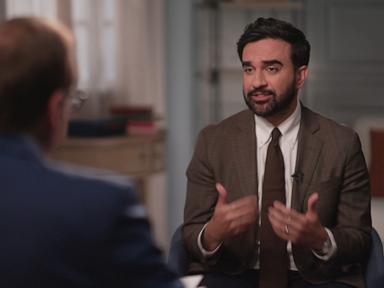
On a recent Sunday morning, the television screen in countless living rooms displayed a stark contrast in political style. Sitting across from an anchor on ABC’s This Week, Zohran Mamdani looked less like a traditional big-city boss and more like the neighbor who helps you carry your groceries up the stairs.
At thirty-four, the newly elected Democratic Socialist Mayor of New York City carries a heavy mantle. Just days earlier, three congressional candidates he fiercely backed—Claire Valdez, Darializa Avila Chevalier, and Brad Lander—swept through their Democratic primaries. The wins sent shockwaves through the party hierarchy.
The anchor pressed him on the limits of his ideology. Can this brand of politics actually survive outside the deeply progressive, coastal enclave of New York?
Mamdani did not blink.
"I think a democratic socialist can get elected anywhere across this country for any position," he said.
To the political consultants inside the Washington beltway, the statement sounded like dangerous radicalism or naive delusion. But to understand why he is right—and why the establishment is terrified—you have to look away from the television cameras and look at the streets.
The Mechanics of Trust
Consider a hypothetical voter named Marcus. Marcus lives in a midwestern manufacturing town that has been hollowed out by outsourcing. He does not care about ideological labels. He has voted for Republicans and he has voted for Democrats. Mostly, he feels forgotten. When Marcus hears the word "socialism," he thinks of Cold War textbooks and bloated bureaucracies.
Then, a local volunteer knocks on his door. The volunteer does not want to talk about theory. They want to talk about why the local city council refuses to fund public bus routes that connect Marcus’s neighborhood to the new distribution center across town. They talk about the skyrocketing cost of milk and rent.
This is what historians call "sewer socialism"—a pragmatic, hyper-local focus on public works and tangible community benefits that took root in the American Midwest over a century ago. It is returning with a vengeance.
In Seattle, Katie Wilson took office on a similar wave. In Washington D.C., Janeese Lewis George is preparing to take the reins. Los Angeles is staring down a massive mayoral runoff where a leftist insurgent is threatening to unseat the incumbent. This is no longer an isolated New York phenomenon. The strategy relies on a relentless, year-round ground game powered by thousands of young, organized volunteers who treat politics as a continuous community service project rather than a biennial marketing campaign.
But the real problem lies elsewhere. The establishment wing of the Democratic Party views these victories with deep anxiety. They worry that candidates advocating for structural overhauls will alienate moderate voters in swing states, handing easy victories to the opposition. A recent poll highlighted this deep internal friction, showing that only twenty-two percent of Democrats nationwide believe the party should move completely toward socialist positions, while sixty percent prefer a mixture of socialist and capitalist ideas.
The Spine of the Tent
The tension inside the party is palpable. Critics point to the platform of some insurgents, which includes polarizing stances on criminal justice reform and foreign policy, arguing these ideas will fall flat in middle America.
When confronted with these vulnerabilities on national television, Mamdani shifted the focus back to the kitchen table. He acknowledged that the party is a big tent, but added a sharp caveat.
"Even a tent has to stay up," he quipped.
The message is clear: opposition to the status quo is no longer a viable long-term platform. Voters are exhausted by a politics that defines itself solely by what it against, rather than what it is building. They are looking for a political movement that has the courage to propose tangible, material solutions to their exhaustion.
The debate over whether this movement can scale nationally will not be settled by pundits in television studios. It will be tested in the coming months as insurgent candidates enter congressional primaries in Denver, Detroit, and South Florida—places without a Mamdani figurehead, where the demographic and economic realities are vastly different from the gentrifying blocks of Brooklyn and Queens.
Imagine a city where the local government owns the grocery store to keep food prices stable, where public transit is entirely free, and where childcare is treated as a fundamental public right. To some, it sounds like a utopian dream. To others, it sounds like basic decency.
The success of this movement hinges entirely on its ability to prove that ideology can deliver clean streets, affordable housing, and working infrastructure. If they fail to deliver on those basic promises, the movement will evaporate as quickly as it rose. But if they succeed, the political map of the country might look very different by the end of the decade.

:max_bytes(150000):strip_icc()/parts-of-a-swamp-cooler-2718628-a477e6f0787b4f8bb62ddf2def31d495.png)