Water has a long memory, but it keeps its own counsel.
Seven days before I began writing this, the monsoon did not just rain down upon Nepal; it arrived like an ancient eviction notice. Whole hillsides unzipped themselves from the bedrock, sliding downward with the heavy, unhurried grace of an avalanche of mud. Rivers swelled, choked on their own banks, and spilled over into the valleys, erasing roads, splitting villages in two, and turning concrete foundations into driftwood. Don't forget to check out our recent article on this related article.
Now, a week later, the frantic urgency of the first forty-eight hours has settled into something much heavier. Silence.
The air smells of wet slate, bruised vegetation, and the bitter copper tang of silt. On paper, disaster reports are neat. They are neatly arranged in rows of columns, categorized by district, casualty count, and estimated property loss. Officials speak into microphones with tired, measured cadences. They talk about cubic meters of water, displaced populations, and logistics pathways blocked by landslides. To read more about the history here, NPR offers an informative breakdown.
Numbers are a mercy. Numbers allow us to look at a catastrophe from a safe distance, holding it at arm's length like an unpleasant X-ray.
Let us drop the numbers for a moment. Let us talk about a shoe.
Imagine a single red child's sneaker resting on top of a three-foot drift of grey mud where a kitchen used to be. (This is not a hypothetical invention; it is a recurring geometry of grief in every flooded valley). No one is wearing the shoe. The foot that filled it is gone, swept three miles down toward the confluence where the murky torrents meet. The mother stares at that patch of grey mud. She does not care about cubic meters. She cares about the laces she tied that morning before the mountain began to slide.
When you stand in the wake of a catastrophe of this magnitude, the physics of survival turn cruel. The first seventy-two hours are the golden window of rescue. After that, the biology of the human body dictates a bitter math. Dehydration, hypothermia, and crush injuries do not wait for bureaucratic clearance or heavy machinery to be airlifted past washed-out bridges. By day seven, the frantic hope of pulling someone alive from a pocket of air beneath a collapsed roof gives way to a different, hollower phase.
The recovery phase.
That word tastes like ash. Recovery implies that something can be found, gathered, and made whole again. But how do you recover a terraced farm that took three generations to carve into a cliffside, only to be washed into India in thirty minutes? How do you recover the invisible threads of a community where everyone knew the exact pitch of their neighbor’s laugh?
The geography of Nepal makes it uniquely vulnerable to these sudden, vertical tragedies. It is a nation of steep drops, where the mountains climb toward the stratosphere and rivers carve canyons so deep they trap the weather. When climate patterns shift and monsoons drop weeks of rain in a single afternoon, the earth simply cannot drink it fast enough. The soil reaches saturation, loses its grip, and the landscape rearranges itself overnight.
We talk about climate resilience as if it were a software update. We build better walls, we map flood zones, we install early-warning sirens powered by solar panels. And all of those things matter. They are vital shields against a changing sky. But standing on the edge of a fresh landslide, looking across a chasm where a suspension bridge used to hum in the wind, you realize the limits of human engineering.
Nature does not negotiate. It simply clears the board and waits to see what we will build next.
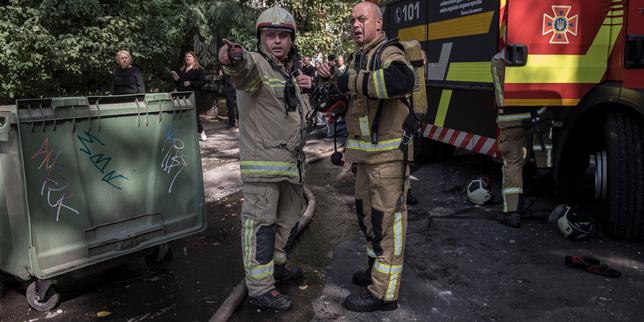
Rescue workers in bright orange vests have been scouring the banks for days now. They use long poles, probing the tangled masses of uprooted pine trees and plastic debris that collect at every bend in the river. Their boots are caked in dried clay. Their eyes are hollowed out by lack of sleep and the grim monotony of their task. They do not talk much. When you handle grief every day, words feel like unnecessary weight.
One rescue volunteer, a man from Kathmandu who left his shop behind when the first distress calls came over the radio, told me—though his words were meant for the wind rather than a notebook—that the hardest part isn't finding the bodies. It's looking into the eyes of the people who are still standing there, waiting for permission to grieve.
Because in the immediate aftermath, there is no time for tears. There is only survival. You must find clean water. You must find a tarp to string between two broken fence posts. You must share a single packet of instant noodles with three children who haven't eaten since the mountain moved. The shock acts as a temporary anesthetic. It numbs the nerves, keeping the panic at bay while the body does the mechanical work of staying alive.
But day seven is when the anesthetic wears off.
The adrenaline clears from the blood, leaving behind a profound, bone-deep exhaustion. The aid packages start arriving—sacks of lentils, bottled water, chlorine tablets—distributed through a haze of dust kicked up by relief helicopters. Yet, aid can fill a belly, but it cannot stitch a shattered horizon back together.
Consider the psychology of displacement. To lose a home is not merely to lose shelter; it is to lose your external memory. Every doorframe measured your children's growth. Every stone wall held the labor of your grandfather. When those things vanish into a brown wall of rushing water, you are suddenly untmoored from time itself. You do not know whether you are living in the past, the present, or a future that has been abruptly canceled.
Governments will pledge funds. Pledges are easy to make in air-conditioned conference rooms miles away from the smell of rotting silt. International agencies will draft reports on infrastructure fragility and monsoon adaptation strategies. Those reports will sit on digital shelves, gathering virtual dust until the next cloud bursts over the foothills.
Meanwhile, the survivors pick up shovels.
They do not wait for the reports. Deep in the valleys, far from the reach of television cameras and satellite feeds, a man is clearing mud from a doorway with a rusted spade. He is not doing it because he has rediscovered hope in some cinematic burst of human spirit. He is doing it because the mud is there, and the sun has come out, and evening is coming, and a man has to put his feet somewhere when the night falls.
The river has gone back down to its channel now, smaller, meaner, leaving behind a stark white bathtub ring of dried silt high up on the tree trunks to mark its temporary kingdom. It flows southward, indifferent to the names of the villages it rearranged, carrying away bits of clothing, roof tin, and old photographs toward the plains.
The mountains remain. They look ancient, indifferent, and impossibly permanent against the blue sky, wearing their scars of red earth like open wounds that no medicine can close.