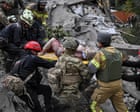
The attack on King Khalid International Airport in Riyadh wasn't just another regional flare-up. When ballistic strikes and projectiles breached the airspace of Saudi Arabia's heavily defended capital, leaving 12 people dead and over 300 injured, the baseline for Middle Eastern security shifted overnight. For years, international observers treated Houthi drone and missile capabilities as localized border nuisances. Striking deep into the Saudi capital with this level of casualties shattered that illusion completely.
Let's look at what actually happened on the ground. Medical facilities in Riyadh faced an immediate crisis, activating emergency protocols and bringing in a mass call-up of trauma specialists as ambulances flooded local hospitals. Passengers described sudden chaos near the departure gates, windows shattering, and parts of terminal ceilings collapsing. The Saudi civil aviation authority had no choice but to temporarily suspend operations, rerouting international flights and stranding thousands of travelers.
Why Traditional Air Defenses Missed the Mark
Military analysts spent the days following the strike picking apart how the projectiles bypassed defense layers. Saudi Arabia's early warning systems faced intense scrutiny after reports emerged that standard threat notifications failed to trigger before the impact.
The reality of modern asymmetrical warfare is brutal. Non-state actors are getting smarter, utilizing low-flight profiles, composite materials, and coordinated salvoes that strain even sophisticated interception batteries. When missiles hit international transport hubs serving a city of eight million people, the economic fallout matches the human cost. Major carriers immediately suspended routes, and upcoming global investment summits faced sudden logistical scrambles.
The Regional Escalation Ladder
You can't separate this attack from the broader military context unfolding across Yemen and the Gulf. Prior to the Riyadh strike, the Saudi-backed Yemeni government launched intensified campaigns targeting Houthi-held weapons depots and supply lines. The response from Sana'a's leadership was swift and uncompromising, explicitly warning commercial aviation firms to stay out of Saudi airspace.
This tit-for-tat dynamic pushes both sides up a very dangerous escalation ladder. Western allies, including the United States and Britain, issued urgent security advisories urging citizens to avoid the airport entirely. Condemnations poured in from international capitals, but diplomatic statements won't reopen runways or comfort the families of the victims.
What Comes Next for Air Travel and Trade
If you're tracking Middle Eastern logistics, the takeaway is clear. Civil aviation over the Arabian Peninsula is entering a high-risk era. Airlines are forced to recalculate risk matrices on a weekly basis, driving up fuel costs and flight times. Insurance underwriters are tightening terms for any aircraft transiting the Gulf.
The Saudi-led coalition vowed a firm response, signaling that military operations in Yemen will likely intensify rather than wind down. Border security and capital defense are no longer theoretical exercises for regional planners—they're an active, daily crisis.
The video above provides a look at the news coverage surrounding the security escalation at Riyadh's airport.