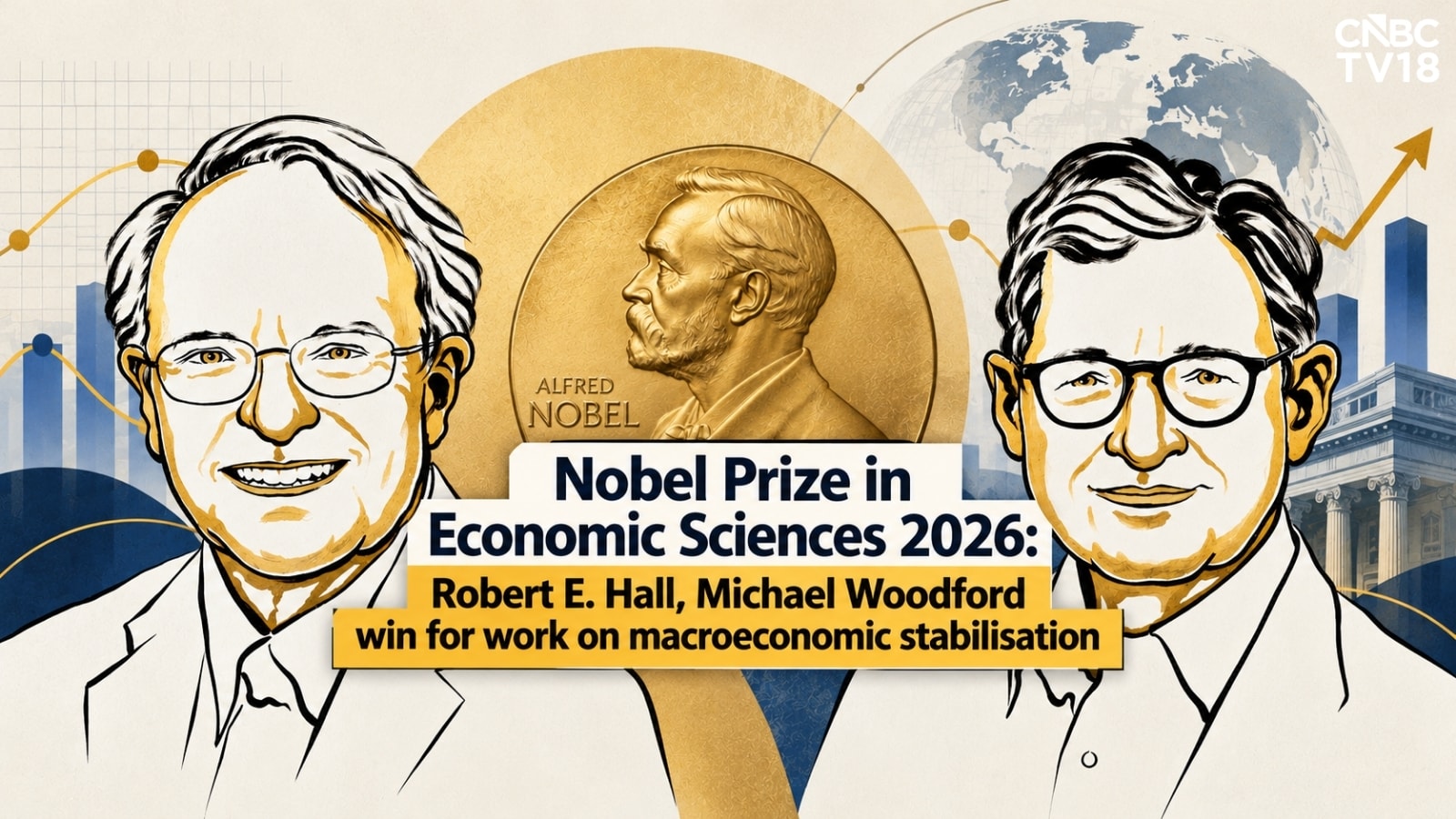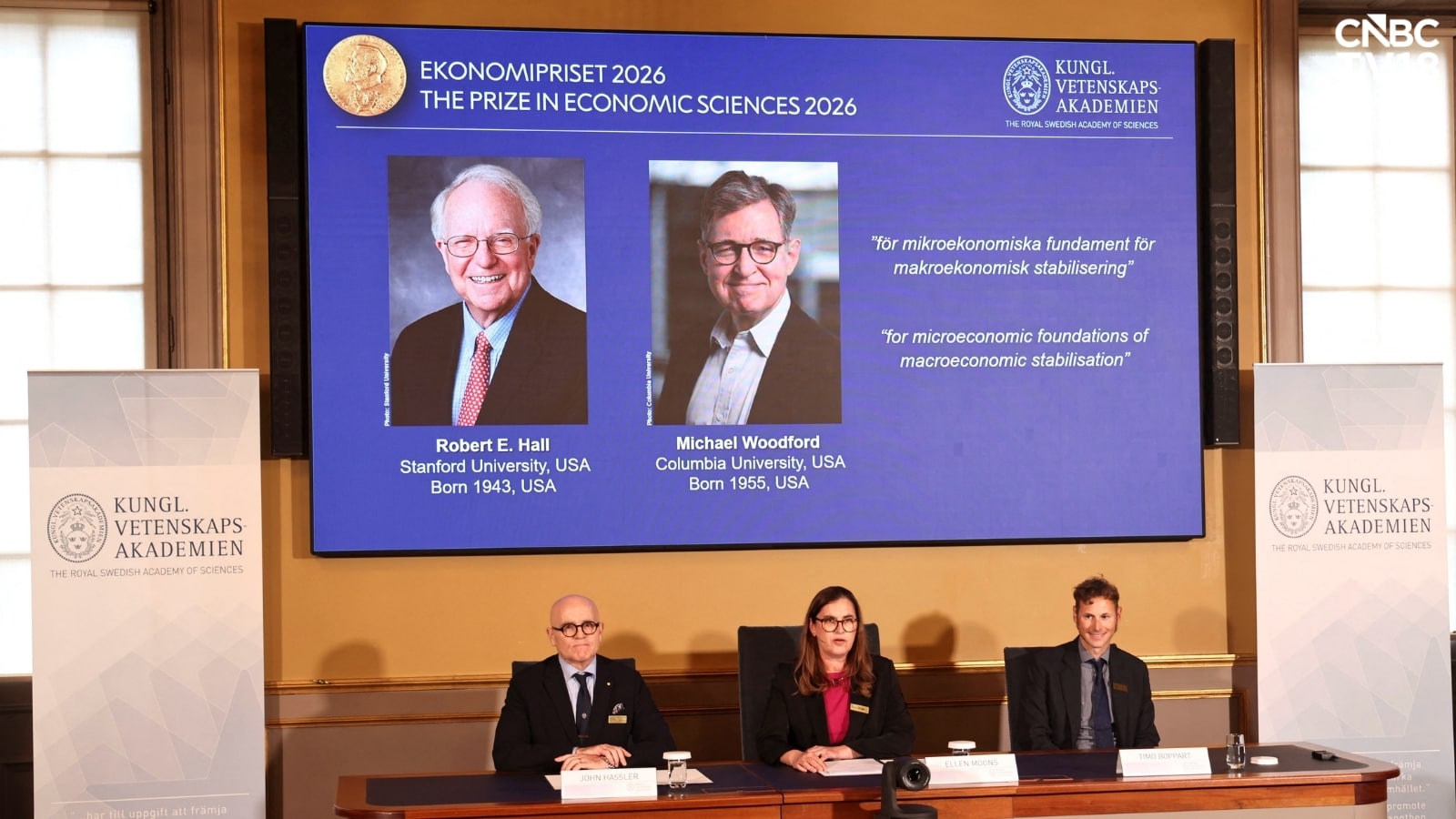
Macroeconomics used to be built on an illusion. For decades, traditional economic theory treated the marketplace like a frictionless physics experiment where rational actors made predictable choices in a vacuum. Then came Robert Hall and Michael Woodford. They did not just tweak the math; they stripped away the comforting fictions that allowed policymakers to pretend that crises were mere statistical blips. By tearing down old assumptions about market clearance and expectations, these two thinkers fundamentally altered how central banks and analysts understand modern financial turbulence.
The core premise is straightforward. Traditional economic models assumed that prices and wages adjusted instantly to shocks, keeping unemployment low and production humming. Hall and Woodford proved that assumption was a dangerous fantasy. Instead, they demonstrated that economic friction, imperfect information, and human psychology dictate real-world outcomes. When a shock hits, people do not immediately optimize their spending based on textbook equilibrium. They panic, they hoard, and they freeze. Understanding that shift means looking past the clean equations on a whiteboard and confronting the messy reality of modern monetary mechanics.
The Cost of Assuming Perfection
Long before the financial system nearly imploded in 2008, the dominant orthodoxy rested on neoclassical foundations. The guiding belief was that markets always clear. If a downturn occurred, it was viewed as a temporary deviation from a natural rate of employment and output.
Robert Hall challenged this complacency by examining the friction inherent in labor markets. Workers do not renegotiate their wages every morning based on overnight inflation numbers. Contracts exist. Habits form. Institutional inertia slows down the gears of commerce. Hall showed that unemployment is not just a voluntary choice by workers waiting for better wages, but a structural failure of matching jobs to people during contractions. When demand drops, firms do not instantly slash wages to keep everyone employed; they lay people off. That simple behavioral truth shattered the neat symmetry of standard macroeconomic models.
Markets are not frictionless engines. They are complicated networks of human hesitation and sticky contracts. When Hall mapped out how labor markets actually function during downturns, he exposed the vulnerability of a policy apparatus that assumed prices could turn on a dime. Central bankers had been driving a heavy truck while looking at a manual designed for a sports car.
The Power of What People Think Will Happen
While Hall focused on the friction of the ground level, Michael Woodford looked upward at the machinery of central banking. Woodford transformed monetary economics by placing expectations at the absolute center of the economic universe.
Before Woodford published his seminal work, Interest and Prices, monetary policy was largely viewed through the narrow lens of the money supply. Central banks adjusted short-term interest rates and watched the money aggregates shift. Woodford argued that this mechanical view missed the real engine of monetary policy: communication and credibility.
The economy reacts less to what a central bank does today and more to what people believe the central bank will do tomorrow. If a population expects high inflation next year, they demand higher wages and charge higher prices today, turning that expectation into a self-fulfilling prophecy. Woodford provided the theoretical backbone for forward guidance, the practice of central banks signaling their future intentions to anchor market expectations.
Consider a hypothetical scenario during a severe recession. If a central bank merely lowers interest rates to zero, businesses and consumers might still hoard cash if they fear future depression. However, if the central bank credibly communicates that rates will stay low for an extended period, even after recovery begins, it changes the calculation. Borrowers realize that future inflation will reduce the real value of their debt, encouraging spending right now. Woodford proved that central banking is fundamentally an exercise in managing psychology through credible commitment.
The Clash of Orthodoxies
Integrating these insights into actual policy was far from smooth. Traditionalists resisted the notion that expectations and sticky prices mattered more than simple money aggregates. Critics argued that models built on expectations were too subjective, relying on psychological variables that are notoriously difficult to measure.
Yet, reality forced their hand. The inflation crises of the 1970s had already discredited strict Keynesian fine-tuning, but the 2008 financial crisis exposed the severe limits of neoclassical models that ignored financial friction and market panic. When central banks faced zero lower bounds on interest rates, traditional tools failed. Policymakers had to rely heavily on Woodford's insights regarding communication and expectations management to prevent a total economic collapse.
The tension remains visible today. Central banks constantly walk a tightrope between maintaining credibility and reacting to unpredictable supply shocks. When inflation surged following global supply chain disruptions and massive fiscal stimulus, critics argued that central banks relied too heavily on the assumption that inflation expectations would remain anchored. The theory was sound, but the execution collided with political realities and unprecedented global disruptions.
The Legacy in the Data
Today, the framework built by Hall and Woodford underpins nearly every major macroeconomic forecast. When the Federal Reserve or the European Central Bank debates interest rate paths, they are speaking the language of Woodford. When labor economists analyze job retention schemes and wage rigidity during a downturn, they are standing on the empirical groundwork laid by Hall.
They did not provide a utopia of permanent stability. Instead, they provided a better map of the turbulence. By acknowledging that markets are plagued by friction and driven by the fragile psychology of expectations, they gave economists the tools to diagnose failures rather than wish them away.
The economy is not a self-correcting clockwork mechanism. It is a fragile ecosystem of human belief, sticky contracts, and delayed reactions. Hall and Woodford forced the profession to wake up to that fact, changing the trajectory of economic thought forever.