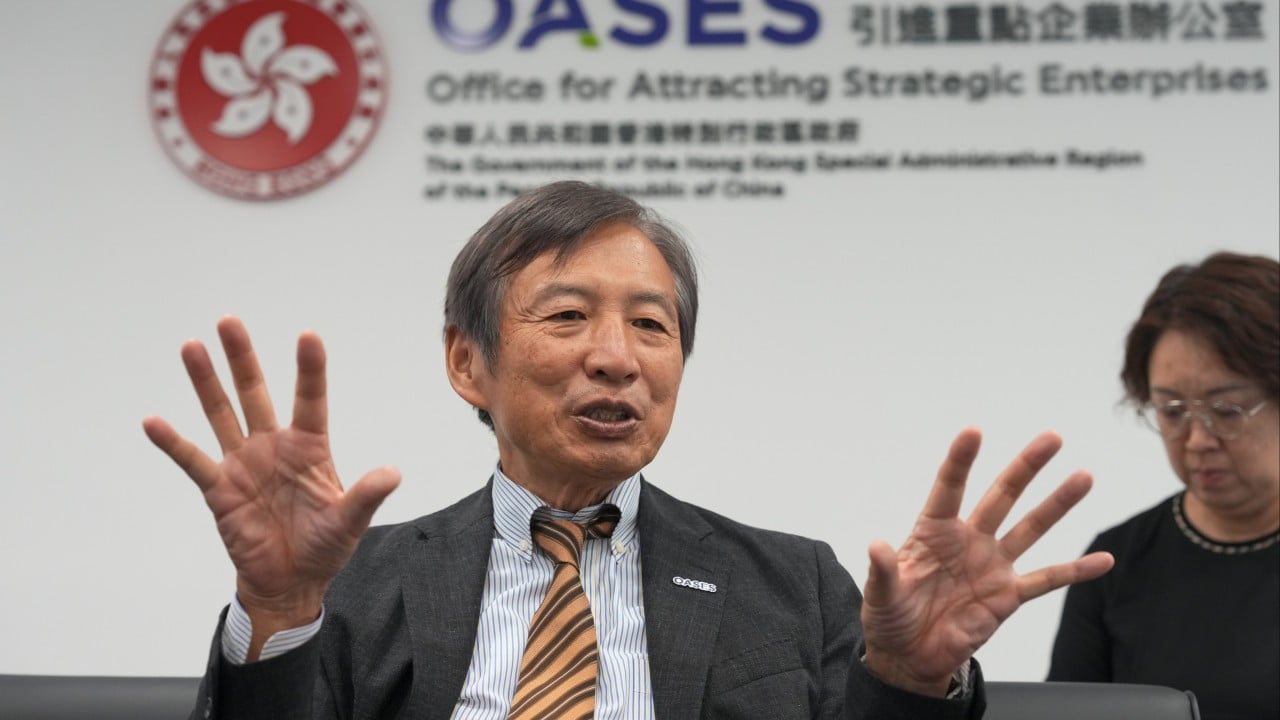
Everybody in the Asian biotech press is applauding the headline. Rohto Pharmaceutical just became the first Japanese strategic partner for Hong Kong’s Office for Attracting Strategic Enterprises (OASES), planning to run clinical trials out of the city.
The lazy consensus is predictable. Analysts see an aging Japanese domestic market, a cash-rich Hong Kong government desperate to rebrand itself as a global biomedical hub, and a mutually beneficial handshake. They treat this partnership like a frictionless bridge into the Greater Bay Area.
They are missing the real story.
I have watched dozens of mid-sized Asian pharmaceutical and consumer health companies blow tens of millions of dollars chasing government subsidies in secondary biotech hubs. They get seduced by tax breaks, shiny lab space, and ministerial photo ops. Two years later, they realize they bought a very expensive ticket to a regulatory cul-de-sac.
Rohto is not stupid. Known globally for eye drops and skincare, the Osaka-based company has spent the last decade quietly transforming into a serious regenerative medicine and cell therapy player. Their move into Hong Kong is not a victory lap for OASES. It is a calculated, high-stakes arbitrage play—and if Rohto miscalculates the regulatory friction between Hong Kong and mainland China, it will become an expensive lesson in cross-border hubris.
The OASES Illusion and the Subsidy Trap
Let us look at what OASES actually is. Established by the Hong Kong government to pull high-value enterprises back to the city after years of talent flight and geopolitical bruising, OASES offers tailored incentives. Land, grants, fast-tracked visas, and institutional hand-holding.
For a Japanese company used to the glacial, risk-averse bureaucracy of the Pharmaceuticals and Medical Devices Agency (PMDA) in Tokyo, Hong Kong looks intoxicating. You get English-speaking trial coordinators, world-class hospital infrastructure at institutions like the University of Hong Kong and the Chinese University of Hong Kong, and a government eager to prove its relevance.
Here is the trap. Clinical trial infrastructure is not the same thing as market access.
When a company sets up clinical operations in Hong Kong, the unspoken assumption among investors is that this serves as a springboard into the 86-million-person Greater Bay Area (GBA) and, eventually, the broader mainland Chinese market.
That assumption relies on a fundamental misunderstanding of how Chinese drug regulation works.
The "1+" Mechanism Is Not a Magic Wand
To understand why everyone is misreading the Rohto-OASES deal, you have to understand Hong Kong's "1+" drug registration mechanism and the Greater Bay Area's "Hong Kong and Macao Medicine and Equipment Connect" policy.
Traditionally, Hong Kong required a new drug to be approved by two major reference regulatory agencies—such as the FDA in the United States, the EMA in Europe, or the PMDA in Japan—before it could be registered locally. Under the "1+" mechanism introduced recently, drugs treating life-threatening or severely debilitating diseases only need approval from one reference agency, provided they have local clinical data and expert backing.
Sounds great on paper. Now look at the fine print:
- Scope limitations: The "1+" pathway initially targeted severe, life-threatening conditions. Rohto’s core strengths—ophthalmology, dermatology, and certain regenerative therapies—often sit in chronic, quality-of-life, or aesthetic-adjacent categories that do not easily qualify for urgent life-saving exemptions.
- The mainland wall: Getting approved in Hong Kong does not automatically grant you the right to sell across the border in Shenzhen or Guangzhou. Under the GBA Connect policy, Hong Kong-registered drugs can only be used in specific, designated hospitals in the GBA, and only for urgent clinical needs.
- The NMPA bottleneck: To actually commercialize a drug across mainland China, you still have to answer to the National Medical Products Administration (NMPA). The NMPA has its own strict requirements regarding ethnic sensitivity data, local manufacturing standards, and Good Clinical Practice (GCP) inspections.
Imagine a scenario where Rohto runs a Phase II clinical trial in Hong Kong, recruits 120 patients, and generates stellar efficacy data. If those trial sites are not explicitly accredited under the NMPA’s specific overseas trial data acceptance framework—or if the patient demographics do not satisfy Beijing’s exact statistical thresholds—Rohto will have to repeat the trials on the mainland anyway.
What Everyone Gets Wrong About Japanese Pharma in China
If you ask industry observers why Rohto is doing this, they will tell you Japan's domestic market is shrinking. True, Japan’s population is aging and the Ministry of Health, Labour and Welfare relentlessly cuts drug reimbursement prices every single year. Japanese pharma must look abroad.
Where observers get it wrong is assuming that Hong Kong is the natural stepping stone for Japanese biopharma.
In reality, the heavy hitters of Japanese pharma—Takeda, Daiichi Sankyo, Astellas—rarely use Hong Kong as their primary clinical development engine for mainland China. When Takeda wants to crack the Chinese market, it builds massive R&D centers directly in Shanghai or Suzhou. They go straight to the source because the NMPA has spent the last decade aligning itself with the International Council for Harmonisation (ICH). You no longer need an intermediary to translate Western or Japanese clinical standards for Beijing.
So why is Rohto taking the Hong Kong route?
Because Rohto is not Takeda. Rohto is a consumer-first healthcare company trying to punch above its weight in clinical biotech. They do not have the multi-billion-dollar war chest to burn on a sprawling Shanghai R&D campus while fighting domestic Chinese biotech giants on their home turf.
By partnering with OASES, Rohto is getting Hong Kong taxpayers to subsidize the early-stage de-risking of its clinical pipeline. They are using Hong Kong as an outsourced, English-speaking clinical sandbox.
Dismantling the Common Myths Around This Deal
When news like this drops, corporate communications teams flood the zone with talking points. Let us strip away the PR varnish and answer the real questions institutional investors and biotech executives should be asking.
Does Hong Kong actually speed up clinical trials for Japanese firms?
Only for Phase I and early Phase II proof-of-concept studies. Hong Kong’s ethics committees and hospital institutional review boards (IRBs) can move faster than Japan’s notoriously cautious university hospitals, especially in novel areas like mesenchymal stem cell therapies. However, the moment you need large patient volume for Phase III trials, Hong Kong’s population of 7.5 million becomes a severe bottleneck. Patient recruitment dries up fast. You cannot run a 1,000-patient ophthalmology trial solely in Hong Kong without taking half a decade.
Why didn't OASES attract a bigger Japanese pharma giant first?
Because the biggest Japanese pharma firms already have established footprints in mainland China, Singapore, or Boston. OASES needed a recognizable Japanese household name to validate its "strategic enterprise" mandate, and Rohto needed a low-cost, high-prestige foothold outside Japan. It is a marriage of convenience between two entities trying to prove they belong in the top tier of global biotech.
Is Hong Kong becoming the next Boston or Basel for biotech?
Stop comparing every Asian city with a shiny science park to Boston. Boston works because of an unmatched density of risk-tolerant venture capital, serial biotech founders, elite academic spinouts, and immediate access to the single most lucrative pharmaceutical pricing market on earth: the United States. Hong Kong has world-class universities, yes. What it lacks is a deep pool of domestic biotech venture capital willing to lead Series B rounds, and its local commercial market is tiny. You cannot subsidize an ecosystem into existence with real estate grants alone.
The Regenerative Medicine Angle Nobody Is Talking About
If you want to understand Rohto’s real play, look at their pipeline, not their press release.
Rohto has invested heavily in regenerative medicine—specifically adipose-derived stem cells for liver cirrhosis, heart failure, and fibrosis. Japan has a unique, accelerated regulatory pathway for regenerative medicine products (the Act on the Safety of Regenerative Medicine and the amended PMD Act), which allows conditional approval based on early safety and predicted efficacy.
The rest of the world is much more skeptical of Japan’s conditional approval model. The FDA and EMA demand rigorous, double-blind, placebo-controlled proof before letting cell therapies near commercial markets.
Hong Kong sits in a fascinating gray zone. Its clinical researchers are deeply familiar with international trial standards, yet the city is actively trying to position itself as a hub for advanced therapies in Asia. If Rohto can validate its cell therapy protocols in Hong Kong’s respected clinical centers, it gains international credibility that purely Japanese domestic trials simply do not carry in Western boardrooms.
That is the smart part of the bet.
The Downside Risk Rohto Must Manage
I will give credit where it is due: using OASES incentives to generate internationally legible clinical data is a clever capital allocation move. If Rohto keeps its burn rate low and uses Hong Kong strictly for early-stage translational research, the upside is real.
Yet the risks are massive, and they are entirely operational:
- Talent poaching and wage inflation: Because Hong Kong is aggressively importing biotech firms through OASES without proportionally expanding its pool of experienced clinical trial managers, everyone is fighting over the same small group of clinical research associates (CRAs) and principal investigators. Rohto will face steep labor costs and high turnover.
- The dual-track regulatory headache: Designing a clinical trial protocol that satisfies both Hong Kong’s Department of Health and future NMPA or FDA reviewers requires elite regulatory affairs talent. Most mid-sized Japanese firms struggle to manage this internally, forcing them to rely on expensive global Contract Research Organizations (CROs) like IQVIA or ICON—which eats straight into the financial incentives OASES just handed them.
- Geopolitical crossfire: Operating in Hong Kong means navigating shifting export controls, data privacy laws, and cross-border biological sample restrictions. Moving human tissue, blood samples, or genomic data between Hong Kong and mainland China—or out to Japan—is a bureaucratic minefield under China’s Biosecurity Law.
What Smart Biotech Leaders Should Do Instead
If you are an executive at a life sciences company watching Rohto’s move and wondering if you should call OASES tomorrow, pause. Do not fall for the headline hype.
First, separate clinical execution from commercial strategy. Never pick a clinical trial location just because a government agency offers you a grant. Pick a location based on where your patients are and where your target regulator sits. If your primary commercial goal is mainland China, set up your clinical operations in Shanghai, Beijing, or Guangzhou and engage directly with the NMPA’s Center for Drug Evaluation (CDE).
Second, use Hong Kong strictly as a translational bridge, not a commercialization hub. If you have a novel therapy—like Rohto’s cell therapies or specialized biologics—and you need rapid, high-integrity Phase I/II human data in an Asian population to show global investors, Hong Kong’s academic hospitals are exceptional. Get in, run a tight, focused trial, own the data, and get out before overhead bloats.
Third, hire regulatory architects before you sign a lease. Before taking a single dollar of government incentive money, map out whether the data generated in your target hub will be accepted without repeat trials by the FDA, EMA, PMDA, or NMPA. If the answer is "maybe," walk away.
Rohto’s partnership with OASES is a win for Hong Kong’s PR machine and a calculated gamble for an ambitious Japanese consumer-health giant. But in drug development, press releases do not cure patients, and government subsidies do not buy regulatory approval. Until Rohto proves that data generated in Hong Kong can actually unlock commercial revenue on the mainland or in the West, this deal remains a shiny press release in search of a business model.