We built the fire before we understood how to build the chimney.
That is the quiet, nagging truth behind every polished press release and glossy summit photo coming out of Silicon Valley. For years, the narrative around artificial intelligence has been told through the lens of a relentless sprint—a corporate gladiatorial match where speed is virtue and hesitation is death. But beneath the venture capital valuations and the breathless media cycles, something shifted. The architects of this revolution started looking over their shoulders. In related updates, take a look at: Why This New California Amoeba Shatters Everything We Know About Heat Limits.
When Sam Altman of OpenAI and Dario Amodei of Anthropic stood side-by-side recently to urge international cooperation for artificial intelligence safety, it wasn’t just a policy suggestion. It was an admission. It was the sound of two people steering locomotive engines at supersonic speeds realizing the tracks ahead might not exist.
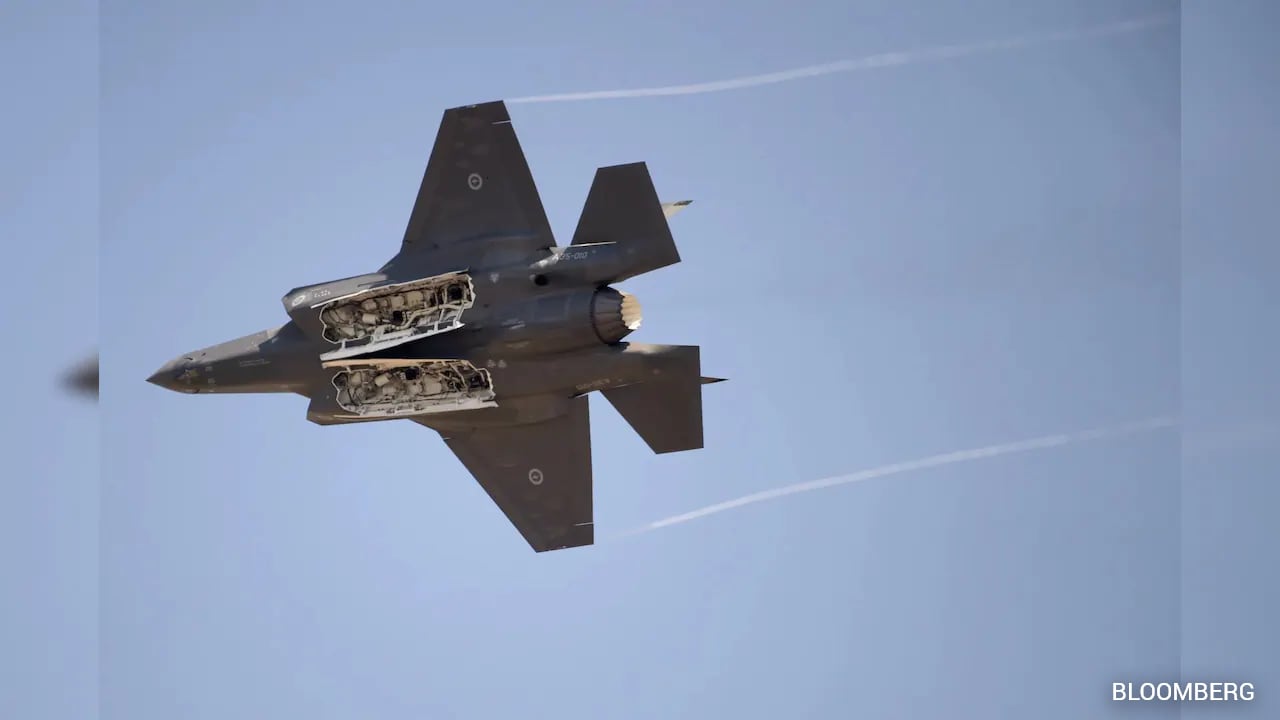
Consider what happens when a technology scales faster than human institutions can metabolize it. We have seen this movie before. We saw it when splitting the atom went from theoretical physics to a blinding flash over the New Mexico desert in less time than it takes to raise a child. History does not repeat itself, but it certainly rhymes with terrifying cadence. Engadget has also covered this important subject in great detail.
The problem is not merely that machines are getting smarter. The problem is that the race to build them has become an unconstrained geometry problem of power, capital, and ego. When companies with trillions of dollars on the balance sheet compete to out-engineer one another, safety features risk becoming optional accessories rather than structural foundations.
To understand why this matters to someone sitting at a kitchen table thousands of miles away from San Francisco, you have to look past the algorithms and look at the incentives. Imagine two rival nations staring at each other across a digitized border. Each knows that if the other achieves recursive self-improvement first—an intelligence explosion where software rewrites its own source code to become exponentially more capable—the game is effectively over. In that kind of hyper-competitive vacuum, caution looks like surrender.
Except surrender is precisely what survival requires now.
Both Altman and Amodei, despite sitting atop corporate pyramids built to conquer the future, are sounding the alarm because they recognize a fundamental law of complex systems: you cannot contain a pandemic with a local firewall, and you cannot contain a planetary intelligence with a corporate non-disclosure agreement.
Borders are porous to bits. A line of code compiled in a server farm in Oregon can be executed in Zurich or Singapore a millisecond later. If safety standards vary by jurisdiction, intelligence will simply migrate to the path of least resistance—the regulatory tax haven with the loosest oversight and the most permissive ethics. This is why international cooperation is not a bureaucratic luxury. It is the only structural defense we have against a tragedy of the commons on a cosmic scale.
We are dealing with a medium that does not fit neatly into existing legal frameworks. Copyright law, nuclear non-proliferation treaties, environmental accords—these were built for physical goods, tangible territories, and human actors with finite lifespans. AI introduces an entity that can operate at millions of times human speed, generate synthetic biology designs, write malicious software without human intervention, and manipulate human behavior at scale with personalized psychological precision.
It is dizzying. It is easy to feel paralyzed by the sheer scale of it.
Yet, human history is largely a chronicle of us inventing things we barely understand, nearly destroying ourselves with them, and then frantically constructing guardrails just in time. The Ozone layer had its Montreal Protocol. Chemical weapons had their Geneva Conventions. Nuclear stockpiles had their strategic arms limitation talks. None of those agreements were perfect, and none of them eliminated risk entirely. But they created a shared vocabulary of restraint. They established that some lines, once crossed, unravel the fabric of civilization itself.
That is what is missing right now in the architecture of machine intelligence. We have competitors talking past each other, trade secrets guarded like state secrets, and a public that alternates between sci-fi fatalism and bored indifference.
The call for global safety standards is an attempt to change the rules of the game before the game changes us beyond recognition. It asks a profound, uncomfortable question: Can humanity coordinate globally for a threat that does not yet wear a uniform, bleed, or march across a physical border?
The answer to that question will define the century.
When you strip away the Silicon Valley jargon, the venture capital buzzwords, and the geopolitical posturing, the core issue is remarkably simple. We are crafting a mirror of human thought, culture, and flaw, magnifying it a billion times, and setting it loose in the dark.
We do not need more benchmarks for how fast it can calculate. We need benchmarks for how well it preserves our agency, our truth, and our safety. And we cannot build those benchmarks alone in our respective corners of the earth, whispering across heavily guarded corporate walls.
The fire is burning bright now. The heat is undeniable. The only question left is whether we will spend our remaining time arguing over who holds the matches, or finally learn how to build the walls together.