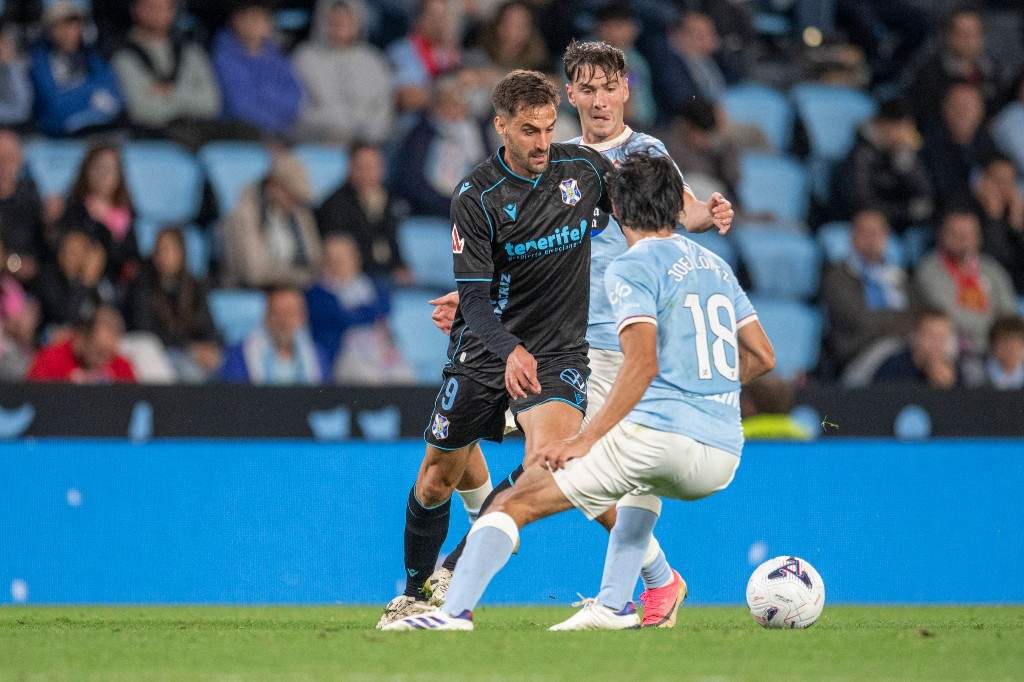
The death of Spanish footballer Jesus de Miguel following a severe on-pitch collision with an opposing goalkeeper has sent shockwaves through the lower tiers of European football, exposing a stark reality that the sport's governing bodies rarely confront head-on. While the immediate headlines focus on the tragedy of a young athlete losing his life during a standard competitive match, the deeper story lies in the biomechanical violence of modern goalkeeping challenges and the glaring disparity in emergency medical preparedness outside the elite television broadcasts. Football treats high-speed collisions in the penalty area as an unavoidable occupational hazard, yet the physics involved rival those of contact sports that mandate heavy protective gear.
When a striker sprints at full speed toward a loose ball while a goalkeeper dives headfirst to smother it, the closing velocity creates an impact zone where human anatomy reaches its absolute breaking point. In the case of Jesus de Miguel, a routine attacking run ended in catastrophic trauma, reminding players, coaches, and medical staff that the penalty box remains the most dangerous square footage on any athletic field.
The Physics of the Penalty Box
To understand why these tragedies continue to occur, you have to look at the geometry and momentum of the modern game. Football has become significantly faster over the past two decades. Conditioning programs have turned lower-league players into athletes who cover more ground at higher sprint speeds than top-flight professionals did in the 1990s.
A forward breaking through a defensive line frequently reaches speeds upwards of 30 kilometers per hour. At the exact same moment, a goalkeeper rushing off the line accelerates toward the ball, dropping their center of gravity to make their body as wide as possible. Unlike an outfield tackle, where feet and shins absorb the initial contact, a goalkeeper-striker collision almost always aligns hard bone with soft tissue or unprotected skulls.
The goalkeeper's knees, elbows, and hips act as blunt-force projectiles driven forward by leg drive and body weight. Meanwhile, the attacking player is usually leaning forward, eyes fixed on the ball, with their head, neck, and ribcage completely exposed. Neither athlete has time to brace. The human body simply did not evolve to absorb that level of concentrated kinetic energy without structural failure.
Why Goalkeepers Are Taught to Lead With Force
Goalkeeping coaching has evolved to prioritize bravery and spatial dominance above almost everything else. From youth academies upward, keepers are drilled to attack the ball aggressively, using their knees to shield their torso and establish a physical barrier. Coaches frame this technique as self-protection for the goalkeeper, who would otherwise risk facial injuries or broken ribs when diving into a crowd of swinging boots.
That defensive posture, however, transfers all the risk directly onto the incoming attacker. When a goalkeeper slides out with a raised knee, they create a rigid wedge moving at high speed. If that knee strikes an opponent's temple, throat, or sternum, the resulting trauma can cause immediate subdural hematomas, cervical spine fractures, or commotio cordis—a lethal disruption of heart rhythm triggered by a blunt blow to the chest.
Refs rarely penalize these collisions unless the goalkeeper's intent appears overtly malicious. Because the keeper is making a legitimate play on the ball, the rules of the game implicitly excuse the collateral damage. This regulatory blind spot encourages increasingly reckless rushes off the line, turning every fifty-fifty ball in the box into a high-stakes gamble with player safety.
The Medical Gap Outside the Spotlight
Elite clubs in La Liga, the Premier League, and the Champions League operate inside a protective bubble of immediate, hospital-grade trauma care. Every match features multiple pitch-side doctors, dedicated paramedics stationed behind the goalposts, automated external defibrillators within arm's reach, and a fully equipped ambulance idling in the tunnel with a clear route to a trauma center.
Step down just two or three divisions in Spain, England, Italy, or anywhere else in the world, and that safety net frays dramatically.
In regional and semi-professional tiers—where players like Jesus de Miguel compete with the same intensity and physical commitment as top-flight stars—medical staffing often shrinks to a single club physiotherapist and a basic first-aid kit. The legal requirements for ambulance presence vary wildly depending on regional federation budgets and local municipal regulations.
When a catastrophic head or neck injury occurs in a lower-tier match, the first five minutes determine survival. Airway management, cervical immobilization, and rapid neurological assessment require specialized emergency physicians, not a sports therapist trained primarily to tape ankles and treat hamstring strains. Waiting fifteen or twenty minutes for a municipal ambulance to navigate weekend traffic turns a survivable trauma into a fatal one.
The Illusion of Protocol Compliance
Football federations frequently point to their rulebooks as proof that player welfare is protected. On paper, almost every organized league mandates emergency action plans, concussion protocols, and basic life-support certification for staff.
In practice, enforcement is inconsistent. Financial constraints force smaller clubs to cut corners wherever regulations allow gray areas. A match might kick off without a dedicated trauma doctor on site because the local federation classifies the fixture as low-risk. Defibrillators might be locked inside a clubhouse office rather than sitting on the touchline.
Consider a hypothetical scenario that plays out every weekend across regional European stadiums. A player suffers a severe blow to the head in the 70th minute. The referee stops play, waves on the lone team trainer, and steps back. Without immediate access to advanced airway equipment or a spinal board managed by trained trauma personnel, well-meaning teammates and coaches often move the injured athlete prematurely, inadvertently worsening internal bleeding or spinal damage before paramedics ever arrive through the stadium gates.
This gap between written policy and pitch-side reality is the industry's quietest scandal. Governing bodies generate billions in broadcast revenue at the top of the pyramid, yet a fraction of that wealth trickles down to fund mandatory, standardized emergency medical teams for the tens of thousands of registered players competing below the professional spotlight.
The Cultural Resistance to Change
Even when medical equipment and trained personnel are present, football culture itself works against rapid, cautious intervention. The sport idolizes toughness, stoicism, and playing through pain. Players who stay down after a heavy collision are routinely accused of simulation by opposing fans, rival managers, and sometimes even match officials.
This skepticism creates a dangerous hesitation during the critical opening seconds after an impact. Referees wait to see if the player gets up. Teammates urge the injured athlete to shake it off. By the time everyone realizes the player is unconscious or experiencing severe neurological distress, precious seconds have evaporated.
Furthermore, rules surrounding concussion substitutions remain overly restrictive or poorly implemented in lower divisions. Managers, operating under immense pressure to secure results with thin squads, often hesitate to remove a key player unless the injury is visibly catastrophic. Players themselves will hide dizziness, blurred vision, or severe headaches to avoid losing their starting spot.
Historical Echoes and Missed Warnings
The tragedy of Jesus de Miguel is not an isolated freak accident; it is part of a documented pattern that football repeatedly mourns and then swiftly forgets.
Over the past two decades, high-profile collisions have forced temporary conversations about goalkeeper protection and head trauma. Petr Cech suffered a depressed skull fracture in 2006 after colliding with Stephen Hunt's knee, an injury that nearly cost him his life and forced him to wear protective headgear for the rest of his career. Raul Jimenez survived a fractured skull in 2020 following an aerial clash with David Luiz, requiring emergency surgery and months of rehabilitation.
In South America, Africa, and lower-tier European leagues, similar collisions involving amateur and semi-professional players have ended fatally because the surrounding medical infrastructure lacked the speed and specialization that saved Cech and Jimenez. Every time a player dies on the pitch, federations issue somber statements, observe a minute of silence the following weekend, and launch internal reviews that rarely alter the fundamental rules of engagement inside the penalty area.
Rethinking the Rules of Engagement
If football is serious about preventing another death like Jesus de Miguel's, tributes and moments of silence will not suffice. The sport must confront both the mechanical causes of these collisions and the systemic failures in emergency response.
First, the International Football Association Board (IFAB) must re-evaluate how the Laws of the Game govern goalkeeper challenges. Just as football outlawed two-footed lunges and high studs-up tackles in midfield—even when the defender wins the ball—the rules must penalize goalkeepers who lead with raised knees or reckless horizontal velocity into an opponent's path. Protecting the goalkeeper cannot come at the cost of granting them immunity to inflict life-threatening blunt-force trauma on attackers.
Second, national federations must establish a non-negotiable baseline for pitch-side medical care across all competitive adult divisions, funded directly through solidarity payments from top-tier broadcast deals. No official match should be permitted to kick off without:
- A certified emergency medical technician or trauma physician stationed on the touchline.
- An immediately accessible automated external defibrillator and full airway management kit within ten meters of the halfway line.
- A clear, unobstructed emergency vehicle access lane verified by the referee prior to kickoff.
- Mandatory, independent authority for medical staff to halt play immediately upon witnessing any high-velocity head or torso collision, bypassing the referee's discretion entirely.
Opponents of these measures will argue that smaller clubs cannot afford the overhead and that stricter collision rules will soften the sport or disrupt the flow of the game. Those arguments collapse the moment you weigh television pacing and club balance sheets against a human life.
The Cost of Institutional Inertia
Football's greatest strength has always been its simplicity—two goals, a ball, and twenty-two players operating under a single universal set of laws from World Cup finals down to dusty municipal pitches. Yet that universality becomes a liability when the physical intensity of the elite game replicates itself at lower levels without the corresponding medical safety net.
Jesus de Miguel stepped onto the pitch expecting the ordinary risks of competitive sport—a pulled muscle, a bruised shin, a hard-fought ninety minutes. Instead, a split-second collision turned a routine match into a permanent loss for his family, his teammates, and his community. Until football's governing bodies value the life of a lower-league player enough to mandate trauma-grade medical care at every stadium and rein in the unchecked violence of penalty-box collisions, the sport remains complicit in the next inevitable tragedy.