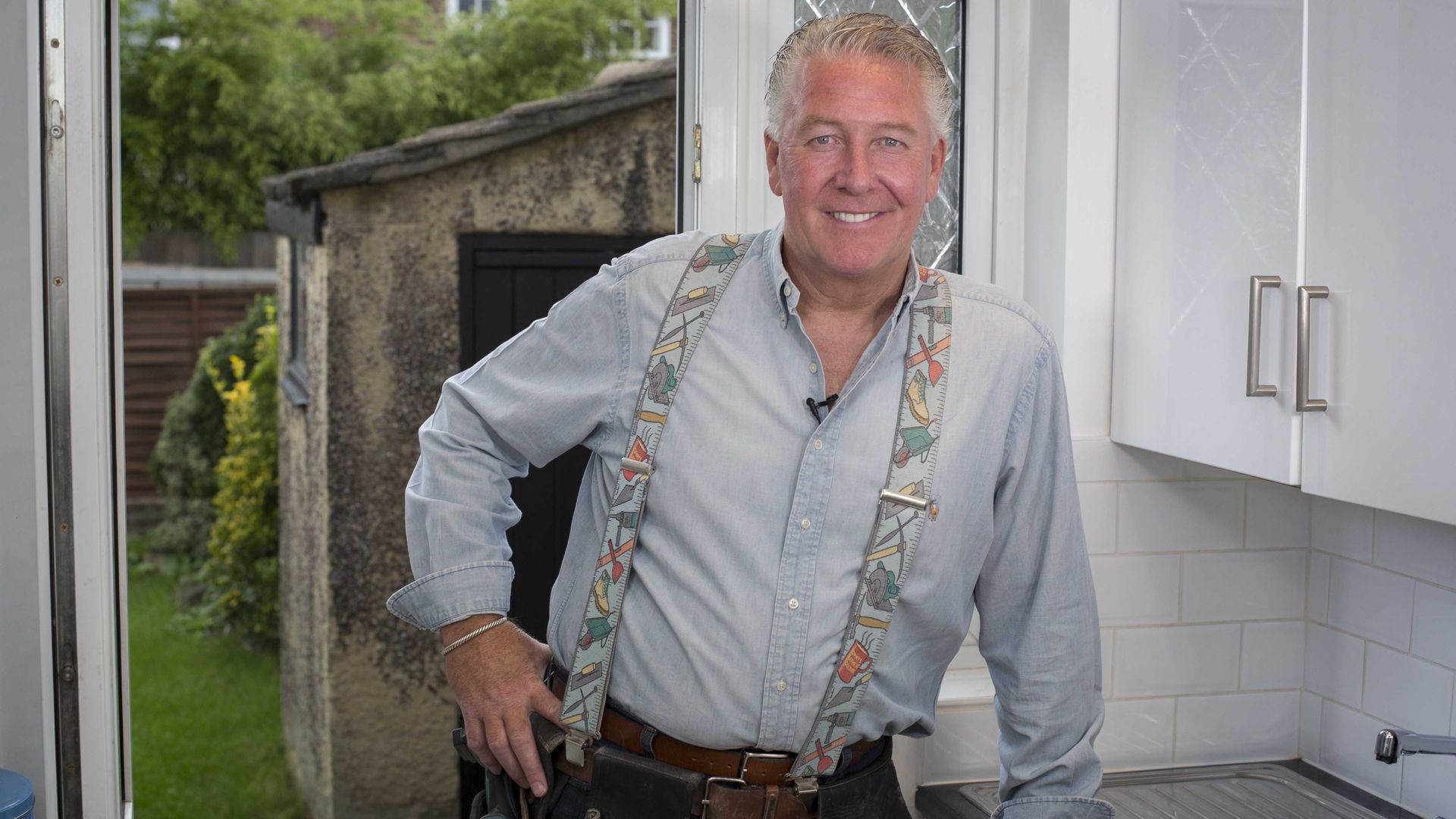
Tommy Walsh is alive.
Let’s get that out of the way before another algorithm-chasing content farm convinces you to mourn a man who is still walking around East London. If you arrived here because you saw a headline claiming the Ground Force legend passed away, you didn't stumble onto breaking news. You walked straight into an automated trap designed to monetize your nostalgia. You might also find this connected coverage interesting: Russell Brand’s Conviction Proves Our Celebrity Accountability Obsession Is Broken.
The competitor piece claiming "Ground Force presenter Tommy Walsh has died" isn't just bad journalism. It is a symptom of a broader, parasitic media ecosystem that weaponizes celebrity health battles—specifically Tommy’s very real, very public fight with cancer—to trigger panic clicks.
While lazy aggregators churn out premature obituaries for ad revenue, they miss the actual story. The real narrative isn't about a tragic ending. It’s about how a 1990s television carpenter accidentally invented modern lifestyle media, why his real-life medical battle is far more instructive than tabloid hysteria, and how you can spot an algorithmic death hoax before you share it. As highlighted in recent articles by Associated Press, the effects are worth noting.
The Anatomy of a Celebrity Death Hoax
You have seen the formula a thousand times. A beloved television personality faces a serious health scare. Months or years later, a low-tier blog with a generic domain name publishes a headline written in the past tense, stuffed with vague, emotionally manipulative phrasing.
They rely on a predictable psychological exploit. When you hear the name Tommy Walsh, your brain immediately triggers a specific warm memory: late 1990s BBC One, Alan Titchmarsh offering gentle horticultural wisdom, Charlie Dimmock refusing to wear a bra while installing a water feature, and Tommy—the cheeky, fast-talking Hackney builder—turning a suburban mud pit into a timber deck in forty-eight hours.
Because that emotional connection is so strong, your critical thinking drops. You click. You scroll past four pop-up ads and an auto-playing video just to see if it’s true. By the time you realize the article is either an outright fabrication or a bait-and-switch about a different Tommy Walsh entirely, the publisher has already banked the programmatic ad impression.
I’ve spent fifteen years watching digital media executives optimize this exact funnel. I’ve watched editorial meetings where traffic managers actively celebrated spikes in search volume around celebrity hospitalizations because the cost-per-click on grief-adjacent queries skyrockets. It is cynical. It is lucrative. And it relies entirely on your refusal to verify a single source.
How to Spot an Algorithmic Obituary in Ten Seconds
Stop falling for it. Whenever a headline claims a beloved public figure has died, run it through this filter before you hit share:
- Check the Wire Services First: If a household name in British broadcasting dies, the BBC, Press Association (PA), or Reuters will have a verified report within minutes. If the only source is a site you have never heard of, it is fake.
- Look for the "Name Collision" Trick: Scammers routinely exploit shared names. There have been multiple athletes, local politicians, and musicians named Tommy Walsh. Clickbait engines deliberately omit middle initials or professions in the title to trick Google News algorithms into conflating a stranger's death with a celebrity's brand.
- Inspect the Dateline and Bylines: Legitimate obituaries list the exact date, location, and family or agent confirmation. Hoaxes use passive voice ("fans are mourning," "tributes are pouring in") without a single named relative or official representative on the record.
What Actually Happened to Tommy Walsh
The reason these rumors stick to Tommy Walsh like wet cement is simple: he has been brutally honest about his health. Unlike celebrities who hide behind polished PR statements, Walsh has spoken openly about living with cancer, giving the rumor mill just enough real-world ammunition to sound plausible.
Let’s look at the verified facts of his medical history, without the tabloid sensationalism.
In 2022, during a routine check-up prompted by his own advocacy for early detection, doctors discovered an unexpected lump in his throat. That led to surgery to remove a cancerous tumor. He recovered, returned to work, and used his platform to urge men—particularly working-class men of his generation who famously avoid the doctor—to get screened.
Then came the 2023 update that sent the internet into a frenzy. Speaking at a charity event for Cancer Research UK, Walsh revealed that doctors had discovered a three-centimeter tumor in his lung. He underwent a targeted, non-invasive treatment known as SABR (Stereotactic Ablative Radiotherapy)—a high-precision radiation technique that attacks tumors without requiring traditional open-chest surgery.
By early 2024, the news was overwhelmingly positive. The targeted radiotherapy had shrunk the tumor, clearing the immediate threat and allowing him to return to normal life.
Notice the massive gap between reality and the clickbait narrative. The reality is a textbook example of modern oncology working exactly as intended: early detection, precision radiotherapy, and a resilient patient managing a chronic health reality. The clickbait narrative turns a medical success story into a cheap funeral.
Why Ground Force Was Actually a Media Revolution
If we are going to talk about Tommy Walsh’s legacy, we shouldn't be writing obituaries; we should be dissecting why the show that made him famous remains the blueprint for almost everything on television today.
The prevailing consensus among snobby television critics in the late 1990s was that Ground Force was mindless daytime fluff disguised as prime-time entertainment. They were completely wrong. At its peak, Ground Force pulled in over 12 million viewers on BBC One—numbers that modern streaming executives would commit crimes to achieve.
It succeeded because it broke every rule of traditional instructional television. Before 1997, gardening and DIY shows were lectures. Experts stood in manicured estates, speaking in received pronunciation, explaining concepts that required a massive budget and three years of patience.
Producer John Thornicroft and the Ground Force trio flipped the model. They introduced three mechanics that now dominate the entire creator economy:
- Artificial Scarcity of Time: The 48-hour deadline wasn't about horticulture; it was about narrative tension. By forcing a massive physical transformation into a weekend window, they turned laying turf into a heist movie. Every single home renovation show on HGTV, every TikTok room-makeover time-lapse, and every YouTube building challenge owes its structural DNA to that ticking clock.
- Radical Authenticity Over Polish: Tommy Walsh wasn't trained at RADA. He was an actual builder from Hackney whose father taught him the trade. When he screwed up a measurement or bantered with Alan Titchmarsh, it wasn't scripted. Audiences were starving for real competence paired with blue-collar charisma.
- The Emotional Reveal: The show understood that nobody actually cares about decking joists or water pumps. They care about the human reaction when a grieving widow or an overworked nurse walks through the back gate and sees their neglected yard transformed.
When you look at modern mega-creators like MrBeast or the massive home-renovation empires on cable, you are looking at the direct descendants of Tommy Walsh swinging a lump hammer in a rainy British suburb.
The Uncomfortable Truth About Nostalgia and Celebrity Health
There is a downside to calling out these death hoaxes, and I won't pretend otherwise. Whenever you debunk a rumor about a celebrity's death, you inadvertently keep their name tethered to the word "died" in search engines. Furthermore, when a public figure is genuinely navigating a serious illness like lung cancer, celebrating a positive scan doesn't mean the risk disappears forever. Medical realities are fragile, and over-optimism can feel just as reductive as premature mourning.
Yet the alternative—letting automated content farms write the final chapter of a living man's life—is worse.
When we reduce icons like Tommy Walsh to sad headlines, we erase the actual value of what they are doing right now. Walsh didn't go public with his throat cancer and lung tumor for sympathy clicks. He did it because men over fifty are notoriously terrible at advocating for their own health. According to data consistently highlighted by Cancer Research UK, late diagnosis remains one of the primary drivers of preventable cancer mortality in men, largely because men delay reporting persistent symptoms like a hoarse voice or a lingering cough.
Tommy Walsh walked into a doctor's office, caught a throat tumor early, caught a lung tumor before it metastasized out of control, and underwent cutting-edge radiotherapy that kept him alive. That isn't a tragedy. That is a blueprint.
Stop Consuming Garbage Media
The next time your social feed serves you a breathless headline claiming a childhood television icon has suddenly passed away, pause for five seconds. Ask yourself who benefits from your panic.
If the article comes from a verified newsroom with a real journalist's name attached, read it and pay your respects. If it comes from a faceless content aggregator recycling three-year-old quotes about a hospital visit under a deceptive headline, close the tab. Starve the algorithm of the engagement it needs to survive.
Tommy Walsh is still here, still talking, and still proving that real resilience looks nothing like a tabloid headline.