Mainstream media loves a tidy morality play. They want you to believe Russell Brand was a beloved comic genius who somehow lost his way, succumbed to dark impulses, and crashed into a wall of legal accountability.
That narrative is lazy, self-serving fiction. Recently making news in this space: The Operational Architecture of Celebrity Philanthropy and the Christmas Is Not Cancelled Campaign.
Before we go any further, let’s establish absolute factual clarity. As of the latest public record, Russell Brand has faced serious allegations of rape, sexual assault, and emotional abuse stemming from a joint investigation by The Times, The Sunday Times, and Channel 4’s Dispatches, alongside subsequent police inquiries. He has vehemently denied all criminal allegations, maintaining his relationships were consensual, and he has not been convicted in a criminal court. Framing his trajectory as a "rape conviction" isn't just premature; it fundamentally misunderstands the machinery that made him untouchable for twenty years.
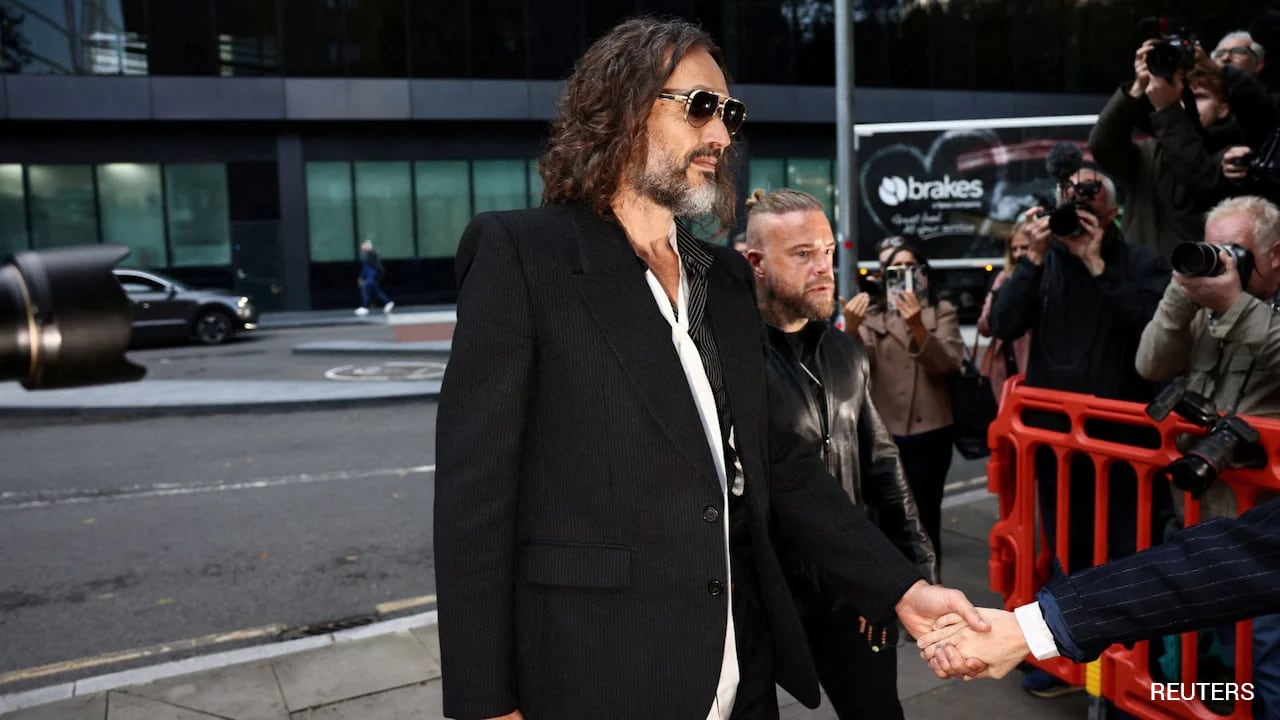
The real story isn’t about a sudden fall. It’s about an industry that weaponized a walking red flag for ratings, cashed the checks, and then acted shocked when the bill came due. Additional insights regarding the matter are detailed by Reuters.
The Myth of the "Beloved" Outsider
If you read standard celebrity obituaries—or premature career autopsies—they paint Brand’s rise as a triumph of eccentric charm. They point to his 2006 breakthrough on Big Brother’s Big Mouth, his MTV stints, and his Hollywood pivot in Forgetting Sarah Marshall.
Here is what they leave out: Brand’s entire commercial value was predicated on boundary violation.
I’ve spent fifteen years advising talent agencies and crisis communications teams in London and Los Angeles. I’ve watched network executives sign off on high-risk talent because controversy converts to eyeballs faster than competence ever will. In the mid-2000s, British broadcasting was locked in a race to the bottom for shock value. Brand wasn't an anomaly; he was the peak asset of that business model.
Executives didn't hire him despite his hyper-sexualized, aggressive persona. They hired him because of it. When he famously left lewd voicemails on actor Andrew Sachs’ answering machine during a 2008 BBC Radio 2 broadcast—a stunt that triggered 42,000 complaints and forced the resignation of BBC Radio 2 controller Lesley Douglas—the industry didn't banish him. Hollywood handed him leading roles.
Why? Because in entertainment economics, outrage is just unpaid marketing.
Why the "Rise and Fall" Narrative Fails
The standard media framing asks: How did a mainstream darling become a pariah?
That is the wrong question. The right question is: Why did institutional gatekeepers subsidize behavior they now claim to abhor?
When you look at Brand’s career through the lens of media incentives rather than personal biography, the "fall" disappears. What remains is a predictable lifecycle of reputational arbitrage:
- The Shock Arbitrage Phase (2004–2012): Legacy networks use Brand to signal edginess to younger demographics. His public persona—the leering Lothario, the unapologetic addict—acts as a shield. Any rumor of off-camera misconduct is dismissed by insiders as "just Russell being Russell."
- The Intellectual Pivot (2013–2019): As mainstream comedy tastes shift toward safer, more socially conscious norms, Brand’s shtick becomes a liability for corporate advertisers. Sensing the market closing, he rebrands as a revolutionary thinker, publishing Revolution and leaning into addiction recovery and anti-establishment politics.
- The Audience Capture Phase (2020–Present): Locked out of legacy studios, Brand migrates to YouTube and Rumble. He trades Hollywood budgets for direct-to-consumer attention, pivoting sharply into populist skepticism and wellness conspiracies.
Notice what didn't change across all three phases: the core mechanism of his appeal. Whether he was mocking traditional decorum on the BBC or questioning pharmaceutical institutions on Rumble, Brand sold the exact same product—transgression.
The Mechanics of Audience Capture and Insulation
To understand how Brand survived the initial wave of investigative reporting in 2023 without his digital empire evaporating overnight, you have to understand audience capture.
In traditional media, a scandal destroys your distribution. If a network drops you, your audience vanishes. In the creator economy, distribution is decentralized, and your audience is primed to view institutional attacks as proof of your validity.
Months before the Dispatches documentary aired, Brand’s content had already shifted toward framing himself as a target of a coordinated "establishment" smear campaign. Whether intentional or instinctual, this created an airtight epistemic bunker. When the allegations dropped, his core subscriber base didn't see journalism; they saw confirmation bias. They viewed the reporting not as an accountability mechanism, but as a hit job by the exact legacy institutions Brand had spent three years telling them to distrust.
Media analysts love to claim that "cancel culture" is an all-powerful guillotine. They’re wrong. Cancel culture only works on people whose revenue depends on corporate advertisers. Once a public figure transitions to direct-to-consumer monetization—subscriptions, merchandise, independent video platforms—traditional reputational shame loses its leverage.
You cannot boycott someone whose customers believe the boycott itself is a conspiracy.
Dismantling the Common Misconceptions
When people search for the story behind Russell Brand, they usually bring a set of flawed assumptions shaped by tabloid headlines. Let’s clear the board.
Did Russell Brand actually go to prison?
No. Despite sensationalist framing and premature verdicts on social media, criminal proceedings and convictions operate on strict evidentiary timelines, not news cycles. Conflating media investigations and police inquiries with a criminal conviction destroys public literacy around how the justice system actually functions. If you care about accountability, precision matters.
Why didn't anyone stop him in the 2000s?
Because nobody had a financial incentive to stop him. In high-margin entertainment environments, HR departments exist to protect the company, not the talent or the crew. As long as a star generates more revenue than legal exposure, red flags are treated as quirks. I’ve sat in rooms where producers laughed off behavior that would get a middle manager fired in ten minutes, simply because the ratings justified the risk.
Is his pivot to wellness and spirituality fake?
This is where lazy critics miss the nuance. Calling Brand a simple grifter is too easy—and it underestimates why he’s effective. People rarely sustain a persona for a decade through pure cynicism. The most persuasive figures in media are the ones who genuinely believe their own mythology in the moment they’re speaking it. Brand’s obsession with recovery, mysticism, and anti-authoritarianism isn't necessarily a mask; it’s an evolution of the same ego that drove his comedy. He simply swapped the applause of a comedy club for the devotion of a digital congregation.
The Uncomfortable Truth About Media Complicity
If you want to understand the real pathology here, stop looking at Russell Brand and start looking at the mirror the media refuses to hold up to itself.
For years, British and American outlets printed profiles marveling at his sexual conquests. They gave him awards—literally naming him "Shagger of the Year" at the NME Awards three years in a row. They turned his boundary-pushing into a punchline because it sold magazines and filled airtime.
Now, those same institutions write solemn retrospectives about the "dark side" of his rise.
There is an obvious downside to pointing out this institutional hypocrisy: critics will accuse you of deflecting blame from the individual. Let’s be clear—systemic complicity never absolves personal responsibility. Individuals make their own choices, and if criminal lines were crossed, the courts exist to adjudicate them.
However, if we pretend Brand operated in a vacuum, we guarantee the exact same cycle will repeat with the next charismatic outlaw who walks through a studio door.
How to Spot the Next Industry Mirage
If you work in media, PR, or brand management—or if you’re simply a consumer tired of being played by manufactured narratives—stop watching what celebrities say and start tracking their incentives.
- Audit the Persona vs. The Product: Whenever a public figure builds their brand entirely around "radical honesty" or "vulnerability," look closely at what they are deflecting from. Excessive transparency about minor flaws is the oldest trick in the book for hiding major ones.
- Follow the Distribution Shift: When an entertainer suddenly abandons mainstream entertainment for intense political or ideological commentary, check their recent career trajectory. Nine times out of ten, an ideological awakening follows a commercial rejection.
- Ignore the "Fall" Narrative: Public figures rarely change their fundamental wiring overnight. When a star appears to implode, look back ten years. The traits that destroyed them are almost always the exact traits that made them famous.
Russell Brand didn't trick the entertainment industry, and he didn't fall from a pedestal he built alone. Legacy media built the stage, handed him the microphone, and cheered while he tore up the rulebook—right up until the moment the crowd turned on the theater.