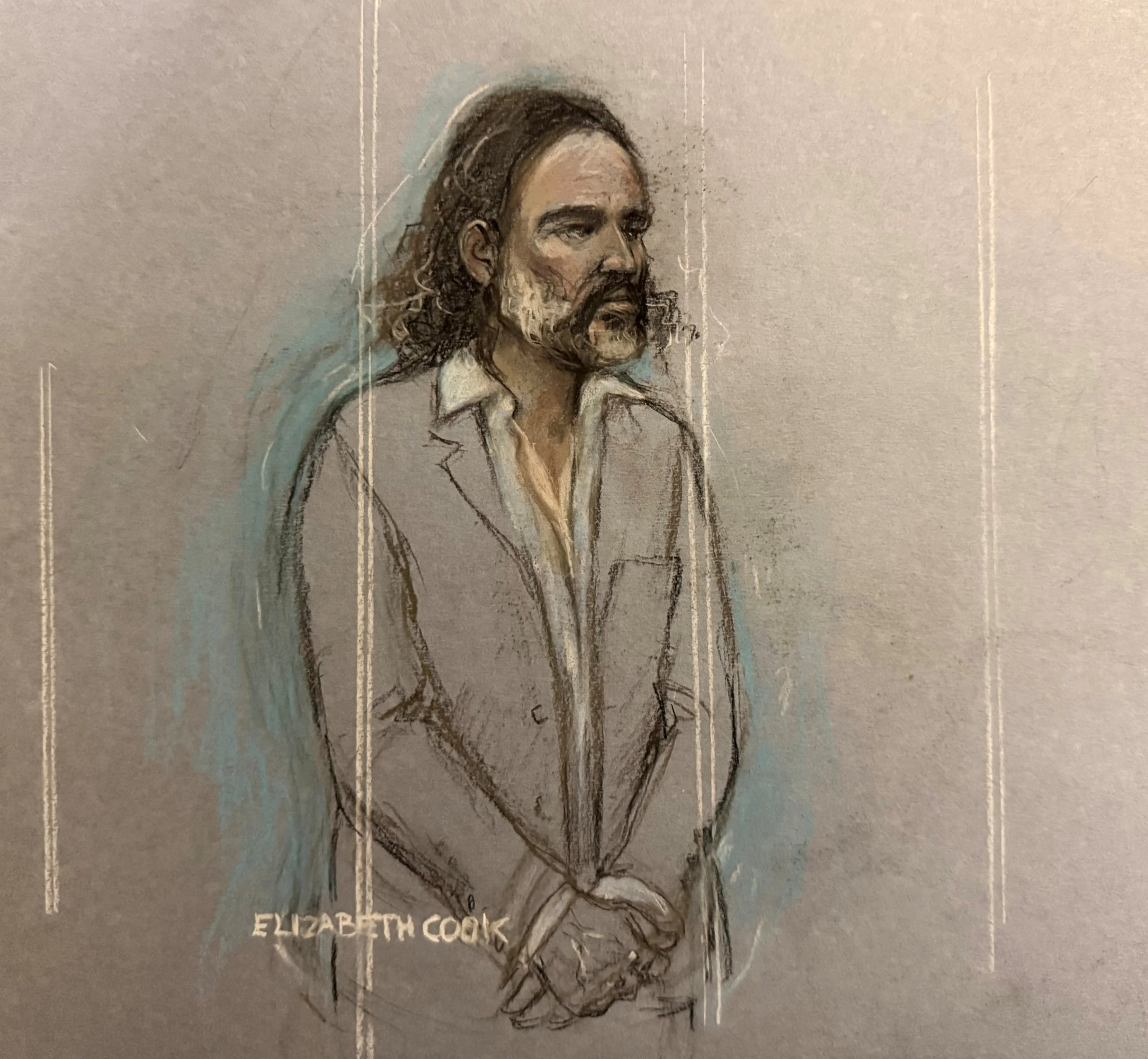
You think a double-digit prison sentence means the system finally works. You are wrong.
When news breaks that a high-profile figure like Russell Brand has been handed over a decade behind bars for rape and sexual assault, the collective exhale from the media class is deafening. Pundits immediately rush to declare a cultural victory. They frame the gavel drop as the definitive end of the untouchable celebrity era—proof that wealth, charisma, and an army of crisis PR handlers can no longer outrun accountability.
That is a comforting fairy tale. It is also complete nonsense.
Having spent fifteen years dissecting crisis communications, media litigation, and high-stakes entertainment fallout from the inside, I have watched the exact same playbook run on repeat. The public celebrates the rare conviction of a fallen star while remaining entirely blind to the structural rot that allowed the behavior to thrive for twenty years in the first place. A single ten-year sentence does not fix a broken industry; it merely provides a convenient scapegoat so the executives who cashed the checks can sleep soundly at night.
The Lie of the "Self-Correcting" Industry
The mainstream coverage treats this verdict like a triumph of modern journalism and legal rigor. Look closer at the timeline, and that narrative collapses under its own weight.
High-profile abuse in the entertainment sector does not happen in a vacuum. It requires an ecosystem. It demands producers who look the other way because ratings are peaking, bookers who ignore whispered warnings from junior staffers, and legal departments whose primary function is shielding corporate liability rather than protecting human beings.
When a major star finally faces criminal consequences decades after the alleged offenses occurred, the industry does not experience a moral awakening. It executes a controlled demolition. By the time a celebrity reaches the dock, their commercial value has already plummeted. The studios have already severed ties. The streaming platforms have already scrubbed the back catalog.
Prosecuting a disgraced figure who has already been exiled from mainstream broadcasting costs the machine nothing. It is the ultimate risk-free virtue signal.
Why Delayed Justice is Institutional Protection
Let us look at the mechanics of how these cases actually reach a courtroom. In the UK and US legal systems, historical sexual offense prosecutions face astronomical hurdles. Without contemporary forensic evidence, the state relies heavily on corroborating witness testimony, contemporaneous communications, and established patterns of behavior.
- The Statute of Limitations Trap: While the UK has no statute of limitations on indictable offenses like rape, the passage of time degrades memory, scatters witnesses, and gives defense teams endless ammunition to attack credibility.
- The Resource Asymmetry: A multimillionaire entertainer enters the legal arena with top-tier King's Counsel, private investigators, and defamation lawyers who spend years issuing chilling cease-and-desist letters before a single criminal charge is ever filed.
- The Media Gating Mechanism: Investigative reporters often sit on explosive, fully corroborated dossiers for years—not because the facts are unclear, but because corporate legal teams refuse to greenlight publication until the target loses their institutional backing.
Imagine a scenario where a network executive receives three separate complaints about a flagship host during the peak of their prime-time run. Does the network call the police? Almost never. They offer a quiet non-disclosure agreement, reassign the complainant to a different production, and renew the host's contract for another three seasons. The criminal justice system only gets a turn at bat once the talent becomes a financial liability.
Dismantling the "Cancel Culture" Myth
If you listen to the loudest voices in the digital peanut gallery, you will hear two equally brain-dead arguments regarding cases like Brand’s.
On one side, you have the institutional cheerleaders claiming that the verdict proves nobody is above the law. On the other, you have the conspiratorial fringe insisting that any prosecution of an anti-establishment figure is a coordinated hit job by the "matrix" to silence dissent.
Both camps are missing the actual point.
The conspiratorial defense relies on a massive logical fallacy: the idea that pivoting to anti-mainstream political commentary grants retroactive immunity for past crimes. When celebrities sense the walls closing in—when investigative journalists start calling former assistants and ex-partners for comment—rebranding as a persecuted truth-teller is the oldest trick in the PR manual. It builds a pre-packaged defense narrative. Every subsequent criminal charge is instantly reframed by the fanbase as political persecution.
Conversely, the "nobody is above the law" crowd ignores the thousands of identical cases involving non-famous perpetrators—or worse, famous perpetrators who are still profitable—that never even make it past a police desk sergeant.
What People Actually Get Wrong About Celebrity Trials
When high-profile convictions happen, the public inevitably asks the wrong questions. They obsess over the psychological profile of the perpetrator or the theatrical details of the cross-examination. Here is the brutal reality behind the questions people actually search for—and why the standard answers are completely flawed.
Does a harsh sentence deter other powerful men in entertainment?
No. Deterrence only works when the perpetrator believes they will be caught while they still have something to lose. Narcissistic predators operating at the height of their fame do not calculate risk on a twenty-year horizon. As long as immediate financial and social rewards are guaranteed by enablers, the threat of a courtroom twenty years down the road is irrelevant.
Why didn't the victims go to the police immediately?
This question betrays a total ignorance of power dynamics. In the 2000s, a junior runner or an unknown actor accusing a beloved comedy icon of assault wasn't just risking their career; they were inviting coordinated public humiliation by the tabloid press. Police forces routinely dismissed such reports as "he-said, she-said" disputes, while tabloid editors actively paid to bury stories that threatened their access to A-list talent.
Will this verdict force networks to change their duty-of-care policies?
Only on paper. Studios will roll out mandatory HR seminars, update their codes of conduct, and hire external compliance officers. None of it matters when a show is generating fifty million dollars a year in ad revenue. When money talks, compliance walks.
The Structural Reforms Nobody Wants to Fund
If you actually care about preventing predatory behavior in media and entertainment rather than just enjoying the spectacle of a public execution, stop cheering for courtroom verdicts. Start demanding structural changes that hit the enablers where it hurts: their balance sheets.
I have sat in boardrooms where executives debated the "reputational risk" of keeping problematic talent on the payroll. Never once did the conversation center on the safety of the crew. It was strictly an actuarial calculation comparing projected ad revenue against the potential cost of a future lawsuit. Until that math changes, nothing changes.
1. Abolish Non-Disclosure Agreements for Misconduct
NDAs were designed to protect trade secrets and proprietary algorithms, not to silence victims of sexual assault. When a studio uses a settlement agreement to gag a complainant, they are actively concealing a serial predator from future victims. Banning NDAs in cases involving criminal misconduct—with zero loopholes for "mutual non-disparagement"—would collapse the cover-up economy overnight.
2. Pierce the Corporate Veil for Enablers
Right now, if a producer knowingly feeds vulnerable young staffers to an abusive star, the worst-case scenario for the producer is a golden parachute and a quiet exit. We need statutory vicarious liability that holds executives personally and financially accountable when internal records show they ignored documented warnings. Put one television executive in the dock alongside the talent, and watch how fast workplace culture transforms.
3. Independent Industry-Wide Reporting Bodies
Internal HR departments exist to protect the company, not the employee. Asking a twenty-two-year-old production assistant to report a star to the network's HR team is like asking a sheep to file a complaint with the wolf's butcher. The entertainment industry needs an independent, externally funded ombudsman with subpoena power and zero financial ties to studios or talent agencies.
The Uncomfortable Truth About Outrage
There is a massive downside to the contrarian stance I am taking here, and I will own it directly: acknowledging that the system is fundamentally rigged against real accountability breeds cynicism. It is deeply unsatisfying to realize that a ten-year prison sentence is an anomaly rather than a turning point. People want closure. They want to believe that putting one man in a cell closes the book on a dark chapter.
It doesn't.
The outrage cycle is a commodity. Media outlets generate millions of clicks covering the arrest, the trial, the sentencing, and the inevitable appeal. Social media feeds ignite with righteous fury. Everyone feels morally superior for condemning the monster of the week.
Meanwhile, the talent agencies that booked the gigs, the networks that aired the specials, and the managers who pocketed fifteen percent of every predatory tour quietly move on to the next rising star. They wash their hands of the fallout, issue a sterile statement expressing "deep concern for all those affected," and keep the machine running at full speed.
Stop mistaking a single conviction for systemic justice. Until the people who built the stage, sold the tickets, and silenced the witnesses face the exact same consequences as the man holding the microphone, every verdict is just theater.


