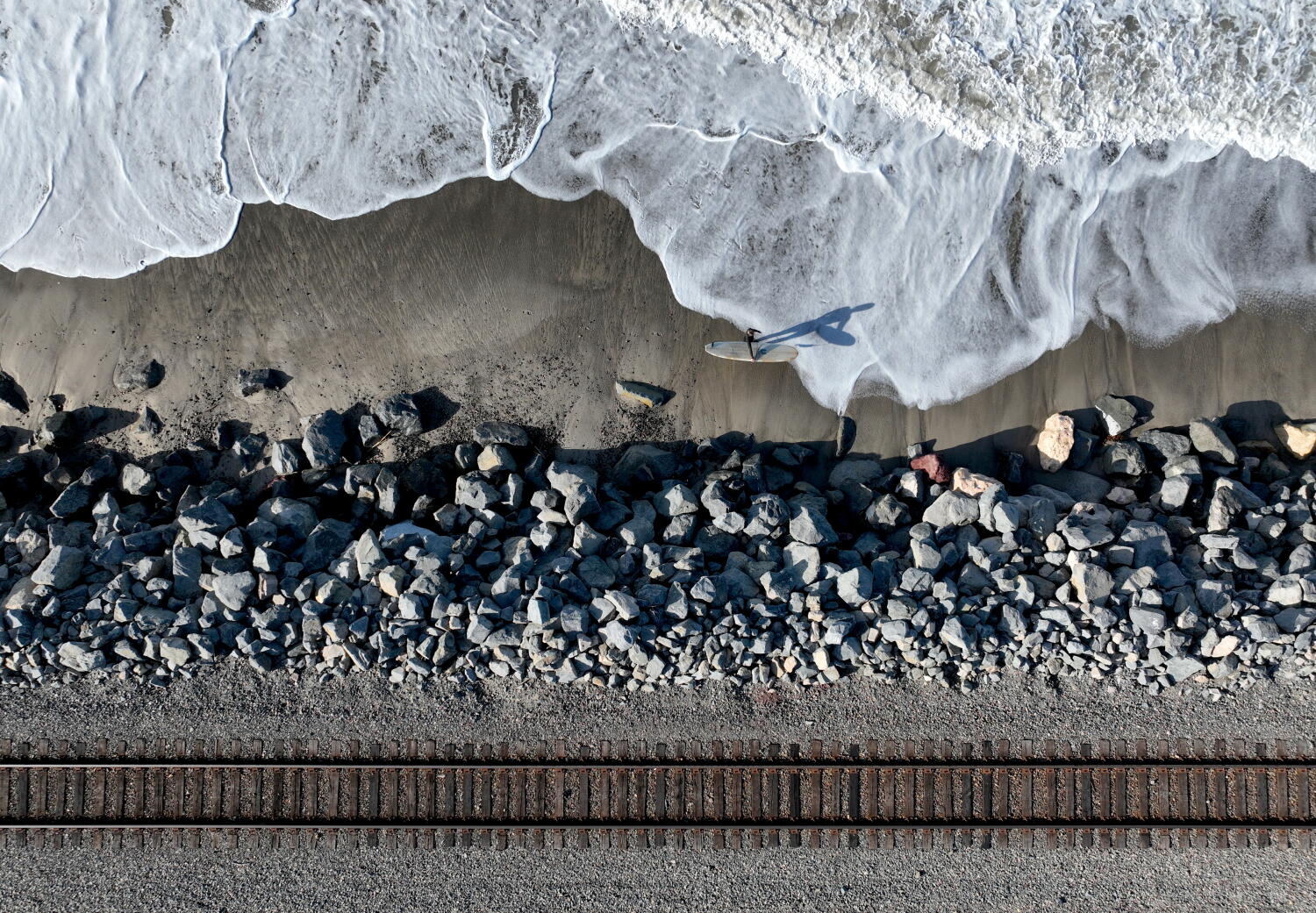
Passenger trains aren't supposed to teeter on the edge of a cliff while the ground beneath them liquefies. Yet, along a critical stretch of Southern California coastline in San Clemente, that is precisely what is happening. If you have ever taken the Pacific Surfliner between San Diego and Los Angeles, you have rolled right through a slow-motion geological disaster zone.
Engineers call it bluff erosion. Locals just call it terrifying.
For years, the rail line hugging the Orange County coastline has faced repeated emergency closures. Massive chunks of earth slide onto the tracks, or worse, the dirt underneath the wooden ties simply washes away into the surf. Fixing it isn't just a matter of dumping some gravel and hoping for the best. It requires fighting coastal physics, rising sea levels, and a notoriously unstable rock formation that refuses to stay put.
Here is what is actually going on beneath the tracks and why fixing this vital corridor is turning into an engineering nightmare.
The Geography Problem No One Wants to Solve
Southern California's coastline is gorgeous, but it's fundamentally fragile. The railway through San Clemente runs right at the base of coastal bluffs composed of ancient, poorly consolidated marine deposits. Translation? It is essentially compacted dirt and soft sandstone that hates water.
When heavy winter storms hit, rainwater seeps into the bluffs. That water adds immense weight and lubricates internal fault lines and fractures. Gravity does the rest. The bluffs fail, sending thousands of tons of dirt and rock tumbling down onto the right-of-way.
To complicate matters further, the Pacific Ocean is gnawing at the base of these cliffs. High tides combined with storm surges smash directly into the toe of the bluffs. Sea walls help, but they are expensive, politically contentious, and often just shift erosion problems further down the beach.
Band-Aid Solutions Have Reached Their Limit
Transit authorities haven't just sat back and watched the tracks slide into the sea. They have spent tens of millions of dollars on emergency repairs.
You see the same playbook every time a slide closes the line. Crews bring in heavy machinery, haul away tons of mud, drive steel soil nails deep into the cliffs to anchor the hillside, and sometimes build catchment walls to catch falling debris.
These fixes work just long enough for the next big atmospheric river to wash them out. They are reactionary. Every closure strands thousands of commuters, shuts down freight traffic moving goods from the ports of Los Angeles and San Diego, and severs a multi-billion-dollar economic corridor.
Relying on emergency shoring is no longer a viable strategy. The ground is moving too fast, and the storms are getting too aggressive.
The Long-Term Fixes Facing Harsh Realities
If quick fixes won't work, what's the actual solution? Transportation planners are looking at massive, permanent overhauls, but every single option comes with massive hurdles.
Moving the tracks inland sounds obvious until you look at the topography. San Clemente is built on steep, densely populated hillsides dripping with multi-million-dollar homes. Acquiring right-of-way, tunneling through unstable hills, or elevating miles of track would cost billions of dollars and take decades of environmental reviews and lawsuits.
Another option involves extensive beach nourishment. Pumping millions of cubic yards of sand onto the shore creates a natural buffer that absorbs wave energy before it hits the bluffs. It protects the railway, but it is a temporary fix that requires constant maintenance and millions of taxpayer dollars every few years.
Deep subsurface drainage is also on the table. By pulling water out of the bluffs before it can saturate the soil, engineers can dramatically reduce the risk of sudden slope failures. It's less visually disruptive than a giant sea wall, but it requires pinpoint geological mapping and continuous maintenance.
What This Means for the Future of Coastal Transit
The reality check is stark. We built our critical infrastructure right on the edge of a dynamic, eroding coastline during a period of relative climatic stability. That era is over.
As sea levels rise and extreme weather events become more frequent, public officials will have to make brutal financial and logistical choices. Do we spend endless fortunes defending a vulnerable rail line in its current footprint, or do we bite the bullet and invest in a massive, multi-decade relocation project?
Until a consensus is reached, the Pacific Surfliner will continue to face emergency shutdowns every time a major storm hits Southern California. If you rely on this train for your daily commute or a weekend getaway, always check the service alerts before heading to the station. The earth beneath the tracks is still shifting, and the ocean isn't backing down.