Money loves power, and power loves control. For decades, control over global money meant conforming to the rules of the US dollar. If you stepped out of line, Washington pulled the plug on your access to the SWIFT banking system, leaving your national economy stranded. But the rules have fundamentally shifted.
The global financial system is experiencing a bizarre convergence. On one side, heavily sanctioned regimes are handling massive amounts of digital assets to bypass blockades. On the other side, mainstream politicians are suddenly positioning themselves as defenders of the blockchain.
They aren't adopting the technology out of ideological love for decentralized finance. It's about survival, leverage, and practical necessity. When you look past the standard talking points, the reality of why politicians and sanctioned states are embracing crypto becomes clear: it's the ultimate tool for moving capital when traditional avenues are completely blocked.
The Eightfold Jump in State Level Evasion
Sanctioned nations handled over $100 billion in cryptocurrency in 2025 alone. According to data reported by the Wall Street Journal and blockchain intelligence firms like Chainalysis, that represents a jaw-dropping eightfold increase from the previous year.
Rogue states aren't just dabbling in digital assets anymore; they've industrialized the process. They're setting up native token networks, backing state-run exchanges, and establishing parallel financial systems that operate entirely outside the reach of Western regulators.
Consider how specific nations deploy this infrastructure:
- Russia: After being cut off from SWIFT and traditional Western banking rails, Moscow pivotally shifted its cross-border trade strategy. Legislation passed over the last couple of years has crystallized into daily operational reality, allowing Russian firms to settle large-scale import and export deals directly on-chain.
- Iran: The domestic crypto ecosystem reached over $7.7 billion recently. The Islamic Revolutionary Guard Corps (IRGC) and its proxy networks command more than half of that market share, utilizing stablecoin rails to fund regional militia networks, procure dual-use equipment, and process international oil sales.
- North Korea: Hacking remains a primary revenue driver, with state-linked entities stealing hundreds of millions of dollars from decentralized finance (DeFi) platforms in the first half of 2026 alone. The Kim regime routinely channels these stolen digital funds directly into its weapons programs and covert fuel procurement.
The old playbook of freezing bank accounts doesn't work when the account is an autonomous smart contract. When the US Office of Foreign Assets Control (OFAC) tried to sanction decentralized tools like Tornado Cash, federal courts ruled that autonomous smart contracts couldn't be treated as regulatable property. It's a massive structural loophole that nation-states exploit every single day.
Why Domestic Politicians Suddenly Flipped the Switch
While isolated regimes use crypto to keep their economies on life support, politicians in democratic nations are chasing a completely different incentive: campaign capital and voter block consolidation.
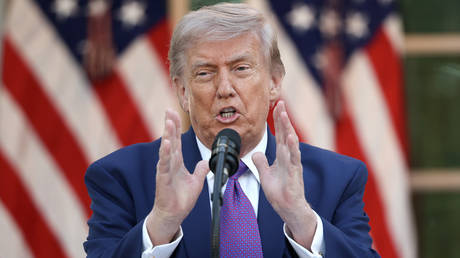
Look at the transformation in American politics. The Trump administration aggressively prioritized securing US cryptocurrency dominance, backing deregulatory measures like the GENIUS Act and the CLARITY Act. This is a massive shift from a few years ago when leadership routinely dismissed digital assets as a speculative scam or a tool for criminals.
Politicians realized that the crypto lobby represents one of the most well-funded corporate interest groups in modern history. Super PACs backed by digital asset firms pump hundreds of millions of dollars into tight electoral races. If you're running for office, taking a hard anti-crypto stance means volunteering to face a heavily funded opposition campaign.
It also serves as an easy populist talking point. Promising to protect self-custody and digital asset innovation appeals directly to younger voters who feel locked out of traditional real estate and stock markets. Supporting the blockchain allows politicians to frame themselves as forward-thinking, anti-establishment figures fighting against overly restrictive federal agencies.
The Stablecoin Rail Dependency
You might think these entities are relying entirely on highly volatile assets like Bitcoin. They aren't. While Bitcoin serves as a solid long-term treasury reserve or an anti-inflation hedge, it's terrible for pricing a shipment of industrial machinery or a barrel of crude oil.
The real driver of state-level adoption is the stablecoin. By pegging transactions to the value of the US dollar without actually using the US banking system, sanctioned states get the stability of global reserve currencies without the compliance headaches.
The exact same infrastructure that a worker uses to send a cross-border remittance back home to their family is being used by state-level brokers to move billions in illicit trade flows. It's incredibly difficult for Western intelligence to untangle these threads because the transaction volume blends directly into the legitimate, daily activity of millions of global retail users.
Moving Beyond the Hype
If you want to understand where global finance is heading, stop looking at the retail market charts and start watching the regulatory gray zones. The romanticized idea of crypto as a tool for universal financial liberation is hitting a wall of geopolitical reality.
For state treasurers in conservative domestic regions, digital assets are becoming an accepted asset class for pension diversification. For isolated regimes, it's a vital economic shield against foreign policy decisions made in Washington. For politicians, it's a reliable source of campaign funding and a powerful cultural wedge issue.
The immediate next steps for anyone trying to navigate this landscape aren't about chasing the next speculative token pump. You need to watch the intersection of international trade policy and on-chain compliance. Keep a close eye on stablecoin legislation and the development of state-backed digital networks. The line between traditional statecraft and decentralized finance has permanently blurred, and the entities holding the real power have no intention of looking back.