Every time a haze-choked photo of a singed orangutan hits the global wire, the sympathy machine roars to life. Donors open their checkbooks, NGOs charter emergency evacuation flights, and well-meaning activists demand more rescue centers, faster veterinary triage, and bigger cages. It feels righteous. It feels urgent.
It is also completely missing the point, and worse, it is subsidizing the very system driving these magnificent apes toward functional extinction.
I have spent years tracking supply chains and conservation politics across Southeast Asia. I have watched millions of dollars vanish into the administrative black holes of well-funded sanctuaries while the actual forest burned down around them. The lazy consensus among mainstream environmental journalism is simple: wildfires happen, orangutans get hurt, heroes save them, repeat. This narrative treats a systemic, economic crisis like an animal shelter PR problem.
Stop funding the band-aids. The real fight is far uglier than a rescue photo lets on.
The Rescue Industry Trap
Let us look at the mechanics of the current conservation model. When a peat forest is drained, logged, and set ablaze to clear land for palm oil expansion, displaced orangutans inevitably starve, wander into plantations, or get caught in traps.
Rescuers swoop in. They capture the stressed animal, treat its burns, feed it imported formula, and house it in a rehabilitation facility. The public loves this. The Instagram engagement is astronomical.
Here is what nobody in the fundraising department wants to admit: building more rehabilitation centers creates a moral hazard for corporations.
If plantation owners and rogue land speculators know that NGOs will step in to rescue, relocate, and care for displaced wildlife, the economic friction of destroying high-conservation-value forest drops to zero. You do not have to worry about endangered species halting your land clearance if an army of foreign-funded veterinarians is waiting in the wings to scoop up every displaced animal you flush out.
By treating the symptom, we are professionalizing the displacement. We have turned orangutan rescue into an institutional supply chain where the input is corporate greed and the output is a perpetual stream of orphans living out their days in wire enclosures because their native habitat has been paved over for cheap biodiesel and snack food additives.
Follow the Money Not the Fur
To understand why orangutans are losing the war, you have to look past the primate and look at the ledger.
Palm oil is not just an ingredient in your shampoo or your afternoon snack. It is an economic juggernaut deeply embedded in global trade finance. When international banks underwrite land conversion in Sumatra and Borneo, they are not factoring in the cost of long-term rehabilitation centers. They are betting that NGOs will absorb the externalized social and environmental costs of their balance sheets.
Mainstream reports love to blame smallholder farmers using slash-and-burn agriculture. It makes for an easy villain. The reality is far more corporate. Industrial conglomerates hold the concessions, dictate the hydrology of the peatlands, and dig the drainage canals that turn ancient rainforests into giant tinderboxes.
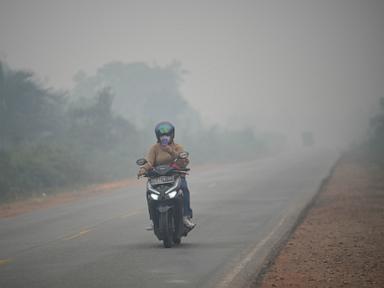
When you drain a peat dome—an ecosystem that naturally holds water like a giant sponge—you are not just creating dry soil for oil palms. You are creating a subterranean fuse. When those peat fires start, they do not just burn the surface vegetation; they burn for months underground, releasing carbon stores that dwarf industrial emissions while cooking the local fauna alive.
Handing out sedatives and topical burn cream at a triage station while the water table of an entire ecosystem remains artificially lowered for corporate profit is like handing out buckets on the Titanic.
The Radical Shift We Refuse to Make
If we want to stop writing obituaries for the red ape, we have to flip the entire intervention model on its head.
First, stop treating habitat protection as a charity case and start treating it as a corporate liability war. Conservation groups need to stop begging for donations to build bigger cages and start weaponizing corporate law, supply-chain traceability, and direct financial penalties against the institutional investors backing deforestation.
Second, rewilding and rescue must be decoupled from the tourism and donation-farming complex. An orangutan that spends five years in a human-run rehabilitation camp learning how to climb plastic structures is poorly equipped for a forest that is shrinking by the day. The only metric of success for conservation is hectares of contiguous, legally protected, un-drained forest floor. If an animal cannot go back to an intact, secure home range, keeping it alive in a cage is not conservation; it is zoo management financed by guilt.
We do not need another emergency appeal. We need an audit of our own complicity in the global consumption patterns that make burning a rainforest cheaper than leaving it alone.
Until we stop rewarding the destruction with our sympathy dollars and start making habitat loss mathematically unprofitable for the boardroom, every rescue mission is just a ticket to a slower, more televised extinction.