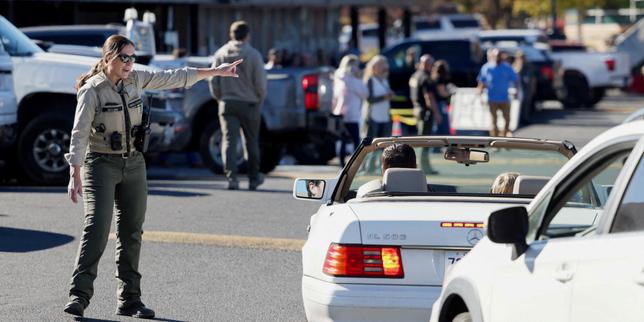
Breaking news dispatches on school shootings—such as a headline reporting at least four deaths at an elementary school in Oregon—capture immediate fatalities while omitting the structural mechanics that govern crisis response, institutional liability, and long-term community recovery. A rigorous analytical rewrite replaces headline tallying with a four-part operational blueprint: Information Lifecycle Dynamics, Facility Vulnerability Architecture, Multi-Agency Command Mechanics, and Long-Term Institutional Cost Functions. Rather than treating a preliminary fatality count as the complete story, analysts must evaluate how verified facts separate from early rumors, how physical and procedural defenses interact inside a school building, how police and emergency medical teams coordinate under time pressure, and how shocks propagate across a school district.
Competitor reporting typically follows a predictable chronological compression: initial casualty estimate, location identification, suspect or perimeter status, and brief institutional context. That format serves speed, yet it leaves major blind spots. Readers often wonder how early death tolls shift, why first responders take minutes to clear complex buildings, how lockdown rules affect survival, and what happens to a district after cameras leave. Answering those questions requires mapping the underlying systems rather than repeating provisional numbers.
Information Lifecycle Dynamics in Breaking Incidents
Early casualty counts in mass-violence dispatches are inherently unstable because emergency operations prioritize life preservation and scene stabilization over immediate accounting. When a report states "at least four deaths," the phrase signals a lower bound established under incomplete visibility, not a final census. Victims may be transported by private vehicles or multiple ambulance waves before hospital registries reconcile identities, while scene investigators cannot enter active or unverified zones until tactical clearing is complete.
Treating preliminary counts as static facts creates predictable analytical errors. Public attention anchors on the initial number, making subsequent revisions—whether upward as critical injuries become fatalities or downward due to duplicated reports—look like confusion rather than normal reconciliation lag. In operational terms, information quality improves in phases:
- Phase One — Tactical Triage: Dispatchers and on-scene units log immediate threats, perimeter boundaries, and urgent medical needs; counts remain rough and fragmented.
- Phase Two — Medical Reconciliation: Receiving hospitals and county medical examiners match patient intakes against scene reports, reducing double counting while introducing cross-jurisdictional delay.
- Phase Three — Evidentiary Verification: Law enforcement and coroners confirm identities, cause of death, and exact spatial sequence once forensic access is authorized.
Understanding this lag prevents over-interpreting early headlines. A distinction between known facts (such as an active law enforcement response at a named school type in a given state) and educated hypotheses (such as expected shifts in casualty totals or likely investigative timelines) keeps analysis grounded when hard details remain sparse.
Facility Vulnerability Architecture and Access Friction
A school building is not a neutral container during an emergency; its layout, lock hardware, glass sightlines, and staffing ratios act as physical variables that either slow or accelerate an attacker's movement. Elementary schools present distinct structural characteristics compared with high schools or universities. Younger students generally require closer adult supervision, cannot self-evacuate as independently in unfamiliar corridors, and rely heavily on staff execution of room-clear and barricade procedures.
Security analysts evaluate campus protection through time and friction rather than absolute invulnerability. Every barrier—locked exterior doors, buzzer entry vestibules, interior classroom doors that lock from the inside without stepping into a hallway, and reinforced glazing—adds seconds or forces route changes. Time matters because law enforcement response duration sets the window during which building occupants must rely on passive protection and internal actions.
Consider a conceptual floor-plan comparison between two classrooms along the same hallway. Room A has an unlocked door, wide glass panels beside the frame, and desks arranged in rows near the entrance; Room B has a solid core door locked from within, window coverings that block line of sight, and seating clustered away from the glass. Under identical external response times, the physical friction profile differs sharply even before accounting for human reaction speed.
Hardware alone does not resolve trade-offs. Locking exterior doors can improve perimeter control, yet over-fortification or rigid access rules can complicate orderly evacuation or emergency ingress if poorly coordinated with local fire and police codes. Likewise, frequent drills build muscle memory, but poorly calibrated drills can induce anxiety or compliance habits that fail when real cues differ from routine bells.
Multi-Agency Command Mechanics and Bottlenecks
Large-scale school emergencies test interoperability across municipal police, county sheriffs, state police, fire departments, emergency medical services, and school district leadership. When multiple agencies converge on a single campus, operational friction typically arises from span-of-control limits, radio channel congestion, staging bottlenecks, and parent reunification pressure.
Effective crisis management relies on a clear Incident Command System structure where authority, tactical operations, medical triage, and public information are separated into distinct tracks rather than concentrated in one overwhelmed official. Without disciplined role separation, tactical commanders get pulled into press briefings, or ambulances stack up outside an uncleared perimeter while wounded victims wait inside.
The second limitation in many responses involves reunification logistics. Parents naturally converge on the school site, clogging access roads needed by fire trucks and ambulances and creating secondary security hazards near active perimeters. Establishing a remote, well-staffed reunification center with dedicated mental health, liaison, and verification teams removes civilians from the tactical zone while addressing an urgent human need.
Even well-trained agencies face structural limits. Dense urban environments offer faster unit arrival but heavier traffic gridlock and more overlapping jurisdictions; rural counties often face longer travel distances and smaller specialized tactical teams. No command protocol eliminates the fog of the first ten minutes, when radio traffic spikes and unverified reports circulate simultaneously.
Long-Term Institutional Cost Functions
When coverage ends after a few news cycles, the economic and organizational burden shifts onto the local school district and municipality. Analysts can model this burden as a cost function across four compounding categories:
- Direct Response and Security Outlays: Overtime pay for law enforcement and emergency personnel, physical security upgrades, alarm or communication systems, and specialized training.
- Clinical and Behavioral Care Costs: Short- and long-term trauma counseling, grief support, and clinical services for students, teachers, families, and first responders.
- Operational Continuity Losses: Instructional disruption, substitute teacher shortages, staff turnover, absenteeism, and enrollment shifts as families reassess school options.
- Legal and Administrative Overhead: Investigations, public records processing, civil litigation defense, insurance adjustments, and governance strain on school boards.
These costs do not arrive in a single lump sum. Behavioral health needs and workforce attrition often peak months later, after immediate emergency funds taper off and routine academic demands return. Smaller districts face acute proportional strain because fixed administrative overhead is spread across fewer students and a narrower tax base.
Strategic Recommendation for Decision-Makers
Newsrooms, school boards, and municipal leaders should shift from event-centric tallying to system-level readiness auditing. Every public update on a school shooting should pair verified incident facts with transparent status markers for casualty reconciliation, perimeter security, and reunification operations, while local districts should audit three concrete bottlenecks before a crisis occurs: interior door-locking mechanics and sightline controls, joint police-fire-district radio and staging plans, and multi-year funding for school-based mental health and staff retention.