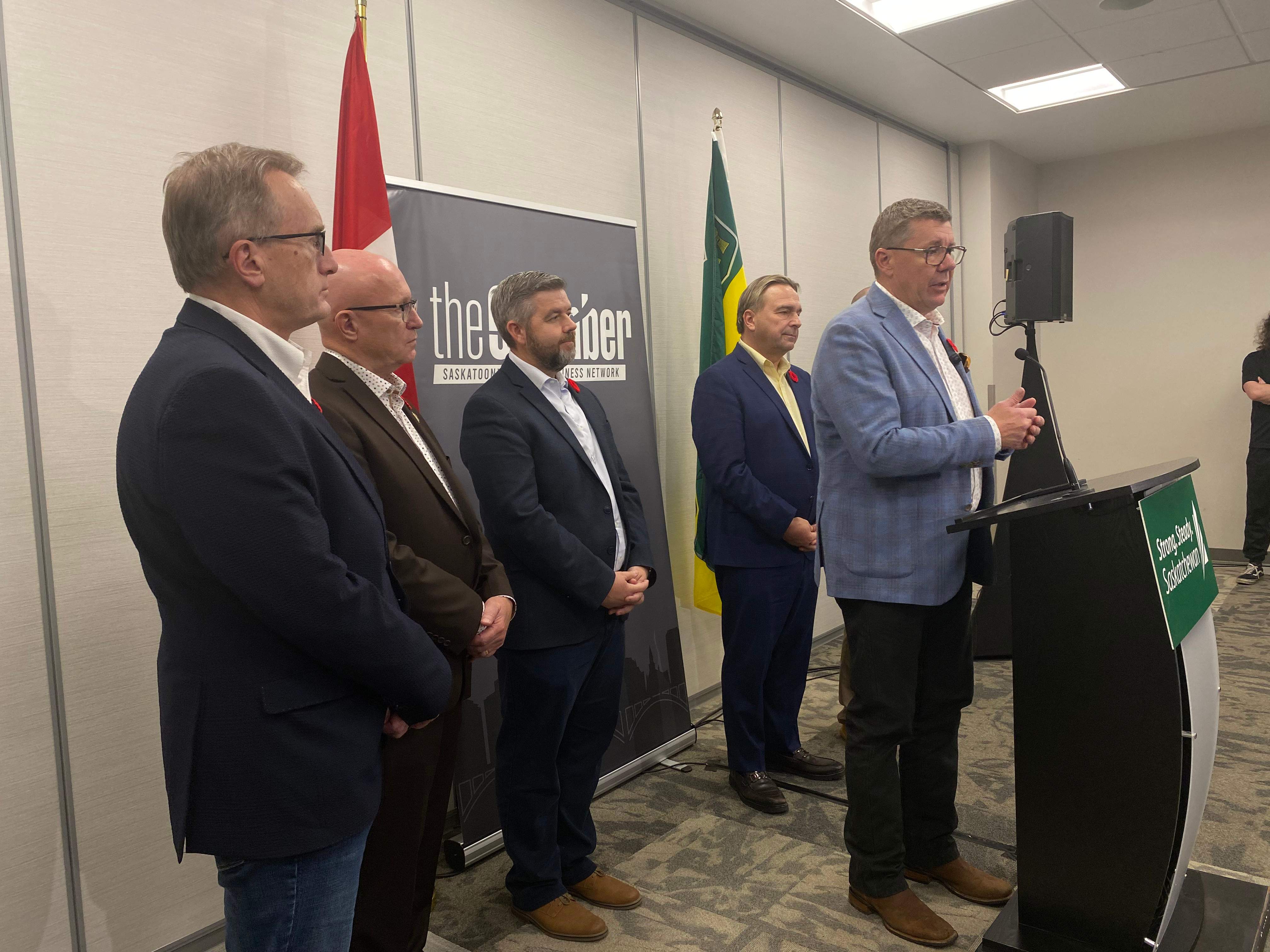
Saskatchewan Premier Scott Moe’s sudden praise of a federal budget as the "best in a decade" signals a major political pivot driven by multi-billion-dollar infrastructure commitments, resource-sector tax relief, and strategic survival ahead of shifting electoral tides. Rather than signaling a newfound ideological harmony between Regina and Ottawa, Moe’s endorsement reflects a cold transactional calculation: take the federal cash for carbon capture, nuclear expansion, and critical minerals while keeping the rhetorical powder dry on provincial autonomy. For years, the Saskatchewan Party’s brand relied almost entirely on fighting Ottawa at every turn, turning federal fiscal policy into a reliable regional punching bag. Now, the ledger has shifted, and the premier is cashing the check.
The Anatomy of a Political Pivot
Politics makes strange bedfellows, and fiscal federalism makes even stranger ones. To understand why a premier who spent years drafting provincial sovereignty legislation suddenly applauded a federal spending plan, you have to look at the structural pressures squeezing Saskatchewan’s treasury. Also making waves in this space: The Fiscal Mechanics of Foreign Aid Omissions in Federal Budgets.
Resource revenues are notoriously volatile. Potash prices swing wildly on global supply shocks, and conventional oil royalties face long-term headwinds from capital flight and shifting global energy demand. Regina needed a massive injection of external capital to de-risk its next-generation industrial bets, specifically small modular reactors (SMRs), carbon capture, utilization, and storage (CCUS), and critical mineral processing.
Ottawa’s budget delivered the exact mechanism Saskatchewan’s corporate sector demanded: refundable investment tax credits. Unlike traditional grants that require endless bureaucratic begging in Ottawa, refundable tax credits act like cash on the barrelhead for capital-intensive projects. If a mining company or energy producer builds qualifying infrastructure in Saskatchewan, the federal treasury subsidizes a massive chunk of the upfront capital expenditure, even if the company isn't yet turning a profit on the project. More details into this topic are explored by NBC News.
Moe didn't suddenly fall in love with federal fiscal policy. He simply recognized that Ottawa finally built a funding model that flows directly to Saskatchewan’s core industries without forcing Regina to sign onto progressive social conditions.
Following the Money in the Prairie Ledger
A budget is never just a moral document; it is an accounting ledger with winners, losers, and deferred liabilities. When a provincial leader calls a federal budget the best in ten years, the real story lives in the line items that didn't make the press conference soundbites.
The Clean Electricity and Nuclear Gamble
Saskatchewan relies heavily on coal and natural gas to keep the lights on. Transitioning that grid without bankrupting ratepayers is arguably the single biggest financial headache facing the provincial government.
The federal budget’s expanded Clean Electricity Investment Tax Credit directly targets Crown corporations like SaskPower. By opening up tax-equivalent cash refunds to provincial utilities, Ottawa effectively agreed to underwrite a substantial portion of Saskatchewan’s grid modernization. For Moe, fighting Ottawa over clean electricity regulations makes great political theater, but taking federal billions to build nuclear reactors and transmission lines makes the math actually work.
Critical Minerals and the Supply Chain Race
Northern Saskatchewan sits on some of the richest uranium, lithium, and rare earth deposits on the planet. Extracting them is easy; processing them domestically instead of shipping raw ore overseas is the hard part.
Federal clean technology manufacturing credits lower the barrier to entry for processing facilities in hubs like Saskatoon and Regina. By stacking provincial royalty incentives on top of federal investment tax credits, Saskatchewan can suddenly compete with American states subsidized by Washington’s massive industrial policy push. Without Ottawa’s balance sheet backing those deals, Saskatchewan simply lacked the fiscal firepower to match U.S. subsidies.
Agribusiness and Trade Corridors
Export-dependent economies live and die by rail lines and port capacity. Saskatchewan produces vast quantities of grain, pulses, and fertilizer, all of which bottleneck at West Coast ports during peak shipping seasons.
Federal allocations toward trade corridor infrastructure and agricultural risk-management programs offer quiet, unglamorous relief to rural voters—the exact demographic that keeps the Saskatchewan Party in power. When federal dollars upgrade rail bottlenecks or expand inland terminals, provincial coffers stay intact while rural ridings see tangible results.
What the Soundbites Leave Out
Every silver lining in a federal budget comes wrapped in a long-term fiscal cloud. Calling a budget the best in a decade requires selective vision, ignoring the macroeconomic trade-offs baked into massive federal spending.
First, there is the debt-service overhang. Federal deficits do not exist in a vacuum; they are financed through bond markets, and persistent federal borrowing keeps upward pressure on debt-servicing costs across the entire Canadian economy. Every dollar Ottawa spends servicing national debt is a dollar unavailable for future Canada Health Transfers or Canada Social Transfers—the bread-and-butter funding streams that keep Saskatchewan’s strained hospitals and classrooms running.
Second, tax credits are slow-burn subsidies, not immediate stimulus. A hypothetical example illustrates the trap: suppose a lithium extraction firm announces a $500 million facility in southern Saskatchewan based on a 30 percent federal tax credit. That $150 million federal contribution doesn't arrive on day one. The company must raise the capital, navigate environmental assessments, construct the plant, and bring equipment online before claiming the refund. If global commodity prices tank mid-construction, the project stalls, and the promised jobs evaporate despite the generous budget line item.
Third, the regulatory strings haven't disappeared; they were just moved to separate legislation. Ottawa’s willingness to subsidize carbon capture and nuclear power comes paired with strict federal emissions caps and clean electricity timelines. Moe is praising the carrot while still suing or legislating against the stick, a balancing act that eventually runs out of runway when federal auditors show up to verify compliance before cutting the check.
The Equalization Blind Spot
You cannot discuss federal-provincial finances in Western Canada without addressing the third rail of Prairie politics: the equalization formula.
For years, Regina argued that Ottawa’s fiscal architecture systematically drains wealth from resource-producing provinces to subsidize have-not jurisdictions. Even when Ottawa injects billions into Western industrial tax credits, the underlying mechanics of fiscal federalism remain untouched. Saskatchewan still contributes disproportionately to federal revenues during commodity booms while receiving zero equalization payments.
By praising the budget so effusively, Moe inadvertently blunts one of his own sharpest political weapons. It becomes significantly harder to convince voters that Ottawa is actively trying to destroy the Saskatchewan economy on Tuesday when you spent Monday calling their fiscal blueprint the best in a decade. Opposition critics—both from the left, who argue the budget ignores immediate cost-of-living relief for working families, and from the populist right, who view any praise of Ottawa as treasonous—now have an easy target.
Infrastructure Reality vs. Political Theater
Veteran watchers of Canadian intergovernmental relations know that public rhetoric and private negotiations rarely match. Premiers routinely lambaste the Prime Minister on the steps of the legislature while their deputy ministers quietly hammer out bilateral funding agreements behind closed doors.
What makes Moe’s endorsement unusual is that he dropped the outrage script entirely. That shift tells you two things about the political climate in Regina.
- The industrial lobby demanded peace. Major energy, mining, and agricultural players hate regulatory uncertainty and intergovernmental warfare. Capital flees jurisdiction fights. Business leaders in Calgary, Saskatoon, and Toronto likely made it clear to Moe that picking a fight over a budget that finally delivered their tax-credit wish list would be self-sabotage.
- The domestic fiscal math is tight. Saskatchewan’s own budget projections left very little room for massive new capital spending without running deep deficits. Letting Ottawa pick up the tab for decarbonization and grid upgrades allows Regina to claim credit for economic growth while keeping its own books looking relatively tidy.
The Risks of Transactional Federalism
Relying on targeted federal tax credits to drive provincial industrial strategy carries a hidden structural risk: policy whiplash.
Investment tax credits and targeted infrastructure funds are creatures of the sitting federal government. Unlike constitutional transfers, which are locked into multi-year statutory formulas, industrial subsidies can be altered, capped, or scrapped entirely when political winds shift in Ottawa. If a future federal government decides to austerity-cut corporate tax credits to balance the national books, provinces that built their entire ten-year growth strategy around federal co-funding get left holding the bag on half-built infrastructure.
Furthermore, heavy reliance on federal industrial policy distorts local capital allocation. When Ottawa offers a 30 to 50 percent subsidy on specific green or transition technologies, private capital naturally floods into those subsidized sectors while starving traditional, unsubsidized small businesses of local investment and labor. Saskatchewan’s construction and engineering sectors already face severe skilled-labor shortages; pouring billions of subsidized federal dollars into mega-projects drives up wage and material costs for every regular contractor trying to build housing or municipal roads in Moose Jaw or Prince Albert.
Reading Between the Lines of Regina’s Praise
Scott Moe’s assessment of the federal budget isn't an endorsement of Ottawa’s broader economic management; it is a receipt for services rendered. Saskatchewan’s corporate sector lobbied relentlessly for refundable investment tax credits to offset American industrial subsidies, and Ottawa finally blinked and wrote the check.
The premier took the win, pocketed the billions in potential capital support for nuclear reactors, critical minerals, and carbon capture, and handed federal leaders a rare Prairie soundbite in exchange. Whether those paper tax credits actually translate into completed projects, lower power bills, and sustained royalties—or simply inflate construction costs while leaving Saskatchewan tangled in federal regulatory red tape—won't be decided at a press conference. It will show up in the provincial audit five years from now, long after the headlines have faded and the bill for Ottawa’s generosity finally comes due.