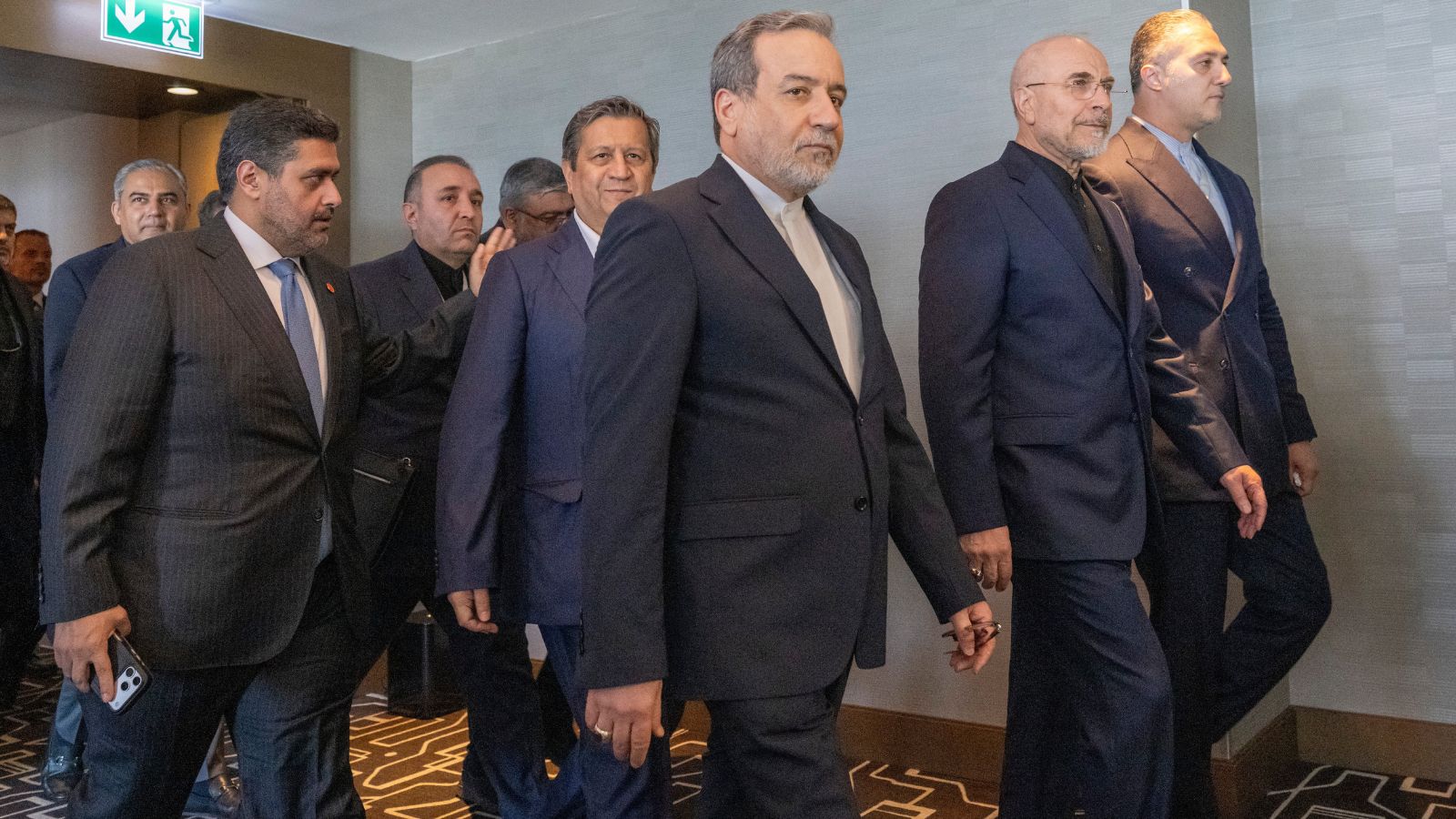
The coffee in the luxury European hotel suite had gone cold hours ago. Outside, a soft, gray drizzle muted the city streets, but inside the room, the air felt thick, almost unbreathable. On one side of the heavy oak table sat men representing a nation isolated by decades of sanctions and hostility. On the other, diplomats representing the world’s most formidable superpower. They were trying to write a treaty to prevent a war.
But as the translators murmured and the papers rustled, a third presence hovered over the table. It was invisible, uninvited, and lethal.
For the American intelligence officials monitoring the historic nuclear negotiations with Iran, the primary anxiety wasn't just whether the deal would fall apart. It was whether the men sitting across from them would survive the week. Documents and insider accounts later revealed a chilling reality: Washington genuinely feared that Israeli intelligence assets would assassinate Iran’s top negotiators right in the middle of the peace talks.
Consider the sheer psychological weight of that environment. You are an envoy, sent by your government to negotiate a fragile truce. You carry the burdens of your nation’s ideology, its economy, and its pride. You step into a gilded European boardroom believing you are arguing over percentages of uranium enrichment and the lifting of economic blockades. In reality, you are walking through a crosshair.
The Architecture of Paranoia
Diplomacy relies on an unspoken architecture of safety. When adversaries meet on neutral ground, there is a tacit agreement that the space is sacred. The Swiss hotels, the Austrian palaces—these are supposed to be arenas of intellect and compromise, not battlefields.
During the height of these high-stakes summits, that architecture shattered.
The Americans were trapped in a agonizing double-blind. They were deeply committed to securing a diplomatic breakthrough that would alter the course of Middle Eastern history. Yet, their closest regional ally, Israel, viewed the entire process not as a path to peace, but as a catastrophic betrayal. To Jerusalem, a deal that legitimized Iran's nuclear infrastructure was an existential threat. And when a state perceives an existential threat, the traditional rules of diplomatic immunity cease to exist.
Imagine the American security detail scanning the crowds in the hotel lobbies. Every courier delivering a package, every waiter carrying a silver tray, every technical contractor adjusting the microphone wires became a potential vector for a targeted strike. The Americans weren't just watching the Iranians for signs of deception. They were watching the perimeter for their own friends.
This was not empty paranoia. Israel’s intelligence agency, the Mossad, had already demonstrated a terrifyingly precise capability to operate inside Iran itself. They had neutralized nuclear scientists on the crowded streets of Tehran using magnetic bombs attached to car doors. They had sabotaged heavily fortified underground facilities with digital weapons. If they could penetrate the highly secured core of the Islamic Republic, a European hotel room was a minor logistical hurdle.
The Human Cost of High Stakes
We often view international relations as a game of chess played by abstract entities. We say "Washington decided" or "Tehran reacted." We forget that these entities are made of flesh and bone.
Think of the Iranian negotiators. To the Western public, they were the face of an adversarial regime. But beneath the sharp suits and the diplomatic stoicism, they were human beings who knew exactly how dangerous their assignment was. Every time they stepped onto a balcony for fresh air, they had to wonder if a sniper was calibrating a scope from a rooftop a kilometer away. Every time they accepted a bottle of water, the thought of untraceable toxins must have crossed their minds.
They were caught between two fires. If they returned home without a deal, their country’s economy would continue to collapse under the weight of crushing sanctions. If they conceded too much, the hardliners in Tehran would brand them as traitors. And while they navigated this political tightrope, they had to live with the knowledge that a foreign intelligence agency might decide it was simpler to just eliminate them entirely.
The Americans found themselves in the bizarre position of acting as a shield for their adversaries. Protecting the Iranian delegation wasn't born out of sudden affection or a desire to play hero. It was cold, hard pragmatism. If an Iranian negotiator were to be assassinated on European soil while engaged in talks with the United States, the fallout would be catastrophic. The negotiations would instantly vaporize. The moderate factions within Iran would be entirely discredited, and the hardliners would gain total control. War would become inevitable.
Blood on the Velvet Carpet
To understand how close the world came to this edge, one must look at the historical pattern of targeted operations. Israel has long maintained a doctrine of preemptive action. When diplomatic tracks appear to conflict with their core security calculus, they do not hesitate to act independently.
The American intelligence community knew this history intimately. They watched the logistics of the meetings with a hawk's eye. Hotel Wi-Fi networks were scanned for anomalies. Local authorities were quietly briefed to increase external security without drawing public attention. The goal was to create a bubble of absolute control around a process that was inherently volatile.
But how do you guarantee safety against an opponent that specializes in the impossible?
Consider what happens next when the illusion of security vanishes. The tone of a negotiation changes. It loses its academic, legalistic quality. Conversations become shorter. Decisiveness gives way to defensive posturing. When survival is on the line, people do not take creative risks to find common ground. They retreat into their ideological fortresses.
The miracle of the negotiations was not that an agreement was eventually reached, but that the human beings in the room managed to speak above the deafening noise of their own vulnerability. They sat feet away from each other, trading arguments and revisions, fully aware that the very act of sitting there made them targets.
The Lingering Shadow
The talks eventually concluded, papers were signed, and flashes of cameras illuminated the triumphant faces of diplomats. The immediate crisis passed, but the precedent remained.
The revelation that the United States had to actively worry about an ally assassinating an adversary during a peace summit exposes the raw, bleeding edge of global politics. It strips away the polite vocabulary of international law and reveals the primal calculus beneath: power, survival, and the willingness to cross any line to achieve security.
Next time you see a photograph of global leaders gathered around a polished table, look past the flags. Look past the formal smiles and the tailored suits. Look at the windows. Look at the doorways.
The true history of our world is not just written by the choices made in the light. It is shaped by the terrifying threats that are quietly managed, neutralized, and survived in the deep shadows of the room.