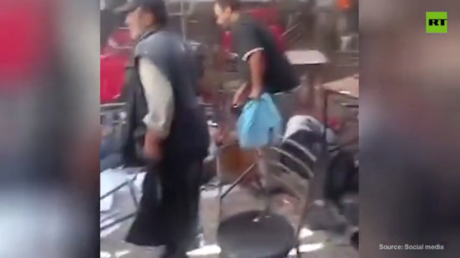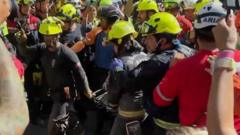
That sound of cheers and applause echoing through a disaster zone is unforgettable. It happens when rescuers pull a survivor out of a collapsed building. Lately, the news of a security guard rescued from rubble gripped everyone. People love a miracle. But behind that emotional moment lies a messy, terrifying, and deeply technical process that most people never see.
When a structure falls, the frontline workers are often the ones caught right in the impact zone. Security guards don't get to run at the first sign of trouble. They stay at their posts. They monitor exits. When the concrete drops, they are trapped. Pulling someone out alive isn't just about digging fast. It's a brutal race against time, physics, and human physiology.
Understanding how these rescues actually happen changes how you view the headlines. It makes you realize that survival isn't just luck. It's a combination of engineering, grueling physical labor, and sheer human endurance.
The immediate chaos of a structural collapse
The first few hours after a building fails are pure chaos. Dust fills the air, blocking out the sun and choking anyone trapped below. For a security guard stationed near a lobby or an entrance, the collapse often seals off their only known escape routes instantly.
Rescuers don't just run into the pile with shovels. Doing that can shift the debris and kill the very person they want to save. The heavy concrete slabs create a complex jigsaw puzzle where moving one piece might cause a secondary collapse.
First responders use a specific triage system. They look for surface victims first. These are the people thrown clear or lightly trapped under superficial debris. Once those individuals are safe, the real work begins. This is the technical search phase, where teams hunt for signs of life deep within the mountain of broken stone and twisted steel.
Finding life beneath the concrete sheets
How do rescue teams find a single person buried under tons of material? They don't guess. They rely on specialized tools and highly trained teams that operate in absolute silence.
Canine search units
Dogs remain one of the most reliable assets in urban search and rescue. These aren't normal pets. They are trained to ignore food, toys, and dead bodies, focusing entirely on the scent of live human breath and sweat. When a dog alerts on a specific spot, it gives the handlers a starting point.
Acoustic listening devices
During a search, the entire site will go dead silent. Rescuers call for quiet. Engines shut down. No one speaks. Technicians place sensitive acoustic sensors on the concrete slabs. These devices pick up the faintest sounds from deep below. A trapped security guard tapping a pipe with a flashlight or scratching at a wall can be heard through feet of solid material.
Search cameras
Once they have a general idea of the location, teams drill small holes through the concrete layers. They drop fiber-optic cameras equipped with thermal imaging into the voids. This lets them see if the person is conscious, trapped by a limb, or surrounded by unstable debris.
The slow agony of breaching and shoring
Locating the survivor is only a fraction of the battle. The physical extraction takes hours, sometimes days. If a security guard is trapped deep within a collapsed office building or industrial site, rescuers must tunnel through unstable layers.
This requires shoring. Rescuers build temporary wooden or mechanical supports inside the debris pile as they dig. Think of it as building a makeshift mine shaft through a pile of trash and concrete. If they don't shore up the sides, the weight of the surrounding rubble will crush the rescue tunnel.
They use heavy hydraulic saws to cut through rebar. They use jackhammers to break up concrete blocks into manageable pieces. Every single piece of debris has to be passed back out of the tunnel by hand, bucket by bucket. It's exhausting, backbreaking work done in cramped spaces where a worker can barely turn around.
The hidden threat of crush syndrome
The applause from the crowd happens when the victim finally breaches the surface. But for medical teams, that moment is fraught with extreme danger. A medical phenomenon known as crush syndrome can turn a successful rescue fatal within minutes of extrication.
When a heavy object pins a limb for hours, blood flow stops. The muscle tissue begins to die. As the cells break down, they release massive amounts of toxins, including potassium and myoglobin, into the isolated limb.
As long as the weight stays on the victim, the toxins remain trapped. The moment rescuers lift the heavy beam or concrete slab, blood rushes back into the area. It washes those dead tissue toxins straight into the central circulatory system.
This sudden flood can cause immediate kidney failure or stop the heart completely. Emergency medical technicians must initiate aggressive intravenous fluid therapy before the debris is removed. They literally treat the patient while they are still buried under the rubble.
Why frontline workers face the highest risk
Security personnel, maintenance crews, and facilities staff face unique dangers during structural failures. They are often the ones who stay behind to secure a perimeter or direct others toward safety.
Their positions are usually fixed near entryways, loading docks, or basement security hubs. These areas frequently bear the brunt of a building's structural collapse, especially if the failure originates in the foundation or lower levels.
The survival of a guard under these conditions often depends on the creation of survival voids. When a building collapses, large structural elements like reinforced concrete pillars or heavy steel desks can catch falling debris. This creates a small pocket of air. If a worker manages to drop and cover next to a heavy object rather than under a weak table, their chances of waiting out the rescue increase significantly.
What to do if you ever find yourself trapped
While most people will never experience a catastrophic building failure, knowing basic survival steps saves lives. The actions taken in the first ten minutes dictate whether a person survives the next forty-eight hours.
- Protect your airway immediately. Dust is the biggest immediate killer. Wrap a shirt or any cloth around your nose and mouth to filter out concrete particles.
- Do not scream constantly. Shouting burns precious oxygen and dehydrates you quickly. Save your voice for when you hear rescuers nearby.
- Use rhythmic tapping. Find a metal object, a pipe, or a stone. Tap in groups of three. Sound travels much better through solid structures than through the air.
- Avoid unnecessary movement. Shifting around can disturb the fragile void you are sitting in, causing more debris to settle on top of you.
The cheers heard when that security guard was pulled from the rubble were well deserved. That survival represents a victory over immense physical odds. It took an army of engineers, medical professionals, and dog handlers working in unison to make that moment happen. The next time you see a headline about a dramatic rescue, remember the silent hours of drilling, the math behind the shoring, and the sheer grit required to pull a living human being out from the jaws of the earth.