The shaking stops, and that is when the real terror begins.
Anyone who has lived through a major earthquake knows the sound of the aftermath. It is not the roar of falling concrete or the shriek of twisting steel. It is a heavy, suffocating quiet broken only by the hiss of a ruptured gas line three blocks over, the distant wail of a single siren that cannot get past a buckled highway, and the frantic tapping of thumbs against glass screens that suddenly show no signal bars.
In the first seventy-two hours after a catastrophic disaster, time does not move in minutes. It moves in blood oxygen levels, in falling body temperatures, and in the shrinking window before a collapsed timber frame becomes a tomb.
For decades, the world has looked at Japan as the undisputed gold standard of disaster preparedness. We marvel at skyscrapers in Tokyo that sway like reeds in a typhoon without shedding a single pane of glass. We watch viral videos of Shinkansen bullet trains detecting P-waves seconds before the earth heaves, braking smoothly from three hundred kilometers an hour to a dead stop without derailing. We assume that a nation sitting atop four colliding tectonic plates has solved the physics of survival.
Japan has mastered the engineering of the shake. What it has struggled to master—and what finally forced the creation of a sweeping new national disaster management agency—is the human choreography of the silence that follows.
The Architecture of Hesitation
To understand why Tokyo decided to overhaul its entire emergency command structure, you have to step away from the sleek seismographs and look at a gymnasium floor in winter.
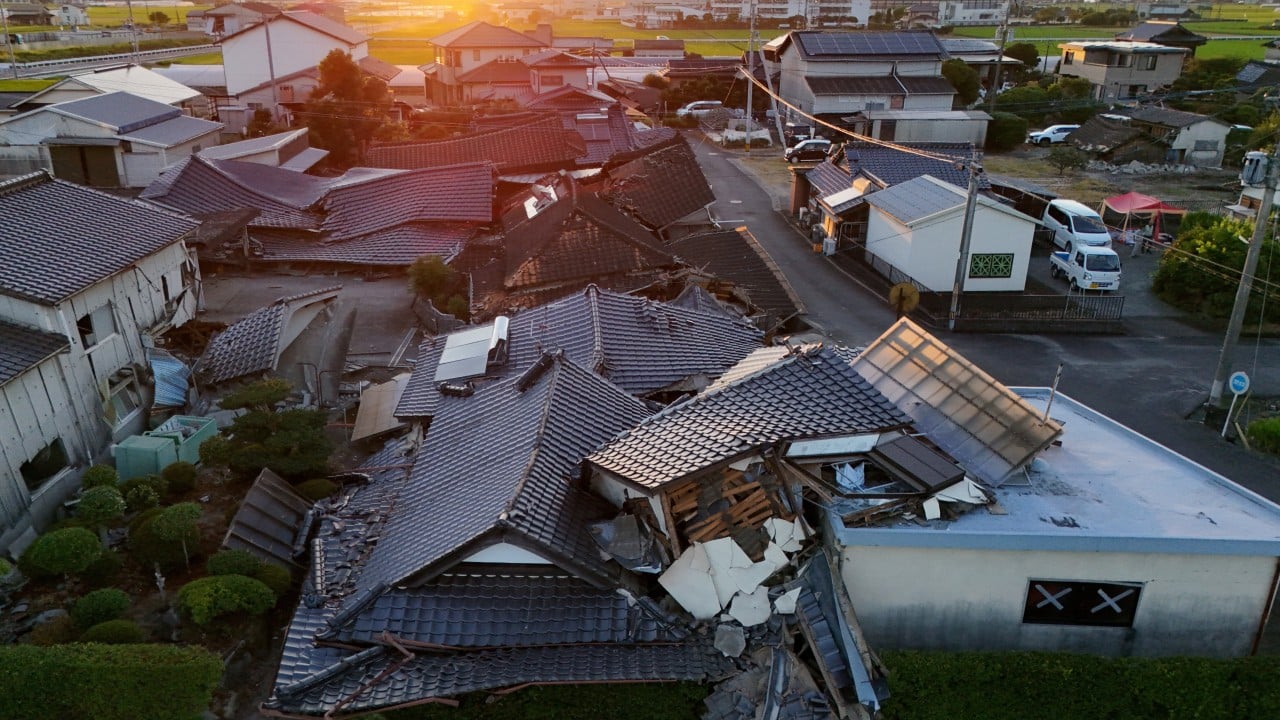
Consider a hypothetical scenario grounded in the harsh realities of recent regional quakes, such as the Noto Peninsula earthquake of January 2024. Meet Kenji, a fictionalized composite of the thousands of municipal officials who serve as Japan's first line of defense. Kenji is a forty-eight-year-old civil servant in a coastal town of twenty thousand people. On a normal Tuesday, his job involves approving zoning permits and managing local road repairs.
Then, at 4:10 PM on a freezing afternoon, a magnitude 7.6 rupture tears open the earth ten kilometers beneath his feet.
Within four minutes, Kenji’s town hall loses power. The backup generator kicks in, sputtering against the cold. Outside, half the town's wooden houses have pancaked. The coastal road—the single arterial lifeline connecting his town to the prefectural capital—has vanished beneath a landslide.
Now, watch what happens to Kenji. Under the old system, Japan’s disaster response relied heavily on a bottom-up chain of command. Local municipalities were expected to assess the damage, tally the missing, request specific aid from the prefecture, which would then escalate those requests to the central government in Tokyo.
It is a system designed by bureaucrats who assume the phone lines will work, the roads will stay open, and the local officials will not themselves be digging their own families out of the rubble.
By hour six, Kenji has three thousand shivering, terrified neighbors crammed into an unheated school gymnasium. There is no water. There are no portable toilets. His own deputy mayor is missing. Yet, before trucks loaded with blankets and diesel generators can roll out of regional staging areas, someone in Tokyo needs an official damage assessment from Kenji’s desk.
Hesitation.
When a local government is paralyzed by the very catastrophe it is supposed to manage, waiting for a formal request for help is like waiting for a drowning swimmer to fill out a liability waiver before throwing a life ring.
This was the bitter, agonizing lesson burned into the national consciousness after the Great East Japan Earthquake of 2011, sharpened during the Kumamoto quakes of 2016, and laid bare in the freezing mud of the Noto Peninsula in 2024. In Noto, damaged roads, severed communications, and overwhelmed local town halls meant that days passed before basic supplies reached isolated coastal hamlets. Elderly survivors sat on cardboard sheets in freezing temperatures while warehouses seventy miles away sat full of bottled water and kerosene heaters, waiting for logistical clearance.
The problem was never a lack of compassion, nor a shortage of supplies. Japan had the muscle. It lacked a central nervous system.
Inside the New Command
When the Japanese government moved to establish its dedicated Disaster Management Agency—slated to take full operational command by fiscal year 2026—critics initially dismissed it as another layer of bureaucratic alphabet soup. In a country already crowded with ministries, task forces, and the existing Cabinet Office disaster division, skeptics asked a fair question: how does creating a new office stop an earthquake?
It does not stop the earth from moving. It changes who takes the wheel the second it does.
Think of the old Cabinet Office disaster team as a pop-up emergency room assembled only after a massive pileup on the highway. Staffed largely by officials seconded temporarily from other ministries—agriculture, transport, defense, health—the team had to spend precious hours just learning each other's workflows, navigating turf wars between agencies, and untangling overlapping jurisdictions. By the time a cohesive operational picture emerged, the golden seventy-two-hour window for live rescues was already closing.
The new agency replaces that temporary pop-up clinic with a permanent, standing trauma center.
For the first time, Japan has consolidated disaster planning, immediate crisis response, and long-term reconstruction under a single, dedicated roof with its own permanent staff, independent budget, and direct statutory authority. Instead of borrowing bureaucrats who rotate back to their home ministries every two years, the agency cultivates career specialists whose sole profession is catastrophe.
More importantly, it flips the command protocol on its head.
Under the new doctrine of "push-style" support, the agency does not wait for a stricken town like Kenji’s to call for help. The moment seismic sensors register an intensity above a critical threshold, the agency assumes local governance has been compromised. Before a single phone call is made from the disaster zone, pre-positioned logistics teams, Self-Defense Force liaisons, medical units, and satellite communication trucks are automatically dispatched toward the epicenter.
The Invisible Stakes of the Nankai Trough
Why the sudden urgency? Why tear down and rebuild an emergency apparatus that most countries would envy?
Because Japan is staring down a geological clock that has been ticking for over a century.
Beneath the Pacific Ocean off Japan’s southern coast lies the Nankai Trough, a deep submarine trench where the Philippine Sea Plate is relentlessly grinding beneath the Eurasian Plate. Roughly every one hundred to one hundred and fifty years, the locked fault snaps. The last major ruptures occurred in 1944 and 1946. Government seismologists estimate there is roughly an eighty percent probability of another magnitude 8 to 9 megathrust earthquake striking the Nankai Trough within the next thirty years.
The numbers attached to a worst-case Nankai Trough scenario are so vast they risk numbing the human brain. Government models project up to 323,000 fatalities, more than two million destroyed buildings, and economic losses exceeding 220 trillion yen—nearly double the entire annual national budget of Japan. A tsunami generated by the rupture could reach thirty meters high in some coastal towns, arriving in less than ten minutes.
Numbers that large erase the individual. They turn human lives into statistical projections.
To feel what those projections actually mean, you have to strip away the trillions and look at a single metric: secondary deaths.
In modern Japanese disasters, surviving the initial earthquake is only half the battle. During the 2016 Kumamoto earthquakes, more people died in the weeks after the tremors—from blood clots caused by sleeping in cramped cars, from pneumonia in unheated shelters, from untreated chronic illnesses, and from sheer psychological despair—than died from collapsing buildings. In the Noto Peninsula, disaster-related deaths eventually outpaced the direct fatalities of the quake itself.
This is the invisible frontline where the new agency will succeed or fail.
Anyone who has spent time in an evacuation center knows how quickly dignity erodes. When five hundred people share four chemical toilets, elderly residents stop drinking water so they won't have to walk across a dark, freezing gymnasium floor in the middle of the night. Dehydration thickens their blood. Within forty-eight hours, strokes and pulmonary embolisms begin claiming the very people who survived the falling roof tiles.
Traditionally, Japanese evacuation shelters were bleak affairs: cold hardwood floors, thin blankets, rice balls, and zero privacy. Meanwhile, Italy—a nation with a fraction of Japan’s GDP—can deploy mobile kitchen trucks serving hot pasta, modular air-conditioned tents, and warm shower units within forty-eight hours of a major quake.
Japanese disaster experts looked at that contrast and felt a deep, stinging embarrassment. Why was the richest, most technologically advanced seismic nation on earth still asking its elderly citizens to sleep on cardboard boxes in school gyms?
The new agency’s mandate explicitly targets this human failure. It establishes national standards for shelter living conditions, pre-contracts with private logistics giants, hotel chains, and catering networks, and deploys mobile container toilets, kitchen trucks, and partition systems as essential emergency supplies—elevating human dignity to the same operational priority as rubble clearance.
The Friction of Reality
I want to be honest here, because blind optimism in the face of nature is its own kind of danger. Creating a new national agency is not a magic wand. Laws written in the quiet, climate-controlled chambers of Tokyo’s Nagatacho district have a way of fraying when they collide with the messy reality of a shattered coastline.
Japan is shrinking and graying at a pace no modern nation has ever navigated. In thousands of rural towns and mountain villages, more than forty percent of the population is over the age of sixty-five. The volunteer fire brigades—the shobodan—who historically pulled neighbors from collapsed homes and guided evacuees up steep tsunami hills are themselves aging out, with fewer young people left in the countryside to replace them.
No centralized agency in Tokyo can conjure twenty-year-old rescue workers out of thin air in a depopulated fishing village.
There is also the stubborn gravity of Japanese bureaucratic culture. Ministries protect their turf fiercely. Convincing the Ministry of Land, Infrastructure, Transport and Tourism to yield immediate operational control over highway clearance to a newly minted agency, or getting local governors to accept top-down federal intervention without feeling overruled, requires more than an organizational chart. It requires a cultural shift in how power is shared when panic sets in.
Even the smartest satellite tracking and AI-driven supply routing cannot clear a mountain road buried under fifty thousand tons of wet earth overnight. When the Nankai Trough finally breaks, there will still be towns cut off from the world. There will still be moments of agonizing helplessness.
What Changes When the Ground Moves
Yet, when you look closely at what this agency actually puts on the ground, the shift is unmistakable.
Go back to Kenji, our fictional town official sitting in his dark, freezing municipal office while the aftershocks rattle the window frames.
Under the old rules, Kenji was alone. He was expected to be an emergency coordinator, a logistics manager, a medical triage officer, and a data entry clerk all at once, while worrying whether his own parents were alive across town.
Under the new architecture, Kenji does not have to beg for help.
Within hours of the main shock, a specialized forward liaison team—trained not in paperwork, but in field triage—drops into his town via helicopter or all-terrain vehicle. They bring their own Starlink-style satellite uplinks, bypassing the dead cell towers. They take over the data collection, feeding real-time drone imagery of blocked roads and collapsed neighborhoods directly into the agency’s central command room in Tokyo.
At that exact moment, hundreds of kilometers away, automated supply triggers fire. Containers stocked with warm bedding, privacy partitions, portable toilets, and specialized medical supplies for dialysis patients are already moving toward the nearest staging port.
Kenji is finally freed to do the one thing a local leader should be doing in a crisis: walking the gymnasium floor, holding the hands of his neighbors, and keeping them alive until the trucks arrive.
Disaster preparedness is never really about concrete, steel, or government org charts. It is a quiet promise a society makes to its most vulnerable citizens—a promise that when the earth betrays them, when the lights go out and the silence closes in, they will not be left to wait in the dark alone.
Somewhere off the southern coast of Japan, deep beneath the black water of the Pacific, two immense plates of rock are locked together, bending slowly under unimaginable pressure, waiting for the second they finally let go.