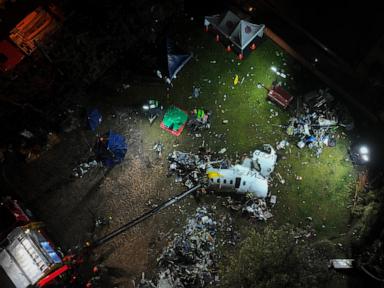
Anatomy of an Aviation Catastrophe
On August 9, 2024, VoePass Flight 2283 pitched into a flat spin over Vinhedo, Brazil, killing all 62 people aboard. Investigators from Brazil's CENIPA quickly identified severe atmospheric icing as a principal driver of the crash. The ATR 72-500 twin-engine turboprop was flying through an altitude band heavily saturated with supercooled water droplets, a high-risk environment for structural ice buildup.
The disaster was not merely a matter of bad weather. It was a failure of risk management, crew situational awareness, and mechanical limitations colliding in a matter of minutes.
An ATR 72 does not simply drop from the sky when ice touches its airframe. The sequence of events requires a critical breakdown in aircraft performance and pilot response. As supercooled liquid water strikes the cold leading edges of the wings and tail assembly, it freezes instantly, altering the aerodynamic profile of the lifting surfaces. This increases drag while dramatically reducing the maximum lift the wing can produce.
[Atmospheric Moisture] -> [Supercooled Droplet Impact] -> [Airframe Ice Accumulation]
                                                                  |
[Loss of Control / Flat Spin] <- [Aerodynamic Stall] <- [Increased Drag & Reduced Lift]
Preliminary findings confirmed that the onboard de-icing systems were toggled on and off repeatedly during the flight. This detail points to a tactical struggle in the cockpit as the crew attempted to manage ice accumulation that was rapidly outpacing the pneumatic boots' capacity to shed it.
The Aerodynamics of Ice Accumulation
Ice accretion changes the physics of flight in ways that can deceive even seasoned flight crews. When ice builds up on the leading edge of a wing, it disrupts the smooth flow of air over the upper surface. The boundary layer separates much earlier than normal, raising the stall speed significantly above standard operating charts.
The Ice Detection Problem
Modern turboprops rely on a combination of visual cues, automated sensors, and pneumatic de-icing boots. The boots use compressed air to inflate flexible rubber bladders along the wing edges, cracking the accumulated ice so the airflow sweeps it away.
- Early Activation Risks: Inflating the boots too early or leaving them cycling continuously under certain liquid water content conditions can allow ice to bridge over the inflated boot, rendering the system useless.
- Runback Ice: When thermal anti-ice systems melt ice on the leading edge, the water can stream backward into unheated zones of the wing and freeze into ridges, creating severe control surface degradation.
- Sensor Limitations: Ice detectors measure localized accumulation, which may not reflect the severity of ice forming on outer wing panels or elevator surfaces.
As ice accumulates, airflow separation progresses forward from the trailing edge toward the leading edge. If the angle of attack increases—even slightly—to maintain altitude, the wing can suffer an asymmetric stall. One wing loses lift before the other, snapping the aircraft into a roll that can rapidly turn into an unrecoverable flat spin.
A History of Turboprop Vulnerabilities
The Vinhedo crash brought back chilling memories of previous turboprop accidents involving severe icing conditions.
| Year | Flight / Location | Aircraft Type | Primary Factor |
|---|---|---|---|
| 1994 | American Eagle 4184 (Roselawn, IN) | ATR 72-200 | Severe icing causing a sudden roll control loss. |
| 2002 | TransAsia Airways 791 (Makung, Taiwan) | ATR 72-200 | Severe ice accumulation exceeding system capabilities. |
| 2010 | Aero Caribbean 883 (Guasimal, Cuba) | ATR 72-212 | Prolonged flight in severe icing; crew awareness lag. |
| 2024 | VoePass 2283 (Vinhedo, Brazil) | ATR 72-500 | Severe icing, flat spin stall sequence. |
The Roselawn disaster in 1994 led to significant airworthiness directives and redesigns of the ATR's de-icing boots. Yet the fundamentally sensitive nature of medium-altitude turboprop operations in severe icing environments remains an industry challenge.
Turboprops typically operate at lower altitudes than jetliners, placing them squarely in the freezing levels where supercooled liquid droplets are most concentrated. Jets often fly above these weather layers, minimizing exposure time. A turboprop cruising between 14,000 and 20,000 feet can remain trapped in severe icing conditions for extended periods if air traffic control clears them along routes saturated with moisture.
The Cockpit Human Factors
Navigating extreme weather places immense pressure on flight crews. When an aircraft enters severe icing, the workload spikes exponentially. Pilots must monitor engine performance, airframe ice accumulation, airspeed margins, and altitude, all while coordinating with air traffic controllers for re-routing or descent clearances.
Situational awareness degrades rapidly when multiple alerts trigger simultaneously. In the VoePass 2283 flight deck, the crew contended with degraded performance indicators while attempting to maintain their assigned altitude. When airspeed decays toward stall thresholds in an icing environment, standard recovery techniques—pushing the nose down to lower the angle of attack—require immediate altitude loss. If controllers or terrain restrict immediate descent, crew decision-making becomes fraught with risk.
A flat spin is extraordinarily difficult to recover from in a commercial airliner. Once the aircraft enters a high-alpha, low-airspeed autorotation, the airflow over the rudder and elevators becomes masked by the turbulent wake of the stalled wing and fuselage. Control surfaces lose effectiveness, rendering traditional pitch and roll inputs virtually useless.
Systemic Oversight and Operational Pressures
Focusing solely on weather conditions misses the broader operational context. Regional carriers operate on tight schedules with high aircraft utilization rates. Maintenance logs, dispatch practices, and pilot training regimens all dictate how an airline handles high-risk weather scenarios.
CENIPA's investigation focuses heavily on several key operational pillars:
- Dispatch Planning: Was the flight crew provided with comprehensive, updated SIGMET (Significant Meteorological Information) advisories regarding severe icing along the route?
- Maintenance Records: Were the pneumatic boots, airframe heating elements, and ice detection sensors fully functional before takeoff, or were there open deferred maintenance items?
- Training Standards: Did VoePass simulator training adequately replicate the subtle airspeed decay characteristics unique to severe ice accretion on the ATR 72-500?
Aviation safety advances through painful lessons. Identifying structural icing as the primary physical cause of the VoePass 2283 crash is merely the first step. Preventing the next tragedy requires tightening operational thresholds, improving real-time satellite weather delivery to regional cockpits, and enforcing conservative dispatch policies when supercooled liquid water threatens flight paths.


