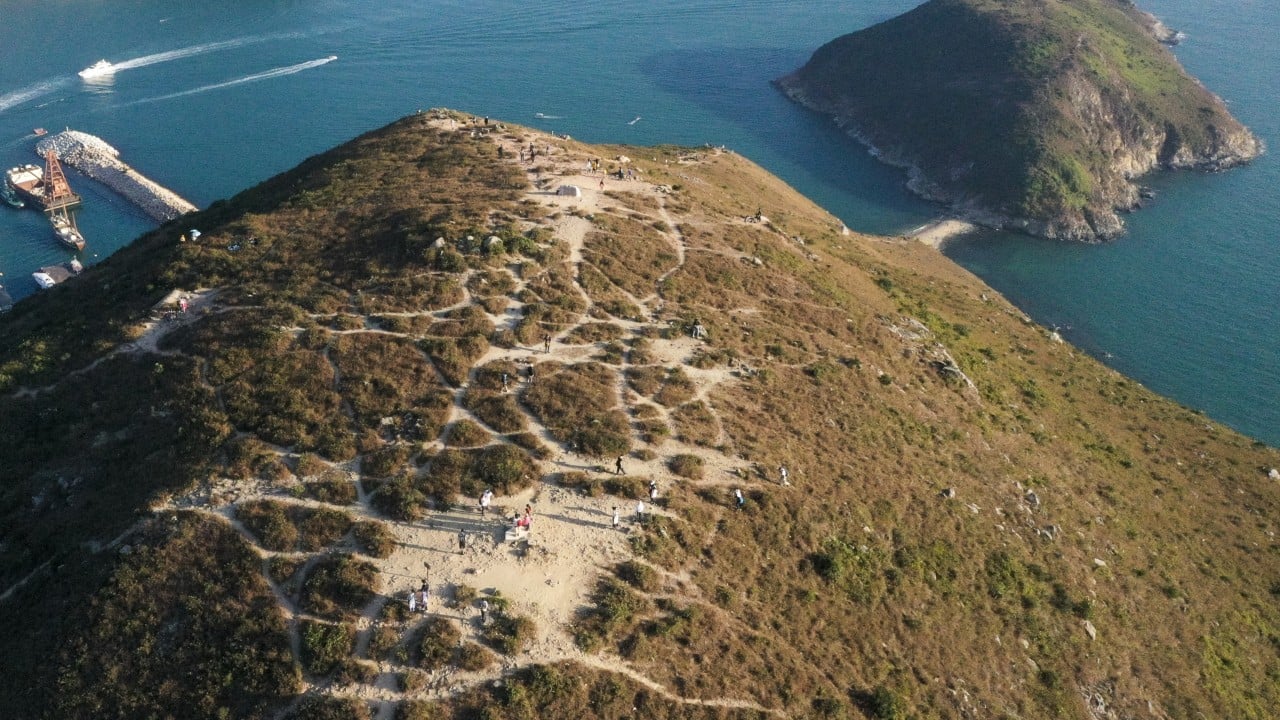
The Mediterranean Sea is supposed to be a promise. It is the visual shorthand for paradise: sun-bleached cliffs, the rhythmic lap of crystal-clear water against white sand, and the scent of saltwater mingling with wild thyme. For millions of tourists packing their bags every summer, this coastline represents a total escape from the grind of daily life.
But paradise is changing. Quietly. Swiftly.
Picture a family. Let's call them the Bennetts. They have saved for two years to rent a small stone villa on the Greek coast. On their third afternoon, their ten-year-old son splashes in the shallows, chasing a flash of silver near the rocky seabed. He sees a fish that looks almost comical—clumsy, blunt-nosed, with oversized teeth that look weirdly human. It is slow enough to catch. He reaches out.
If he touches it, nothing happens immediately. If it bites him, it will hurt. But if that fish ends up on a grill at a local beachside barbecue, the Bennett family’s holiday ends in a sterile intensive care unit. Or a morgue.
This is not a hypothetical monster from a horror film. It is the silver-cheeked toadfish, known scientifically as Lagocephalus sceleratus, and it is currently staging a silent invasion of Europe's favorite holiday destinations.
The Anatomy of an Unintended Invitation
The Mediterranean was never meant to host this creature. For millennia, the sea was isolated, a self-contained ecosystem bounded by Europe, Africa, and Asia. Then, in 1869, humanity altered the geography of the planet by opening the Suez Canal.
It was a triumph of engineering. It was also a biological floodgate.
Marine biologists call the resulting migration the "Lessepsian invasion," named after Ferdinand de Lesseps, the diplomat who oversaw the canal's construction. For over a century, the movement of species from the warm, tropical Indian Ocean into the cooler Mediterranean was a slow trickle. The water was simply too cold for most tropical outsiders to survive, let alone thrive.
Then the water warmed.
Over the past few decades, the Mediterranean has become one of the fastest-warming sea basins on Earth. Suddenly, the environmental barrier vanished. The door didn’t just crack open; it was kicked off its hinges.
Among the hundreds of species that swam through, the silver-cheeked toadfish found the new conditions perfect. With no natural predators in these waters to keep its population in check, a single female can lay up to four million eggs at a time. The math is brutal. The explosion was inevitable.
The Invisible Weapon
To understand why this fish is causing panic among coastal communities from Cyprus to Spain, you have to look past its bizarre appearance. It has no scales. It has a smooth, rubbery skin patterned with dark spots and a distinctive silver stripe running along its flanks. Its jaws are fused into four massive, beak-like teeth capable of snapping nylon fishing lines, crushing crab shells, and easily severing a human finger.
But its true weapon is entirely invisible.
The silver-cheeked toadfish carries tetrodotoxin. TTX.
It is one of the most potent neurotoxins known to science, roughly 1,200 times more toxic than cyanide. It is not produced by the fish itself, but by symbiotic bacteria that live inside its organs. The toxin concentrates in the liver, the ovaries, the skin, and the intestines.
Here is the terrifying part: TTX is completely heat-stable. You cannot cook it out. You cannot freeze it out. You cannot boil, bake, or fry the fish to make it safe. The flesh looks clean, white, and appetizing, resembling harmless local species like sea bream or pufferfish variants that are safe to eat.
Consider how the toxin works. If ingested, TTX blocks the sodium channels in human nerve cells. These channels are the electrical pathways your brain uses to tell your body what to do. When they shut down, the communication line is cut.
First comes the tingling. A strange, numbing sensation around the lips and tongue, like a dental injection that refuses to wear off. Then the numbness creeps down the throat, making it difficult to swallow. Within hours, the paralysis spreads to the extremities.
Your mind remains completely clear. You are entirely aware, trapped inside a body that has stopped responding to your commands. Eventually, the paralysis reaches the diaphragm. The muscles that pump air into your lungs simply stop moving. Without immediate, mechanical respiratory support, death by asphyxiation is certain. There is no known antidote.
The Battle on the Docks
Walk down to any harbor in Cyprus, Rhodes, or Crete at dawn, and you will see the immediate, human cost of this ecological shift. The local fishermen are not thinking about abstract science. They are thinking about survival.
An old fisherman sits on a wooden crate, his hands calloused from fifty years of mending nets. Let’s call him Yiannis. He doesn't speak English, and he doesn't read scientific journals, but he can show you the ruin in his boat.
His nets, which cost hundreds of euros to replace, are riddled with gaping holes. The toadfish don't just steal the catch; they eat right through the mesh to get to the trapped fish. They destroy lines. They bite hooks clean off the wire.
"They take everything," Yiannis says, tossing a fat, spotted fish onto the concrete pier. It inhales air, inflating its belly like a grotesque balloon, clicking its sharp teeth together in a rhythmic, menacing snap. "We used to catch food. Now we catch poison."
The economic strain is forcing younger generations off the water entirely. In parts of the eastern Mediterranean, the silver-cheeked toadfish now makes up half of the total biomass caught by artisanal fishermen. It is a dead weight. You cannot sell it. You cannot eat it. It is illegal to bring it to market.
Governments are desperate. In Cyprus and Greece, authorities have offered bounties for every toadfish caught, paying out hundreds of thousands of euros in an attempt to cull the population. But it is like trying to empty the ocean with a teacup. The fish keep coming, moving steadily westward along the coasts of Italy, Tunisia, and Spain.
A Cultural Blind Spot
The real danger to tourists isn't just the physical presence of the fish. It is a profound lack of awareness combined with a shifting cultural landscape.
For decades, foraging for seafood has been a cherished part of the Mediterranean holiday experience. Tourists rent small motorboats, fish off piers, or spearfish along the rocky reefs. Local tavernas often buy small catches from amateur anglers to serve as the "catch of the day."
In the UK or northern Europe, people are used to buying neatly filleted fish from a supermarket counter. They have lost the generational knowledge required to identify wild species. To an untrained eye, a small toadfish looks like a quirky, exotic prize.
The threat multiplies with the rise of self-catering holiday rentals. More travelers than ever are bypassing traditional restaurants, buying cheap ingredients from local harbors, and cooking in their apartment kitchens. It is a recipe for disaster.
The local population knows the danger. They have seen the warnings posted on harbor walls and read the local news reports. But a tourist arriving for a two-week stay doesn't read the local Greek or Turkish newspapers. They don't see the warnings hidden behind the glossy travel brochures promising sun and serenity.
Navigating the New Waters
This change does not mean the Mediterranean is ruined, or that people should cancel their flights. The sea remains beautiful, and the beaches are still safe for swimming. The toadfish is not an aggressive hunter looking to attack humans in the water; it is a creature operating on instinct, defending itself when handled or disturbed.
Safety in this new era requires a shift in mindset. The old rules of carefree foraging no longer apply.
The golden rule is absolute: if you did not buy it from a registered, professional fishmonger who can explicitly guarantee its identity, do not eat it. Never consume fish caught on recreational lines or during diving trips unless an expert has verified the species on the dock.
Education is the only real shield. Coastal municipalities are beginning to install multilingual signs at popular swimming and fishing spots, featuring clear, high-contrast photographs of the silver-cheeked toadfish alongside stark warnings in English, German, and French.
We are witnessing a fundamental rewriting of marine reality. The borders of nature are fluid, and human actions have set off a chain reaction that cannot be recalled. The warm, inviting sea we think we know is adapting to a different drumbeat, carrying new secrets beneath its glittering surface.
As the sun sets over the harbor, turning the water into a sheet of hammered gold, the Bennetts sit at a taverna yards from the surf. They order the grilled octopus and the local sea bass, prepared by hands that have worked these waters for generations. Nearby, on the dark concrete of the pier, a discarded toadfish lies still, its sharp teeth gleaming in the fading light, a silent reminder that paradise now requires our vigilance.